18 Republicans cite 1600s case law to defend Trump birthright citizenship order

Add Axios as your preferred source to
see more of our stories on Google.
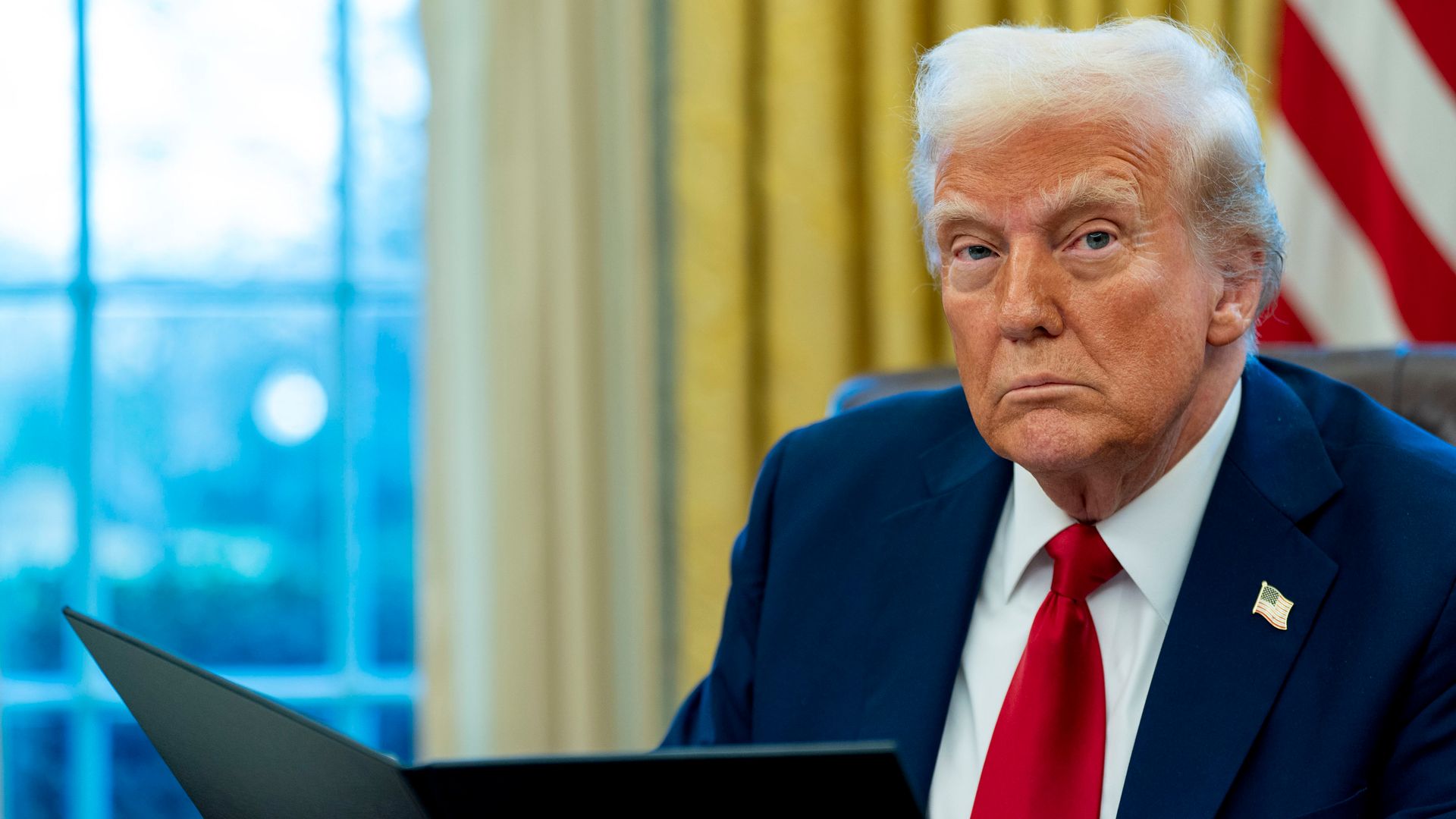
President Trump at the White House on Jan. 30. Photo: Bonnie Cash/UPI/Bloomberg via Getty Images
A group of House Republicans filed a brief Monday using case law from the 1600s to defend President Trump's efforts to end birthright citizenship.
The big picture: The GOP lawmakers cited an English case from 150 years before the U.S. was founded to dictate the country's present laws.
- "Calvin's Case" was a 1608 British legal decision that held that children born in Scotland could be regarded as English subjects after Scotland's James I ascended to the throne in both countries to become James VI.
- The decision was eventually adopted by U.S. courts and was central in shaping the country's birthright citizenship law.
State of play: The brief from 18 of 25 Republican members of the House Judiciary Committee, which was filed in federal court in Washington state, comes in response to a lawsuit filed by four Democratic state attorneys general challenging Trump's executive order.
- A federal judge ruled in the case that Trump's executive order is "blatantly unconstitutional," siding temporarily with the four states that sued — Arizona, Illinois, Oregon and Washington.
- The judge's 14-day temporary restraining order issued Jan. 23 expires this week.
Zoom in: "Early English caselaw supports this concept of total allegiance and its role in citizenship, and even the Senators who drafted and debated the Jurisdiction Clause stated that children of 'aliens' or others 'owing allegiance to anybody else' would not receive citizenship," the brief states.
- "That understanding extended for decades after the ratification of the Fourteenth Amendment," they wrote.
- The lawmakers argued that because the Fourteenth Amendment "does not confer citizenship on the children of illegally present aliens, and because Congress has not done so by statute, the other branches cannot confer such citizenship on their own."
- Trump's executive order, therefore, "properly ensures that rule is followed within the executive branch," they said.
What they're saying: "The touchstone for birthright citizenship under the Fourteenth Amendment is allegiance to the United States, rather than merely being subject to its laws or some subset thereof," the brief concluded.
Zoom out: A group of Republican attorneys general from 18 states filed their own brief defending Trump's order, Iowa AG Brenna Bird said on X.
- "If someone comes on a tourist visa to have an anchor baby, they are not under that original meaning of the United States Constitution," Bird told Fox News Digital on Monday.
Catch up quick: On his first day in office, Trump signed an executive order attempting to end birthright citizenship in the U.S. for children born in the U.S. to noncitizen parents and undocumented immigrants.
- The president's order would also extend to parents in the country legally but temporarily, like foreign students, workers or tourists.
- Birthright citizenship is a right guaranteed by the U.S. Constitution and affirmed by the Supreme Court more than 125 years ago.
Go deeper: "Blatantly unconstitutional": Judge blocks Trump's birthright citizenship order
