Bilal Mahmood shares autism journey in push to protect vital services

Add Axios as your preferred source to
see more of our stories on Google.
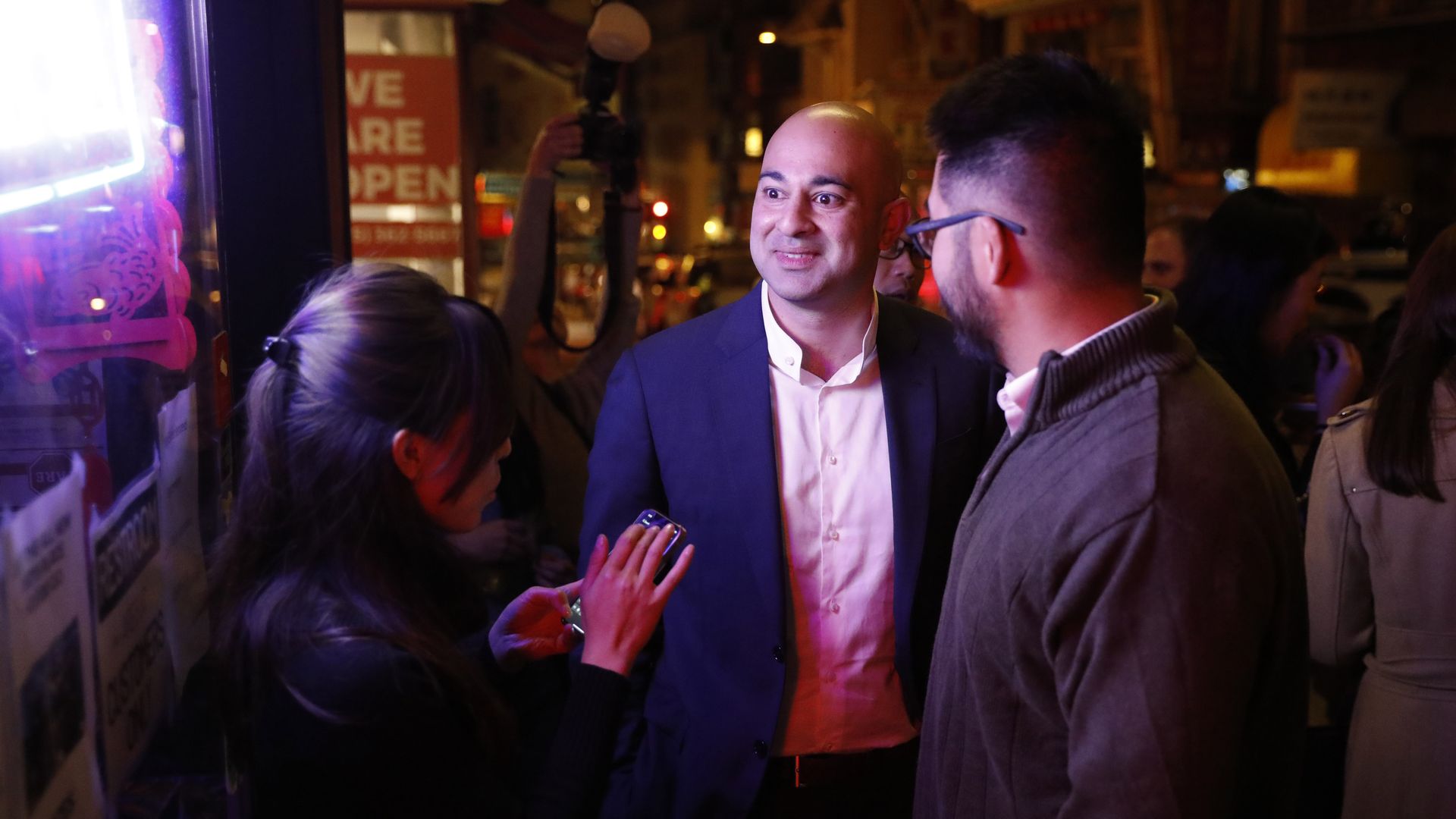
Bilal Mahmood with supporters at Red's Place in San Francisco. Photo: Carlos Avila Gonzalez/San Francisco Chronicle via Getty Images
San Francisco Supervisor Bilal Mahmood publicly spoke about his journey with autism for the first time Tuesday as he announced a resolution declaring April Autism Awareness Month in the city.
Why it matters: The resolution highlights the need to protect services and policies that support the city's neurodivergent population amid looming budget cuts.
Driving the news: These resources, which Mahmood calls "lifelines," include programs that assist in transitions from school to work, Muni transit and housing assistance, early intervention initiatives and autism-focused classes in schools.
- "People who are autistic are very driven by routine, and any disruption in that routine causes a lot of stress," Mahmood told Axios.
- Cutting essential programs that the neurodivergent community relies on would cause "permanent damage," he noted.
State of play: In San Francisco, students diagnosed with autism have increased over 30% in the past decade, per data from the public school district.
- Yet the Human Rights Commission found last year that 80% of autistic adults in the city experience underemployment or unemployment, according to a draft of the resolution shared with Axios.
- Autism spectrum disorder affects roughly 1 in 36 children nationally, CDC estimates show.
Zoom in: Mahmood, like many autistic people, was diagnosed later in life.
- Though he says he'd always felt different, he didn't understand why until a few years ago when he reconnected with a friend, an Asian woman, after gaining exposure in politics.
- As he recounted his longtime difficulties with shaking hands and eye contact, "she was like, 'Well, Bilal, I think you might be autistic, because I am,'" he told Axios.
- Mahmood, the son of Pakistani immigrants, said he'd never considered it because he'd been taught in school that "autism was something that only affected white boys" — a debunked myth rooted in lack of research on its presentation among people of color and women.
What he's saying: "Being neurodivergent and autistic presents itself very differently in different people, and it's not the stereotypical portrayal that people assume," Mahmood told Axios.
- That conversation "put me on a journey to learn more about it" and get diagnosed, which helped him better understand his experiences with things like sensory sensitivities and the need for strict routines, he said.
- "Neurodivergent individuals are at all levels of society, from the private sector, technology to even government," he added. "Hopefully, this gives others the comfortability to come forward and ... destigmatize it with their own stories."
The big picture: Autism Awareness Month originated in the 1970s with psychologist Bernard Rimland.
- Former President Reagan officially declared April as National Autism Awareness Month in 1988.
- Some advocacy groups have pushed in recent years to change the proclamation to Autism Acceptance Month.