Study: California's $20 fast-food minimum wage improves pay at small cost to consumers

Add Axios as your preferred source to
see more of our stories on Google.
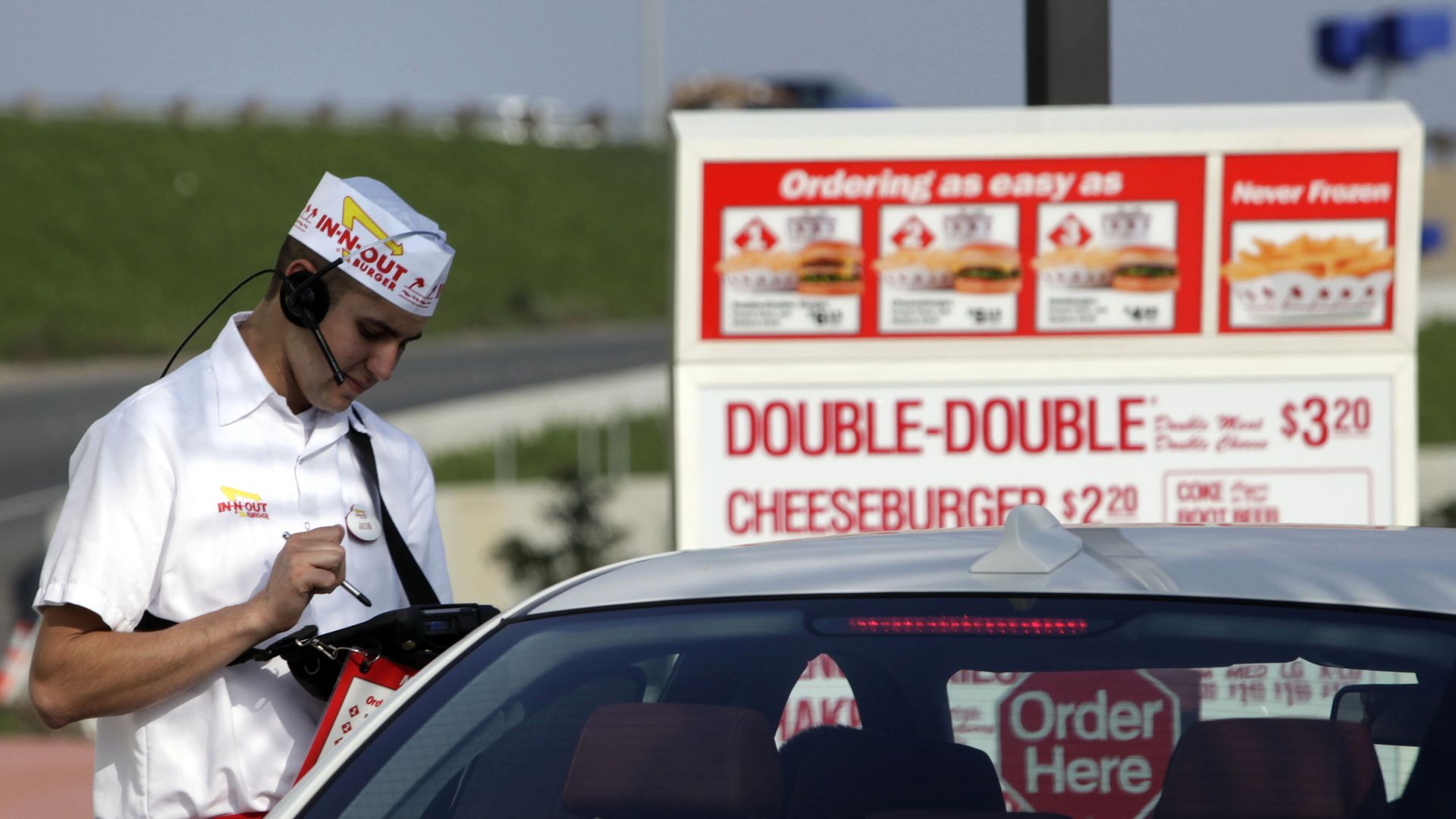
An In-N-Out Burger employee takes a drive-thru order. Photo: Patrick T. Fallon/Bloomberg via Getty Images
California's fast-food minimum wage law did not lead to job losses and has increased wages for workers by about 8% to 9% since going into effect last April, according to an updated analysis.
The big picture: The analysis released this week from the UC Berkeley Center on Wage and Employment Dynamics builds off the findings of an initial study from September, showing that the minimum wage increase has not reduced employment or led to large price increases for consumers.
Catch up quick: The law raised the minimum wage for fast-food employees in California at chains like McDonald's, In-N-Out and Burger King to $20 an hour – the largest in recent U.S. history – in an effort to improve living conditions for low-wage workers.
Driving the news: The latest findings include:
- No evidence thus far suggests there have been negative effects on employment in the fast-food industry.
- While menu prices did increase, costs rose by an average of just 1.5% –equivalent to about 6 cents on a $4 hamburger, down from the 15-cent increase reported in the September study.
- The law has not led to franchises closing as more fast food restaurants continue to open and are growing faster in California than in the rest of the U.S.
What they're saying: In the next series of reports on the effects of the law, the researchers will be looking into employee attraction and retention rates because "the decline in recruitment and retention costs is a big offset to the cost of the minimum wage," said economics professor Michael Reich, the director of the center who authored the study.
The intrigue: Labor advocates and other supporters of the law said the wage increase was needed to address the high cost of living in one of the most expensive states in the U.S. But the legislation was fiercely opposed by the restaurant industry and some business owners, who said it would lead to employment cuts, higher consumer prices and operational costs and job automation.
By the numbers: The law covers about 750,000 employees who work at fast food chains with more than 60 locations across the country, with the exemption of fast-food workers in California airports, stadiums and other similar venues.
Zoom in: The fast-food pay rate is above the hourly wage in San Francisco ($18.67) and the state ($16.50).
What's next: California's Fast Food Council, which was created to regulate the fast-food industry and develop rules about working conditions in the state, will consider increasing the wage for the first time since the law was passed later this year.