San Francisco and California are driving EV adoption


Add Axios as your preferred source to
see more of our stories on Google.
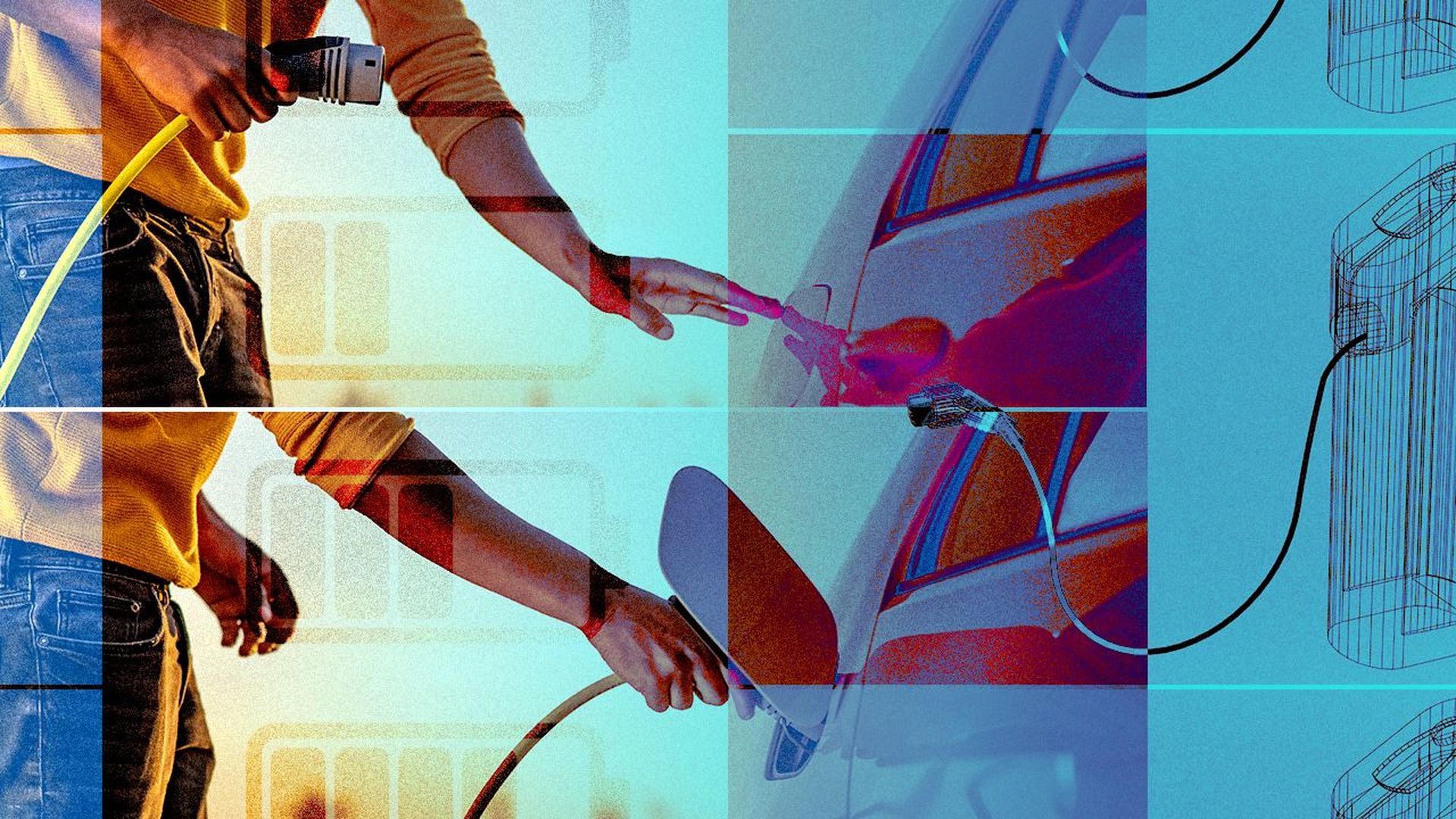
Illustration: Natalie Peeples/Axios
California's electric vehicle market is far more mature than those in other parts of the country, with San Francisco and other Bay Area cities leading the way.
Yes, but: Expanding access to charging infrastructure "is crucial" to further driving adoption, San Francisco's environment department director, Tyrone Jue, told Axios.
Why it matters: Fossil fuels for transportation are among the biggest drivers of emissions in the city, accounting for 44% of our greenhouse gas emissions in 2020, according to city data.
- But drivers ultimately won't switch to an EV until it's cheaper and easier than driving a gasoline vehicle, Axios' Joann Muller writes.
By the numbers: In California, the average EV travels 8% more miles than the average gas-powered vehicle, according to BloombergNEF research.
- About 25% of new car sales in the state are EVs, which is closer to the level of adoption in Europe.
- Separately, zero-emissions vehicles made up 37.4% of all new car sales in San Francisco last year, according to data from the California Energy Commission.
- In Q2 2024, about 36% of new vehicle purchases were electric, according to Jue.


The big picture: In the U.S., American drivers travel about 40% fewer miles in EVs than in gasoline cars, according to BloombergNEF's research.
- In Q2, just 8% of new vehicle purchases were electric nationwide, according to estimates from Kelley Blue Book.
Between the lines: A number of factors contribute to higher EV adoption rates in San Francisco and California, Jue told Axios.
- He pointed to the number of statewide incentives, grants and tax credits to make EV purchases and charger installation more affordable.
- Jue also highlighted both the city and state's emissions standards and EV goals, a general desire among residents to reduce their carbon footprints, and more proactive development of charging infrastructure.
What they're saying: Expanding access to charging infrastructure is a "crucial" part of driving further EV adoption, Jue said.
- That's why the city is working to have 1,700 publicly accessible chargers installed by 2030, up from the current 1,100, he said.
- "Enhancing the availability and convenience of charging stations will significantly encourage more residents to switch to electric vehicles," Jue said.
The bottom line: If the rest of the nation follows the Bay Area and California's lead, the U.S. could catch up to the rest of the world in EV mileage.
What we're watching: San Francisco is currently seeking providers for its curbside EV charging pilot.