The financial case for EVs — with caveats

Add Axios as your preferred source to
see more of our stories on Google.
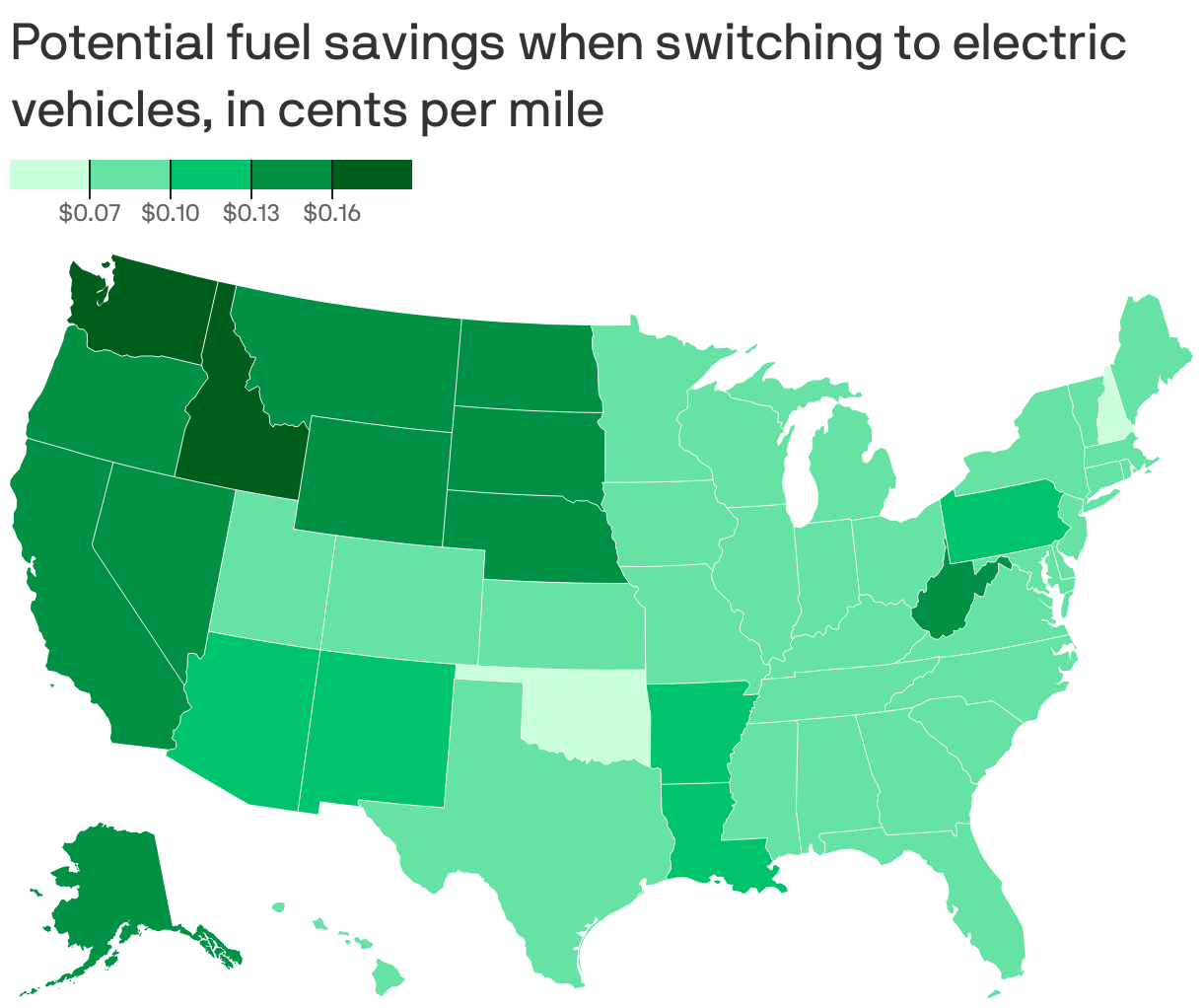
This map is food for thought heading into the weekend and the heart of summer driving season.
Why it matters: While EVs generally have higher sticker prices, running a car on electricity is typically cheaper — often by a lot.
- And EVs are typically less expensive to maintain.
State of play: That map is derived from an Argonne National Lab analysis that found driving a fully electric car means annual fuel savings of up to $2,200.
- It's all pretty location-specific, given regional variations in gasoline and electricity prices. And those prices fluctuate over time.
Zoom in: University of Michigan researchers recently explored lots of variables in 14 cities to see whether EVs are cheaper over the car's lifetime. Their takeaway? It depends.
- Lower-range EVs (think 200 miles) generally beat gas cars, even without incentives, while longer range (300 miles) models are roughly comparable, their peer-reviewed paper found.
Yes, but: The variance is huge!
- For a midsize electric SUV with 300 miles of range, lifetime ownership cost varies by $52,000 — around 40% — depending on where the driver lives.
- They also note that EVs will become even more competitive over time as battery costs fall.
The big picture: Benefitting from those fuel savings means clawing back the higher up front costs over time.
- The price gap has generally diminished, and should fall further as automakers plan more mass-market products.
- But for now, it's significant. The average fully electric vehicle costs over $57,000, per Kelley Blue Book data — nearly $10,000 more than the average for other vehicle types.
What we're watching: How quickly cheaper EVs arrive, and how many of them meet the criteria for $7,500 purchase subsidies under the 2022 climate law.
