Despite living in blue state, California women remain concerned about abortion restrictions

Add Axios as your preferred source to
see more of our stories on Google.
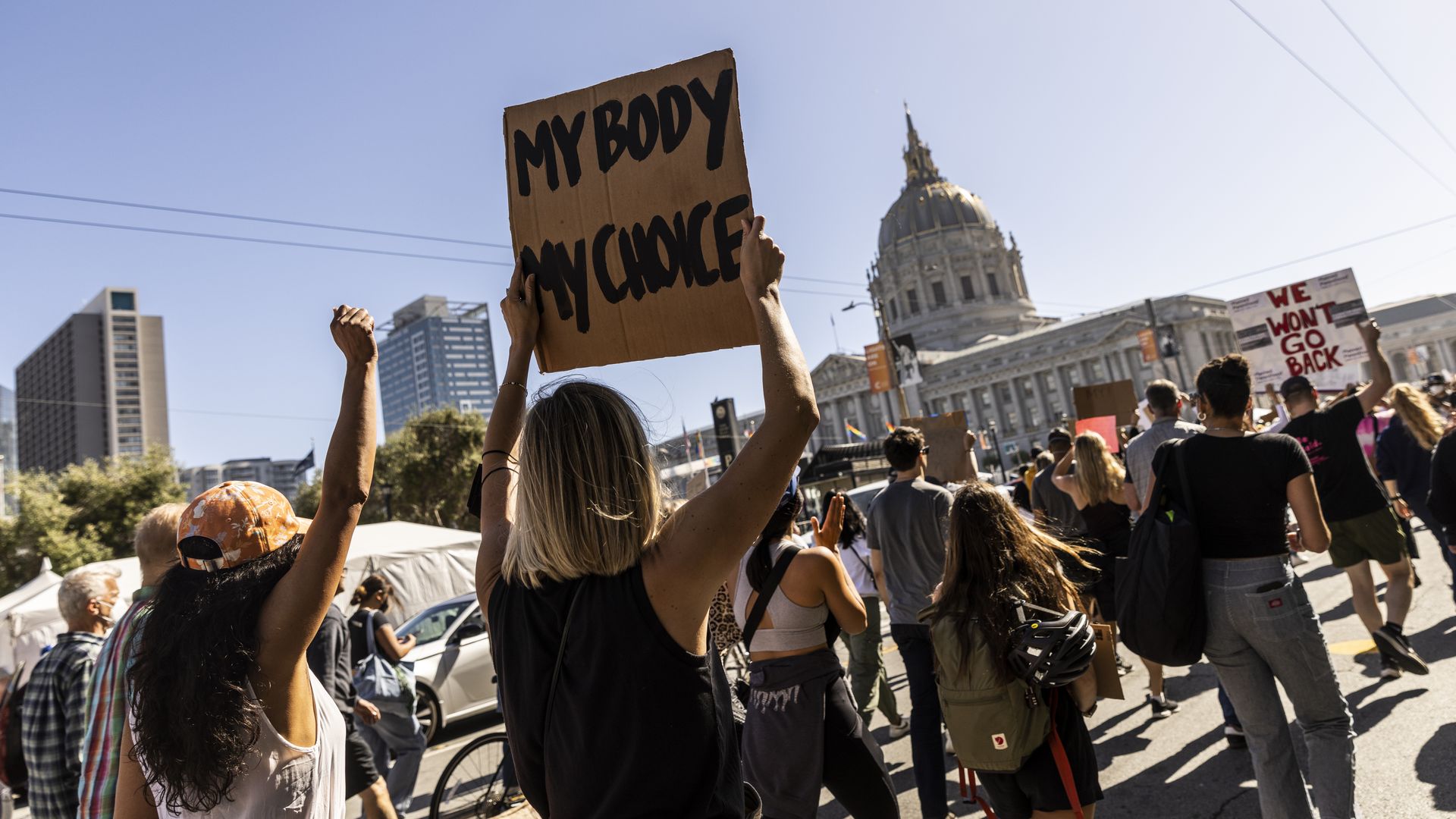
People protest the Supreme Court ruling to overturn Roe v. Wade in 2022. Photo: Stephen Lam/San Francisco Chronicle
Women in California are increasingly taking steps to protect themselves against potential abortion restrictions that they fear could expand to the state under a Trump administration, experts tell Axios.
Why it matters: The fall of Roe sent a ripple effect across the nation, and anti-abortion advocates are aiming to continue that momentum with attempts to erode access to medications like abortion pills and birth control.
By the numbers: A recent study by Nurx, a telehealth company based in San Francisco, found that many women in California report heightened anxiety about the state of reproductive rights despite living in a blue state.
- 36% of women in California said they aren't confident that their right to use contraception is secure.
- 38% also said they feel anxiety about accessing in-person care for reproductive and sexual health.
- 71% have changed at least one health-related behavior in response to the political environment, including delaying preventive care, joining reproductive rights advocacy efforts, seeking emergency contraception and exploring sterilization.
What they're saying: "We're seeing in this data that even when they live in places where the political environment is probably more favorable to their reproductive rights, women increasingly don't take all of these things for granted," Caroline Hofmann, chief business officer at Nurx's parent company Thirty Madison, told Axios.
Driving the news: Pointing to an increase in stockpiling of emergency contraceptives among Nurx users, she added that women feel they "have to have a second and third backup option ... making extra sure that you're not put in a position where you have to actually seek abortion care."
- "The possibility of a national ban, everybody would like to think it would never happen," Karen Meckstroth, director of the UCSF Center for Pregnancy Options, told Axios.
- "I think the fact that something that felt very stable and had 50 years of precedent was, out of the blue, completely overturned gives people new anxiety that it could happen in other areas as well."
Zoom in: The UCSF Center for Pregnancy Options is one of many reproductive health clinics working to ensure safeguards beyond the law, such as educating patients on their privacy rights.
- Oftentimes, patients who live in California come to the clinic confused about whether they could be affected by abortion restrictions, Meckstroth said.
- The clinic typically sees at least one out-of-state abortion seeker every week, though many more call in to request information about the procedure, she noted.
- "People feel reassured by the new California laws that are protecting patients and providers, but none of them have been fully tested," she told Axios. "There's just a possibility of errors, like someone could get a subpoena for medical records and not know that they are not allowed to provide them."
What to watch: Abortion is set to feature heavily in the upcoming November election. A record 32% of voters said in a June Gallup poll that they'd only vote for candidates for major offices if they support their views on abortion.
- The issue took center stage at the Democratic National Convention this week, with speakers detailing unwanted pregnancies and near-death experiences.
- In her DNC speech Thursday night, Vice President Kamala Harris also accused former President Trump of taking away reproductive freedoms and warned that he'll go further.
- "Women have told me their stories," Harris said. "Miscarrying in a parking lot, getting sepsis, losing the ability to ever have children again … Simply put, [Trump and his allies] are out of their minds."
The big picture: California's rate of clinician-provided abortions increased 16.6% from 2020 to 2023, estimates from the Guttmacher Institute show.
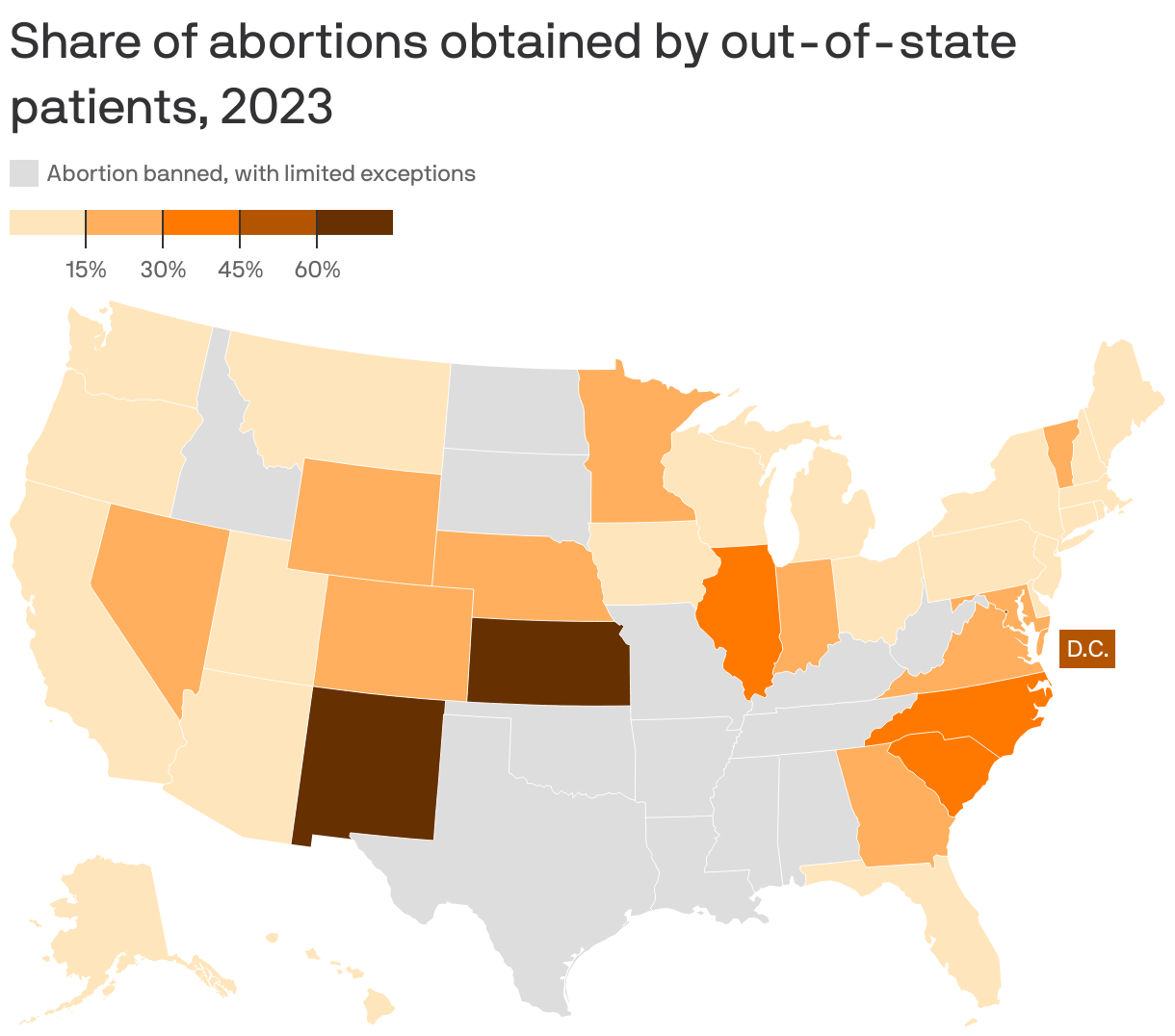
- Meanwhile, its share of out-of-state abortions rose from 1% in 2020 (or 2,270 out-of-state patients) to 4% in 2023 (7,060 out-of-state patients).
Editor's note: This story has been corrected to state that it was the fall of Roe (not Dobbs) that had a ripple effect across the nation.