5 things to know about how the Bay Area shaped Kamala Harris

Add Axios as your preferred source to
see more of our stories on Google.
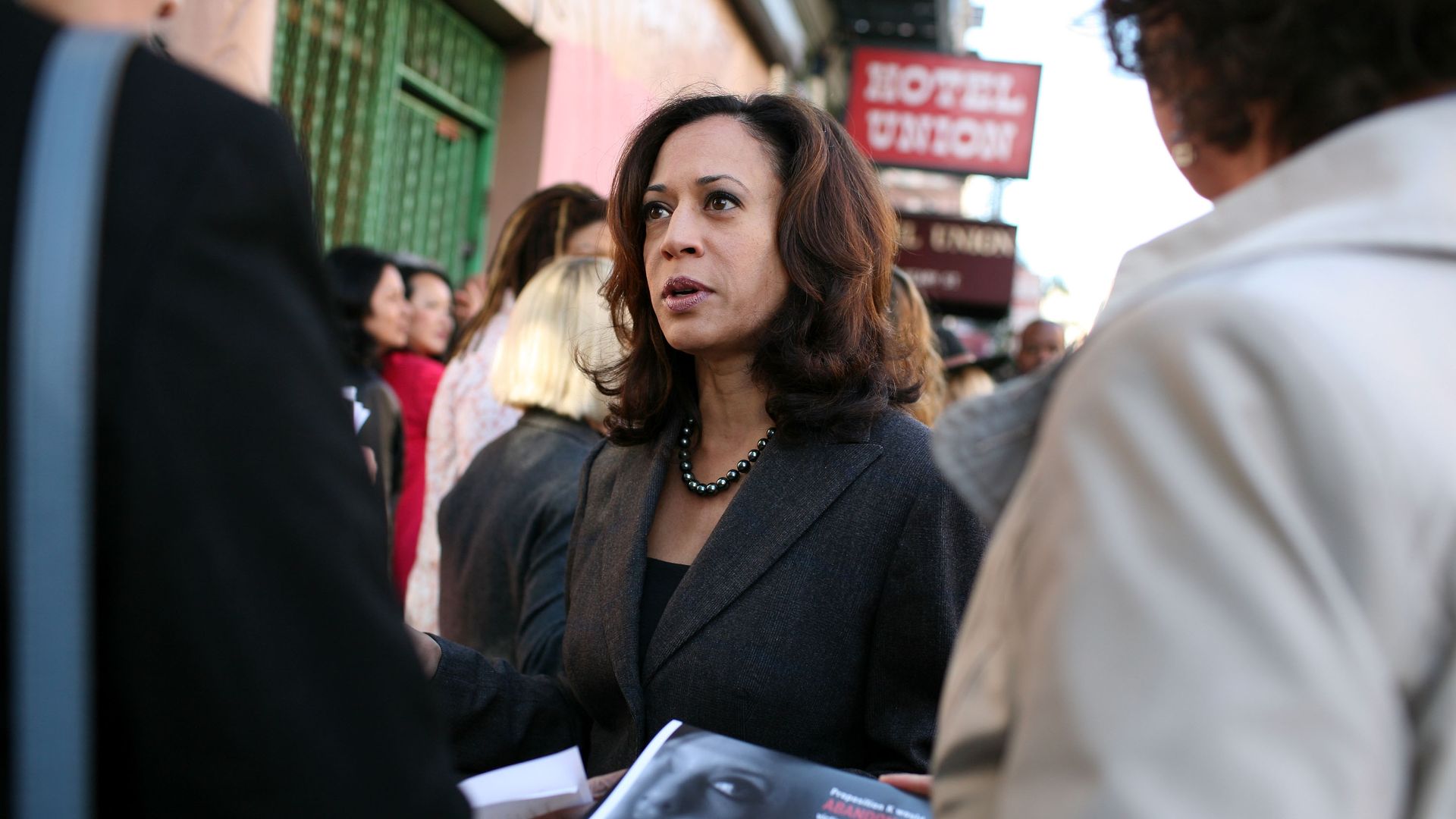
Kamala Harris speaks to residents as district attorney of San Francisco in 2008. Photo: Justin Sullivan via Getty Images
Vice President Kamala Harris has emerged as the most viable option to be the Democrats' presidential nominee following President Joe Biden's exit from the race.
Why it matters: It's unclear if the party will fall in line behind the Berkeley native, who has Biden's endorsement, and she won't automatically pick up Biden's delegates at the Democratic National Convention.
- She said in a statement Sunday that her "intention is to earn and win" the nomination.
Here are five things to know about Harris' Bay Area roots as the scramble for a new candidate plays out.
Woman of firsts
Harris has broken barriers throughout her career.
- She was the first person of color elected district attorney of San Francisco and later the first woman, the first African American and the first South Asian American to serve as California attorney general.
- In 2016, she became the first Indian American and second African American woman ever elected to the U.S. Senate.
- She is the first woman, first African American and first Asian American vice president in U.S. history.
Berkeley ties
Harris' parents met at UC Berkeley as graduate students and sometimes took her to civil rights protests in a stroller.
- Growing up, she attended both a Black Baptist church and a Hindu temple, a nod to her dual heritage.
- Being bused to Thousand Oaks Elementary School starting in 1970 — its second year of integration — was a formative experience for Harris, who wrote in her autobiography about traveling every day from her predominantly Black, lower-income neighborhood to the more affluent white district.
- It became the subject of a tense exchange with Biden during a Democratic primary debate in 2020.
Career origins
After passing the bar in 1990, Harris joined the Alameda County prosecutor's office in Oakland, where she focused on sex crimes.
- She got a career boost in the mid-90s when then-Assembly Speaker Willie Brown appointed her to two state commissions. (The two were dating at the time but broke up before Brown was inaugurated as San Francisco mayor in 1996.)
- From there, she successfully ran for San Francisco DA in 2003, boosting the city's conviction rate from 52% to 67% during her first three years in office.
- She would face fallout, however, from her decision to decline to pursue the death penalty against the man convicted of murdering San Francisco police officer Isaac Espinoza.
Donor relationships
Harris formed crucial relationships with wealthy contacts in Pacific Heights as an up-and-coming politician. They served as a launching pad when she kicked off her DA campaign in 2002.
- She returned to the ritzy neighborhood earlier this year for a fundraising stop at Oracle heiress Nicola Miner's mansion.
- Some of these donors are already coalescing behind her, with one telling the New York Times Harris will "energize and excite" voters of color.
Inconsistent record
Critics have long highlighted what they perceive to be Harris' wishy-washiness on issues like criminal justice.
- She faced accusations of political opportunism after she declined to support two ballot initiatives to ban the death penalty while serving as AG — despite not pursuing it in the Espinoza case.
- She also had to fend off claims of prosecutorial overreach.
What we're watching: Some Democratic officials and operatives are shepherding a movement to bypass Harris as Biden's successor — or at least make the nomination a contest with other candidates.
- Democratic National Committee chair Jaime Harrison said in a statement Sunday that the party will "undertake a transparent and orderly process" to select a candidate "who can defeat" former President Trump.