San Francisco Bay Area's AQI was better than average this summer


Add Axios as your preferred source to
see more of our stories on Google.
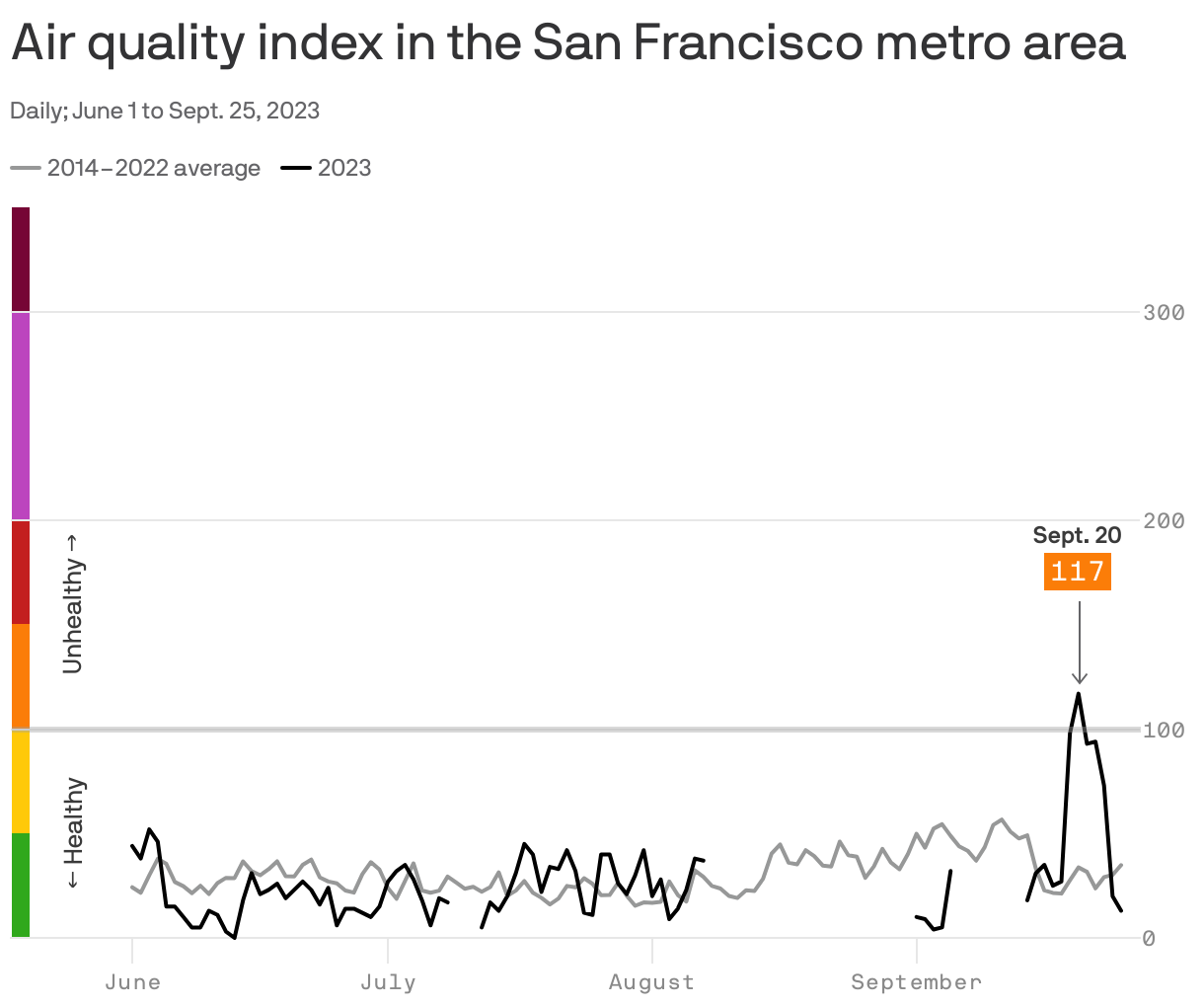
The 2023 wildfire season more than doubled the previous record for fire-related air pollution in the U.S., but folks in the Bay Area didn't have it as bad as others.
Why it matters: The average American was exposed to 66% more air pollution than during the previous record year, driven by the worst wildfires in Canada's history, according to data from the Stanford Environmental Change and Human Outcomes Lab.
Zoom in: The air quality index (AQI) this summer in the Bay Area was 27 on average, compared to 28 in past years.
- The worst day was Sept. 20, when the AQI hit 117.
Zoom out: But the San Francisco Bay Area didn't have it as bad as other parts of the country.
- In New York, for example, the average AQI this summer was 50.9 and the worst day was June 7, when the AQI hit 254.
The big picture: Human-caused climate change has lengthened fire seasons, increased the likelihood of fires, and strengthened the intensity of fires — all of which add up to more smoke in the future.
- One study by World Weather Attribution showed that climate change has more than doubled the likelihood of extreme fires in eastern Canada.
And it's only going to get worse. The latest reports from the Intergovernmental Panel on Climate Change project that future warming will cause even more frequent fire weather conditions.