San Francisco nature alliance wants to paint the city green

Add Axios as your preferred source to
see more of our stories on Google.
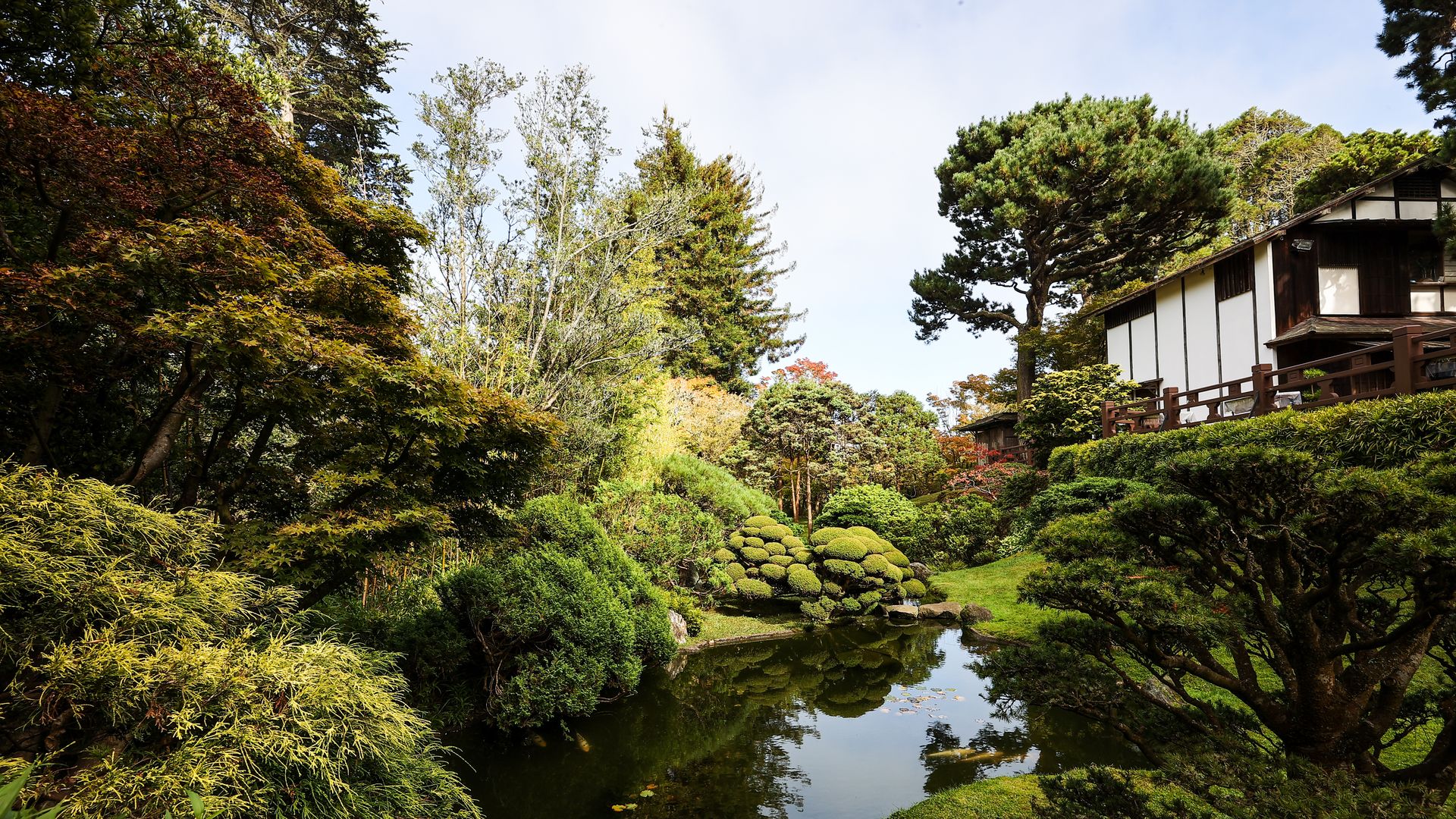
Japanese Tea Garden in Golden Gate Park. Photo: Tayfun Coskun/Anadolu Agency via Getty Images
A new San Francisco nature alliance has a vision to transform stretches of asphalt and concrete throughout the city into nature-rich spaces.
Driving the news: Reimagining San Francisco announced Thursday its plans to improve the city's ecological health, which includes making 30% of the city biologically diverse green space by 2030.
- The city is working with Reimagining San Francisco, which is a collaboration among 32 local organizations, including the California Academy of Sciences, Presidio Trust and Friends of the Urban Forest.
The big picture: Just 5% of the city has green spaces with biological diversity, Tyrone Jue, director of the San Francisco Environment Department, said at a press conference announcing the initiative.
- The new alliance aims to give everyone in San Francisco easier access to green space and nearby nature, as well as equip residents with the resources to foster biodiversity in their neighborhoods.
What they're saying: The big vision is to create "a thriving, diverse community for humans and nonhumans alike," Academy of Sciences director Scott Sampson said in a written statement.
- That means, for example, converting backyards, schoolyards, courtyards and street medians into green spaces, he said.
By the numbers: In San Francisco, there are 220 neighborhood parks and more than 4,100 acres of recreational and open space, according to the city's parks department.
- Meanwhile, 100% of residents live within a 10-minute walk of a park in San Francisco, which has some of the best parks in the country, according to a recent report.
- Yes, but: Residents in neighborhoods with high concentrations of Black, Hispanic, Asian American and other people of color have access to 35% less park space per person than the city's average, and 56% less than residents in neighborhoods with high concentrations of white people.
For communities of color in San Francisco, the new alliance is about "reconnecting the people to the land," Hollis Pierce-Jenkins, the executive director with Literacy for Environmental Justice, said in a statement.
What's next: The alliance is in its early days, but throughout the next year, plans to identify an initial group of projects to pursue.