Homes of the future may be disaster-proof domes


Add Axios as your preferred source to
see more of our stories on Google.
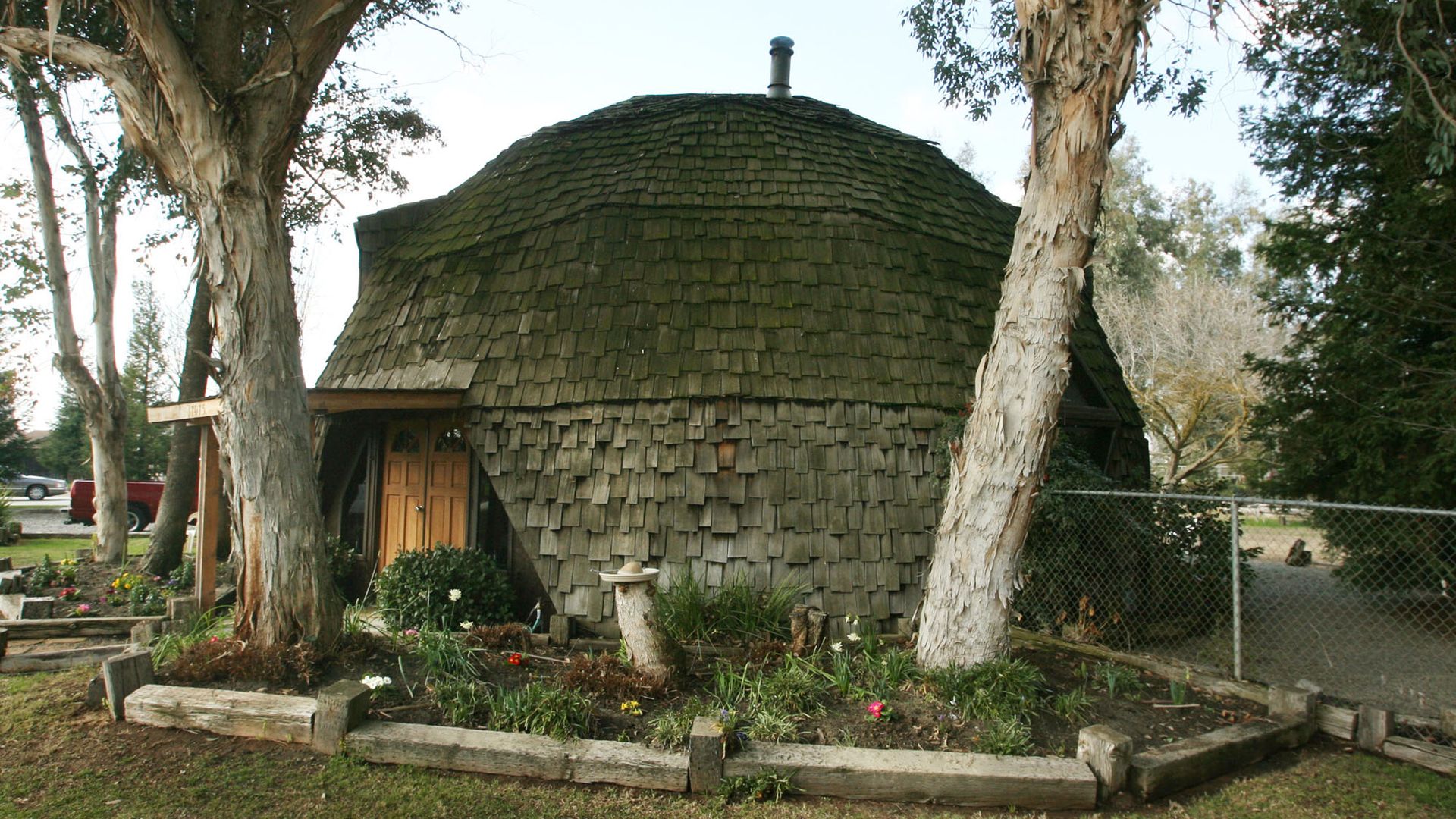
A geodesic dome home in Madera Ranchos, Calif. Photo: Craig Kohlruss/Fresno Bee/Tribune News Service via Getty Images
More people are talking about dome homes and disaster-proof designs as a solution to threats familiar to Californians, like earthquakes and fires.
Why it matters: Experts say increasing extreme weather events could give mass-market appeal to dome structures, which are designed to withstand earthquakes, strong winds and other natural forces.
What they're saying: Minnesota-based Natural Spaces Domes has seen demand surge throughout the country in recent years. C0-owner Dennis Odin Johnson told Axios he's doubled his staff and expects to sell around 40 domes this year, up from 20 last year.
- "Our clients are looking for something different, and they're attuned to climate change," Johnson said.
The big picture: With fewer flat walls and a round shape, domes can weather severe winds and heavier snowfall while using less heating and cooling energy than a conventional house, according to Johnson.
- Also, the entire exterior can be built with fire-resistant material.
Zoom in: Retired software engineer Jon duSaint, who lived in Santa Cruz County during the CZU Lightning Complex fires in 2020, is building a dome home near Bishop, Calif., the New York Times reported last month.
- The 29-foot structure will be fire-resistant, and designed to withstand high winds and heavy snowpack.
- "The dome shell itself is basically impervious," he said.
- In March, California-based Geoship unveiled its first dome home and said it hopes to deliver 1 million dome homes per year. As of March, the company had 10,000 preorders for its homes.
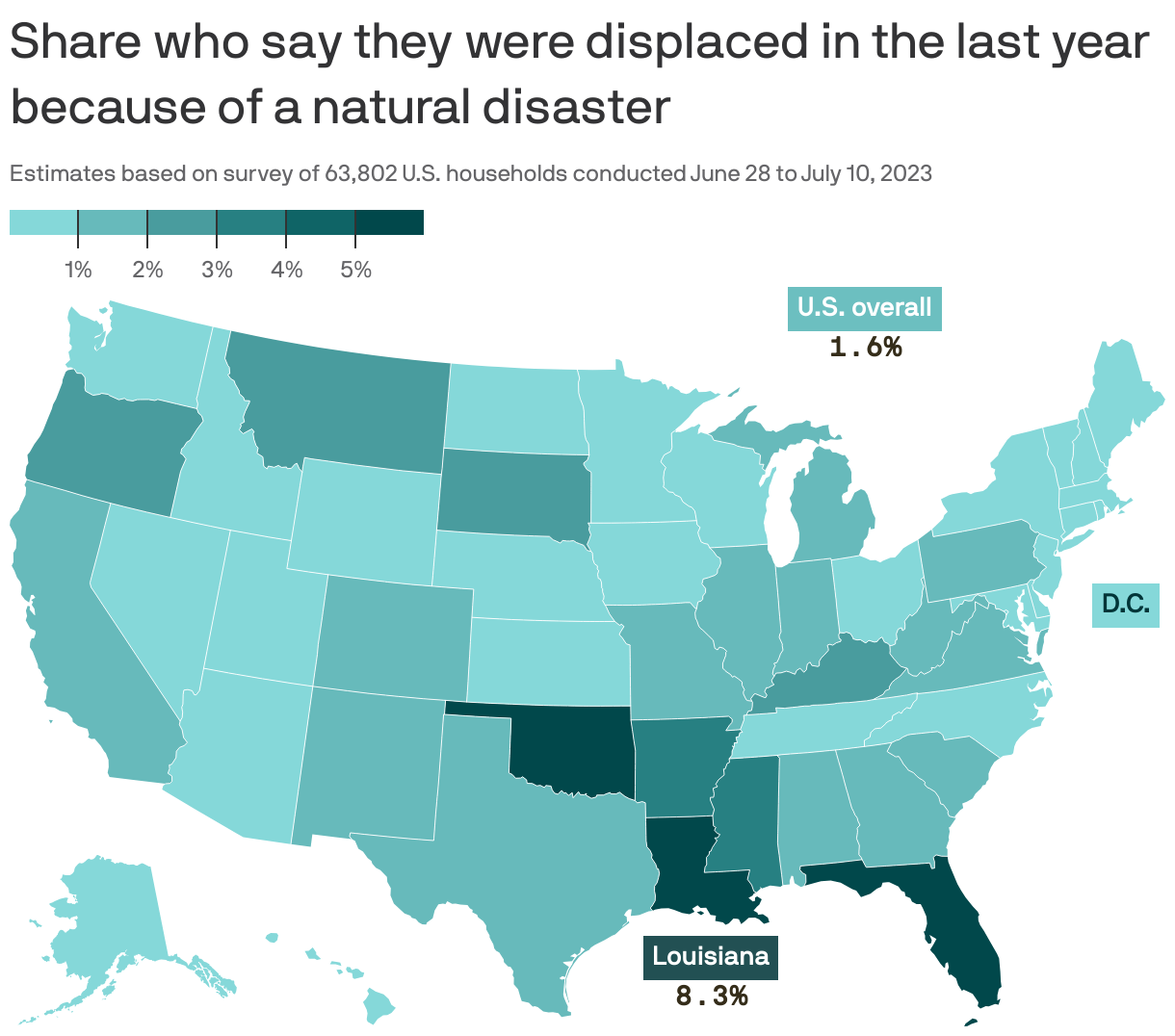
By the numbers: 1.7% of people in California say they were displaced in the last year because of a natural disaster, per the latest U.S. Census Bureau data.
- Nationwide, the average is 1.6%.
Between the lines: A completed dome is generally 5-to-15% less expensive to build, requiring 60% less lumber than a standard house of the same size, according to Johnson.
- For an average-size dome, completed building costs range from $350,000 to $450,000 in rural areas, with costs up to 50% higher in cities and suburbs, he said.
Go deeper: The threat of climate change-related disasters is a big factor driving up consumer costs and putting insurers out of business in some parts of the country, Axios' Andrew Freedman and Nathan Bomey report.