New PBS series explores making of the Golden Gate Bridge

Add Axios as your preferred source to
see more of our stories on Google.
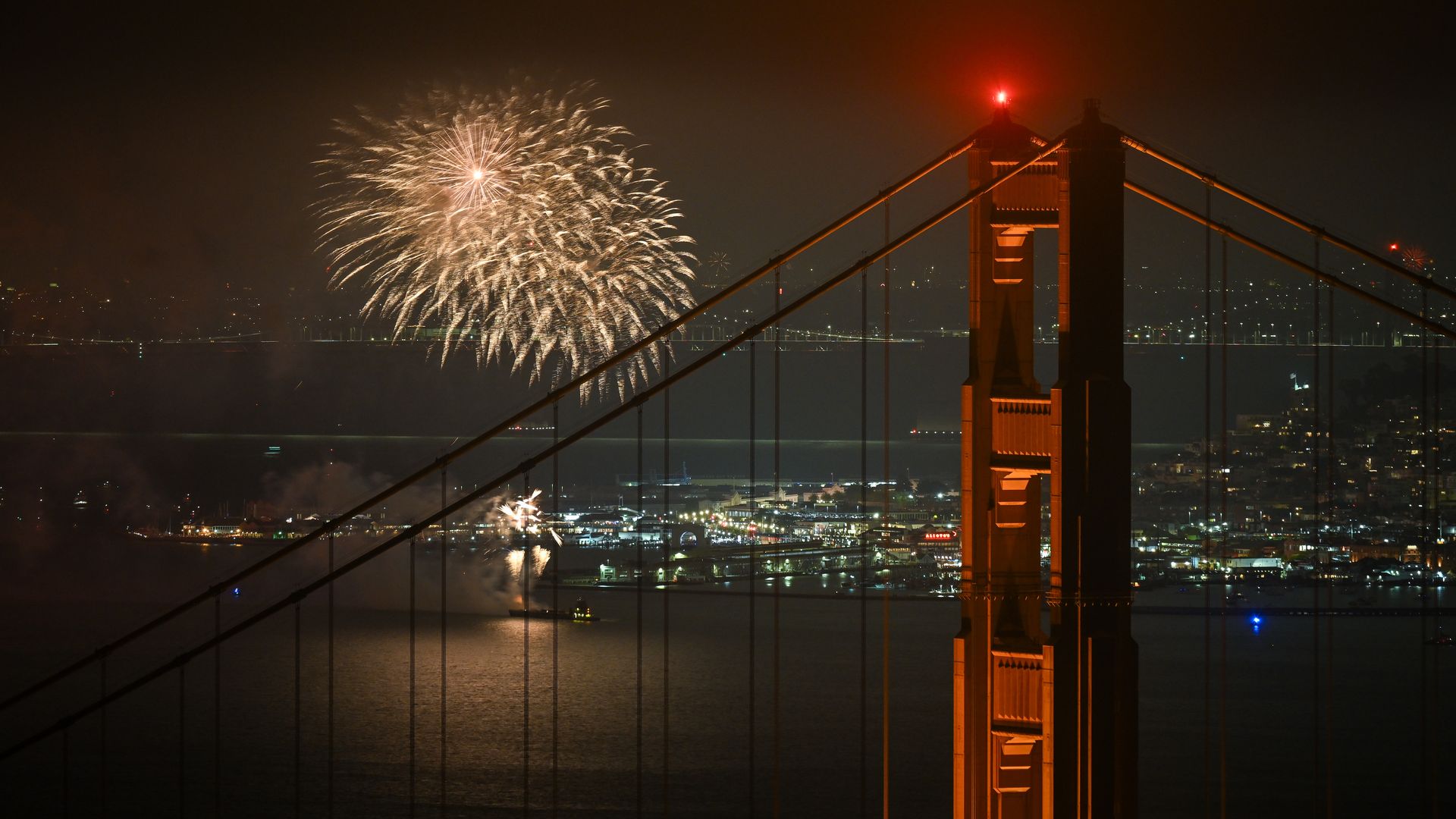
Fireworks illuminate the city during Fourth of July celebrations. Photo: Tayfun Coskun/Anadolu Agency via Getty Images
A new PBS series follows the engineering marvels of iconic American landmarks — and its last episode, focused on the Golden Gate Bridge, premieres Tuesday.
Driving the news: The episode not only delves into the technical feat of building the bridge but also its symbolism and the cultural influence of the city's immigrant workers, many of whom scaled the catwalk every day.
What they're saying: "I've long been struck by the strength of American symbols while saddened by how little we know about them," David M. Rubenstein, host and executive producer of PBS' "Iconic America: Our Symbols and Stories," said in a press release.
- "Our goal with this series was to ... better understand the bigger issues and societal currents they reveal."
Details: The episode on the Golden Gate Bridge features interviews with Transportation Secretary Pete Buttigieg; Golden Gate Bridge, Highway and Transportation District general manager Denis Mulligan; and other infrastructure experts.
- It also includes anecdotes from original Golden Gate workers and devotes some time to one in particular: Fong Bing Wah, or Wallace B. Fong.
Zoom in: Fong was born to Chinese immigrants in San Francisco's Chinatown in 1903 in the era of the Chinese Exclusion Act and deadly anti-Asian violence, according to his granddaughter Katherine Toy.
- Toy, the deputy secretary for access at the California Natural Resources Agency and a former executive at the Golden Gate National Parks Conservancy, told Axios that there was a sense of having to "prove you have a right to belong."
- After attending the UC Berkeley College of Engineering as one of a handful of Asians, Fong began working for PG&E in the 1920s. The company would later build power lines to provide electricity for the machinery used on the bridge.
- Since he was a draftsman who worked on technical drawings and plans, he was tasked with designing the circuitry of the bridge lights.
Yes, but: When the bridge opened in 1937, Fong's name wasn't one of the many carved on plaques honoring those who contributed.
- It harkens back to the photograph of workers at the Transcontinental Railroad's celebratory ceremony, in which the Chinese immigrants who risked their lives for the railroad were notably absent, Toy noted.
The big picture: Immigrants have helped build America by and large, but so many of their stories remain untold.
- "The shadow of exclusion is just so long," Toy said. "Being able to bring these untold stories to life is part of what helps us reclaim our place in America."