San Francisco takes issue with U.S. News hospital rankings

Add Axios as your preferred source to
see more of our stories on Google.
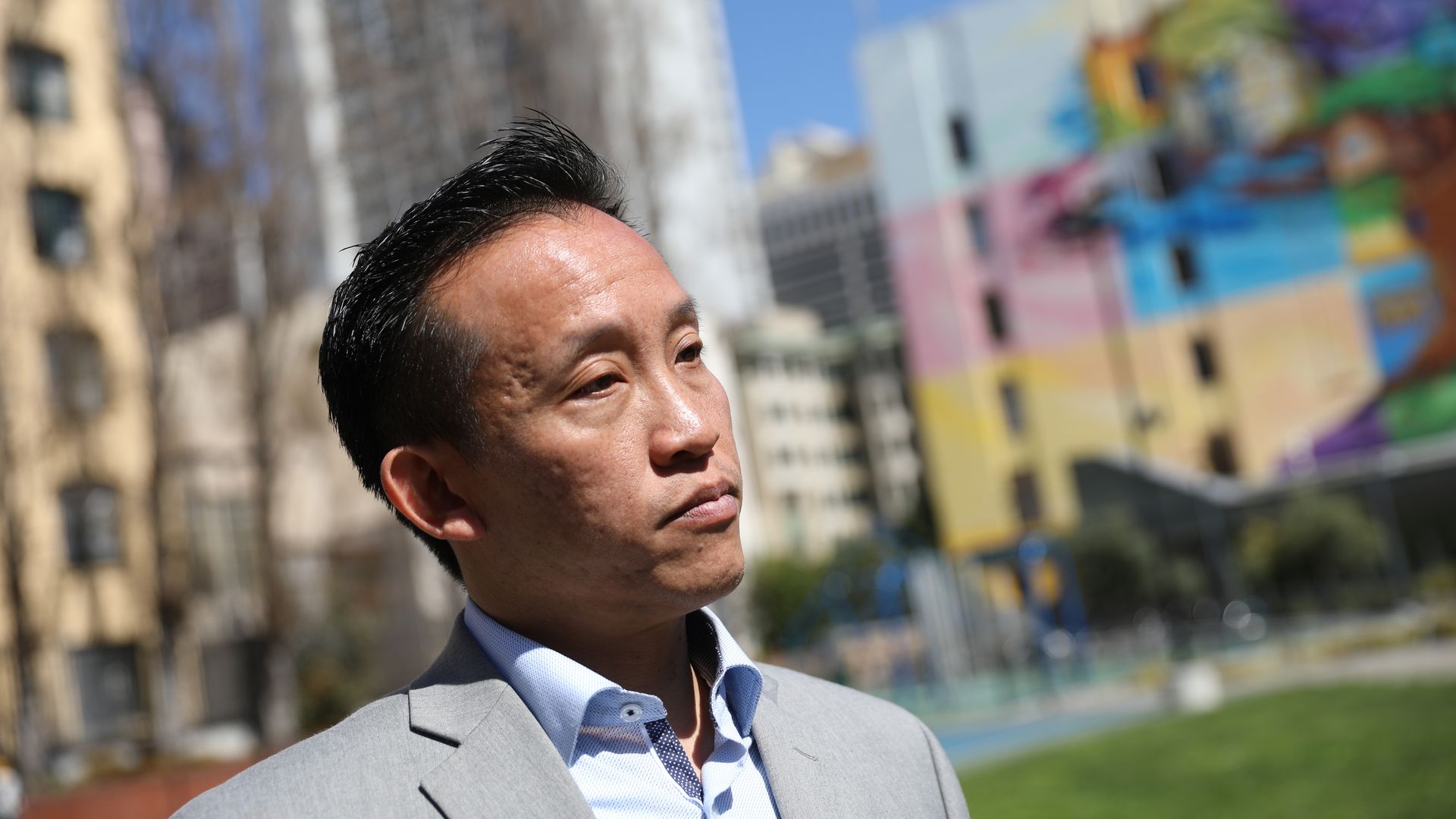
San Francisco City Attorney David Chiu in 2019. Photo: Lea Suzuki/San Francisco Chronicle via Getty Images
San Francisco's city attorney has "significant concerns" with U.S. News & World Report's hospital rankings, asserting U.S. News' advertising statements may violate California law.
What's happening: City Attorney David Chiu sent a letter to U.S. News & World Report on Tuesday demanding evidence of the quality of its hospital rankings, and for specific information about its methodology by July 5.
- He also wants U.S. News to disclose the financial relationships the company has with some ranked hospitals.
Why it matters: Chiu said "consumers may be making health care decisions based on questionable, imprecise ranking methodologies and potentially flawed data," he told Axios.
Details: Chiu, in his letter, asserts U.S. News' advertising statements may violate California law pertaining to false and misleading claims.
- Specifically, Chiu is seeking evidence for a handful of marketing claims, including that U.S. News is "the global authority in hospital rankings" and that its rankings are based on "world-class data and technology."
- Chiu alleges U.S. News appears to violate certain Federal Trade Commission regulations by not disclosing the payments it receives from some of the hospitals it ranks.
Chiu also alleges in the letter that the rankings penalize and disincentivize providing care for sick, low-income patients.
- The rankings, for example, award more points to children's hospitals for treating cystic fibrosis than sickle cell disease, "when the former disease disproportionately affects White children and the latter disproportionately affects African American children," Chiu wrote.
The other side: U.S. News spokesperson Kate O'Donnell, in a written statement to Axios, said "we categorically disagree with [the letter's] assumptions and conclusions."
- She added that U.S. News has "consistently stated that our rankings should be one factor in that decision-making process, and any medical decisions should be made in consultation with a physician."
The big picture: U.S. News' rankings have been under scrutiny as of late, with a number of higher education institutions boycotting the decades-old rankings lists, all citing concerns about its methodology.
- In the past year, Yale and Harvard law schools, Harvard Medical School and Columbia University have all decided to no longer participate in U.S. News' rankings.
- In May, Pennsylvania-based St. Luke's University Health Network called U.S. News' hospital rankings methodology "misguided" and announced it would no longer participate in its annual ranking.
What they're saying: "The data in the hospital context appears as questionable as other categories, but the stakes are arguably much higher," Chiu said.
Of note: U.S. News bases its rankings on a variety of sources, but asks for direct input from hospitals in an annual survey for its best hospitals list, and asks hospitals to self-report data for its best hospitals for maternity list, according to its FAQ page.
What to watch: If U.S. News responds to Chiu's office and satisfies his concerns, and whether other hospitals refrain from participating in the ranking.
Editor's note: This story has been updated with a new response from U.S. News & World Report to the city attorney's letter.