BART policing the focus of new racial equity study

Add Axios as your preferred source to
see more of our stories on Google.
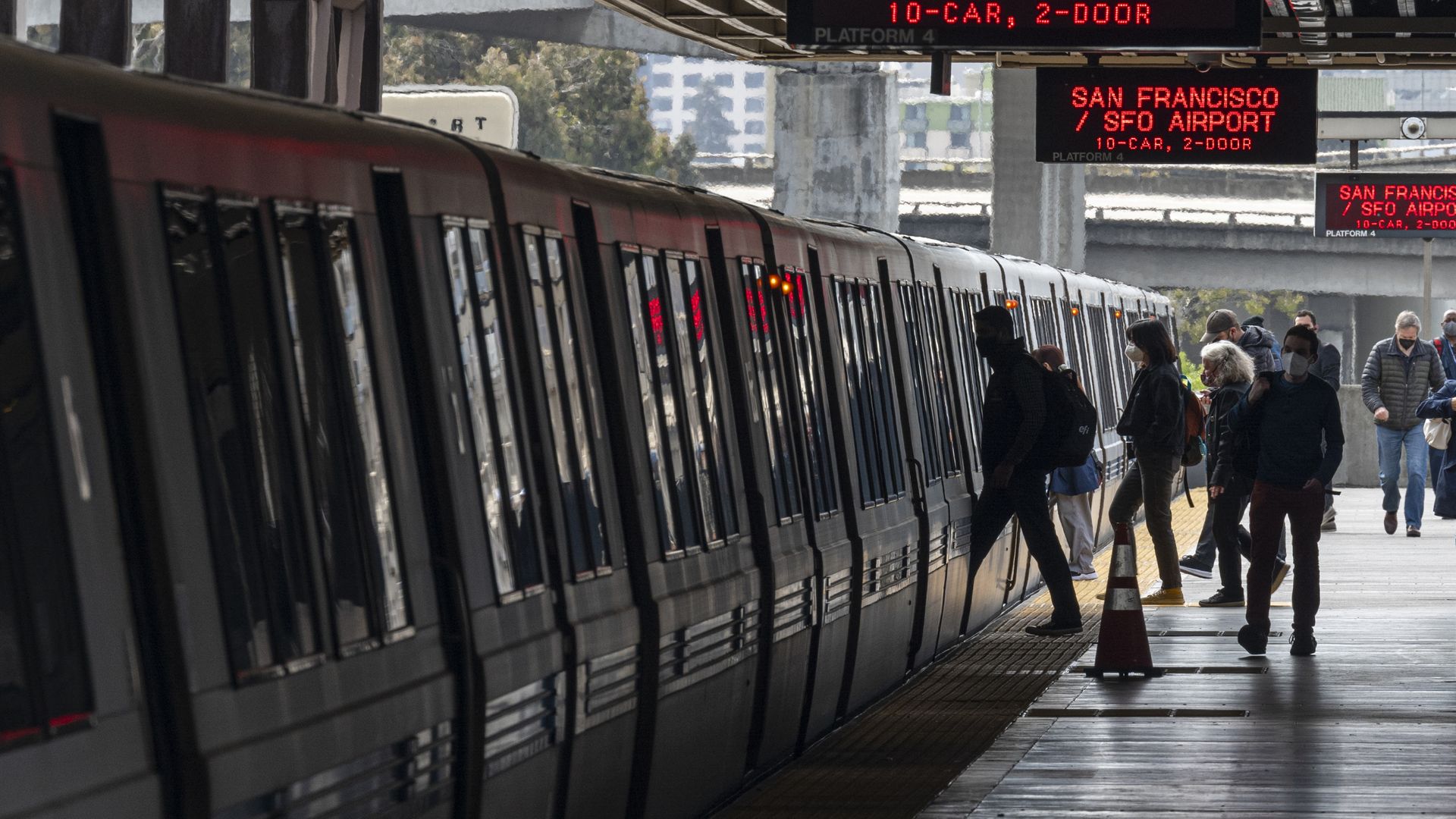
Commuters board a Bay Area Rapid Transit (BART) train at the MacArther station in Oakland on March 4, 2022. Photo: David Paul Morris/Bloomberg via Getty Images
BART will be subject to a new fare evasion enforcement study with racial equity as a focus.
Why it matters: Previous research found that Black riders were stopped by BART Police Department (BPD) officials eight times as often as white riders. They were also 15 times more likely to experience BPD use of force compared to white riders.
Driving the news: The Center for Policing Equity (CPE) and the BART Office of the Independent Police Auditor will collaborate on the new study, which is expected to last 18 months.
- It will look at evasion enforcement data, review BART's legal policies and practices, and include interviews with community members and an assessment of trends among transit agencies nationwide.
- Russell Bloom, BART's independent police auditor, said in a statement that the study is part of the agency's effort to "constantly evaluate" BPD practices to "ensure reform efforts are effective and sustainable."
- "Using data to examine the root causes of disparate outcomes is a critically important way to understand ... where we may need to refocus our attention and resources," Bloom added.
How it works: BART currently employs fare inspectors separate from police officers. Those who are caught attempting to evade fares typically face a civil citation fine of $75 for adults and $55 for minors.
- BPD officers can also check fares in specific circumstances, such as when detaining someone for another offense.
- Hans Menos, vice president of CPE's Triage Response Team, told Axios that CPE’s work with BART will focus on harm reduction instead of punitive measures, especially in the context of larger issues like poverty, mental illness, homelessness or addiction.
- "Our orientation is toward a system of care," he added.
The big picture: BART has struggled to tackle revenue loss from fare evasion for years, which tallied an estimated $25 million per year prior to the pandemic.
- But Chris Van Eyken, director of research and policy at the foundation TransitCenter, told Axios that efforts to combat fare evasion "rarely yield the amount of funding that agencies think they're going to."
- Van Eyken also warned that when fare revenue goes down, agencies can become so focused on fare evasion that it then affects policing and risks perpetrating discriminatory behavior.