Slow Streets' fate to be decided Tuesday

Add Axios as your preferred source to
see more of our stories on Google.
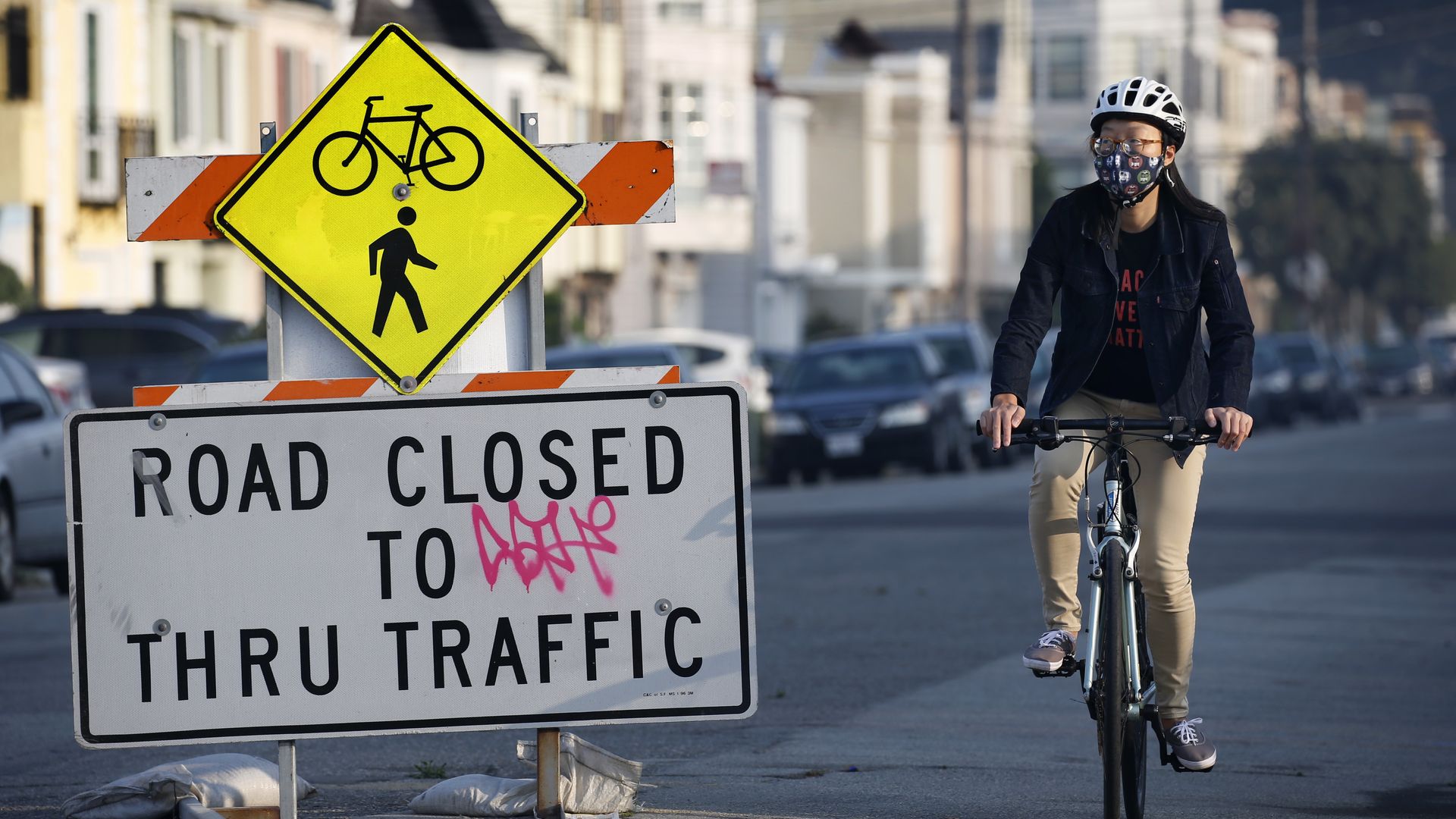
Bicyclist on Judah Street. Photo: Paul Chinn/The San Francisco Chronicle via Getty Images
While the future of the city's Slow Streets program will likely be decided next week, major questions loom regarding its scale.
Driving the news: The SFMTA published a list of recommended roadways last week ahead of its Tuesday's board meeting, calling for 15 Slow Streets corridors to be made permanent — down from roughly 30 live today.
- "Slow Streets were a citywide experiment, and not all of these experiments were successful," the agency said.
Why it matters: Proponents say the "low stress" roadways are a vital part of the city for individuals and families to safely move on foot and by bike.
- But, if the corridors are disconnected, they could be less effective for travel across town.
What they're saying: "Our street grid as a whole has so many different routes … and right now almost all of them prioritize cars," Luke Spray, associate director at the San Francisco Parks Alliance, told Axios. "What this program does is it just takes a few select routes and says, we're going to prioritize people here."
Spray is part of a coalition, including WalkSF, SF Bike Coalition and Senior & Disability Action, who not only want the SFMTA to keep its current Slow Streets intact, but double its network by 2024.
- The group has regularly met with the SFMTA to discuss its plan dubbed "The People’s Slow Streets," Spray said.
- "We're pushing them to be more ambitious," he added.
The intrigue: Mayor London Breed wrote this summer that the city should "evolve" its approach to Slow Streets, calling for a "a broader, connected network" similar to protected bike lanes in SoMa.
- On Wednesday, the mayor's office echoed Breed's earlier statements, telling Axios: "Our city needs a connected street network that feels safe, convenient, and enjoyable for people walking and biking."
- "Establishing this ongoing Slow Streets Program along with a set of future Slow Streets is exactly what we need to help us get there," they added.
Proponents like Spray also point to the November election, when voters decided to keep JFK Drive in Golden Gate Park closed to car traffic, saying it "showed very clearly that San Franciscans want more of these spaces."
What we're watching: Lake Street.
- Perhaps the most contested Slow Street among neighbors, Lake was one of four corridors initially selected to be part of the program permanently.
- But in its announcement last week, the SFMTA didn’t take a stance, leaving its future fully up to the board’s Tuesday vote.