San Antonio Botanical Garden is reforesting the Guadalupe after flood

Add Axios as your preferred source to
see more of our stories on Google.
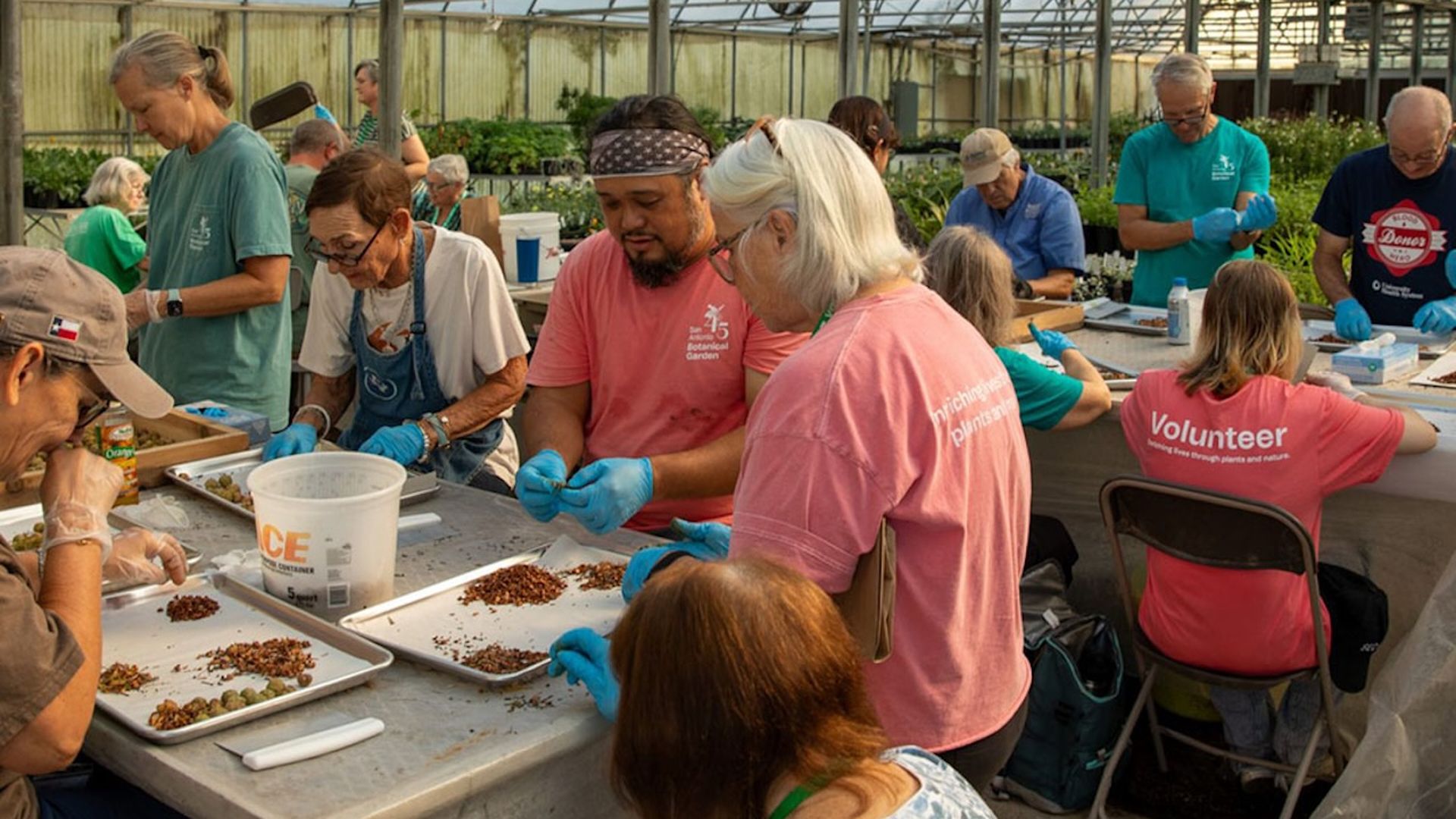
Volunteers also help collect, clean and weigh seeds. Photo: Courtesy of San Antonio Botanical Garden
San Antonio Botanical Garden is propagating tens of thousands of trees to restore the landscape destroyed during the 2025 Guadalupe River flooding tragedy.
Why it matters: Rebuilding a diverse strip of native trees and plants along the Guadalupe doesn't just make the river look like it used to — it will slow floodwater, trap sediment and rebuild habitat, strengthening the river for generations.
Catch up quick: Michael Eason, vice president of conservation at the garden, tells Axios that Texas Recovery for Ecological and Environmental Stability (TREES) started a couple of weeks after the flood and has since grown into a coalition effort with groups like Hill Country Alliance and the Kerr County River Foundation, supported by volunteers and private philanthropy.
What they did: The team collected more than 850,000 seeds from about a dozen sites across the upper Guadalupe watershed. They've focused on bald cypress and sycamore — the trees hit hardest by the flood — along with black willow, chinquapin oak, box elder and more.
- Eason says collecting seeds instead of buying nursery stock is key because they're already adapted to local conditions.
- He dug through a century of herbarium records so the team could replant only species that historically grew along that stretch of the Guadalupe.
- "We're not collecting seeds; we're collecting genetics," he says.
The latest: About 9,000 trees and plants are being propagated at the San Antonio Botanical Garden, with the rest growing at about a dozen Central Texas nurseries.
- The goal is to plant them at roughly 30 sites along the Guadalupe in October.
What's next: Eason says seed collection and planting will continue as funding allows, with the long-term goal of growing from 50,000 to 100,000 trees.
- Last week's flooding hasn't changed that timeline, he says. Because the project was designed as a multiyear restoration effort, replanting is expected wherever future floods or drought require it.
- "It's really a generation or two from now that's going to see the benefits of what we're doing today," Eason says.