Texas and San Antonio leaders honor Pope Francis


Add Axios as your preferred source to
see more of our stories on Google.
San Antonio is joining global remembrances of Pope Francis, the first Latin American pontiff, following his death Monday.
The big picture: Francis was treated for double pneumonia before being released from the hospital in March.
The latest: The Archdiocese of San Antonio hosted a memorial mass Monday at San Fernando Cathedral.
What they're saying: "We were inspired by the Holy Father's advocacy for migrants globally and of his commitment to provide services and minister to all of God's children," Archbishop Gustavo García-Siller said in a statement.
- "He emphasized that in welcoming the stranger we are welcoming Christ. He worked for the conversion of hearts and minds, to create a culture and practice of hospitality in receiving migrants."
- State leaders including Gov. Greg Abbott, U.S. Sen. Ted Cruz and U.S. Rep. Joaquin Castro celebrated the pope and mourned his passing.
Between the lines: Joshua Thurow, professor of philosophy at the University of Texas at San Antonio, tells Axios that Francis' papacy is "deeply meaningful" for Hispanic Catholics.
- "He has consistently elevated care for the poor, marginalized and oppressed," Thurow says. "As pope he spoke forcefully about immigration — urging that immigrants are created in the image of God and deserve respect and should be greeted with a 'spirit of welcome.'"
- Thurow notes Francis' canonization of Oscar Romero and the pope's devotion to Our Lady of Guadalupe, whom he honored early and often in his papacy.
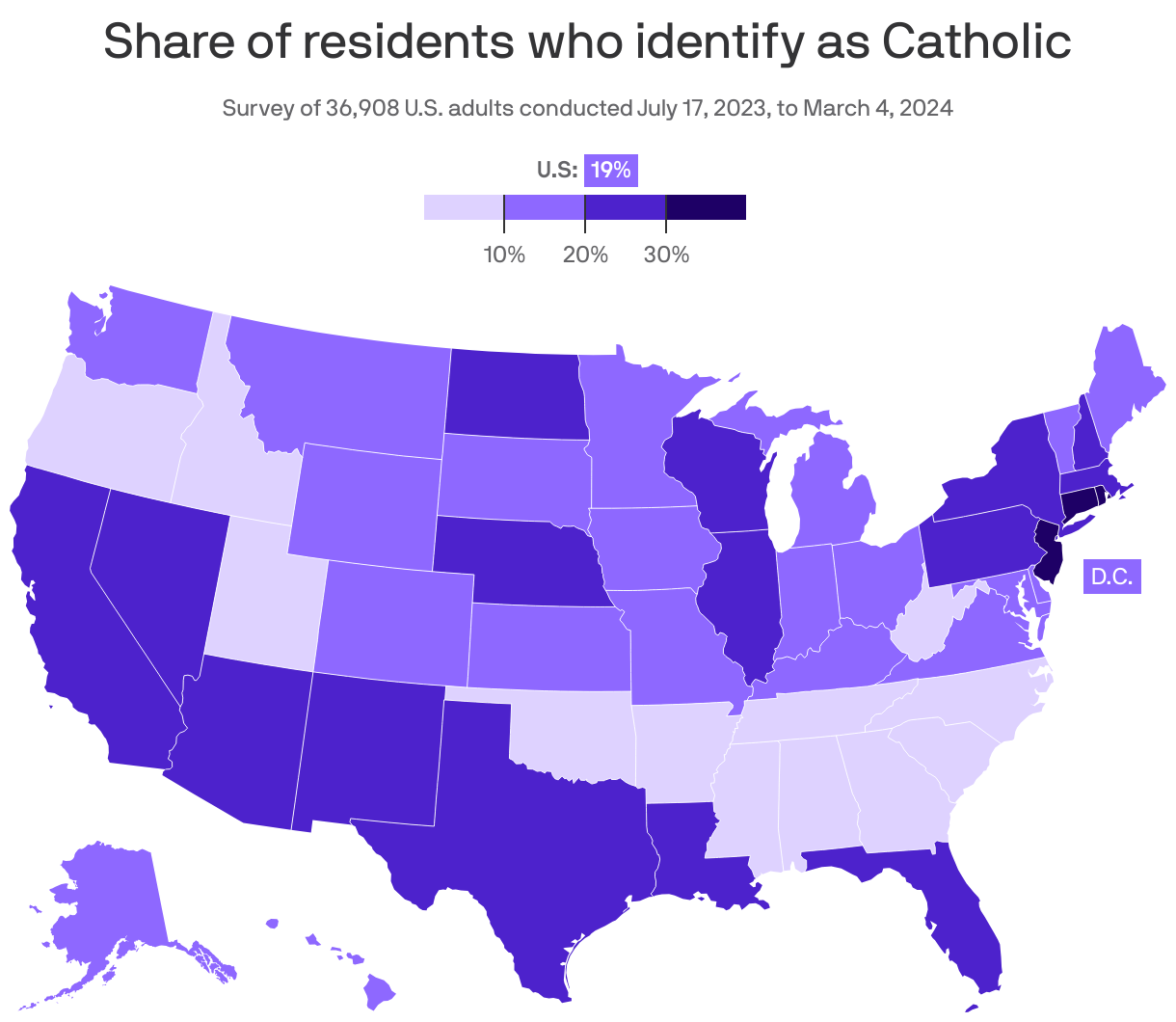
Zoom in: About 29% of San Antonio area residents identify as Catholic, per a survey conducted in 2023-24 by the Pew Research Center.
The next pope will be the church's 267th.
How it works: The selection will follow a series of Vatican meetings and a papal election, called a conclave.
- In about 15 to 20 days, Cardinal electors will gather in St. Peter's Basilica for mass.
- Then, they will go to the Sistine Chapel to begin rounds of super secret voting on the next pope.
When a winner emerges — and accepts the post — the ballots are burned with chemicals that produce a white smoke to signal a pope has been chosen.