San Antonio's deep-rooted lawn shrines

Add Axios as your preferred source to
see more of our stories on Google.
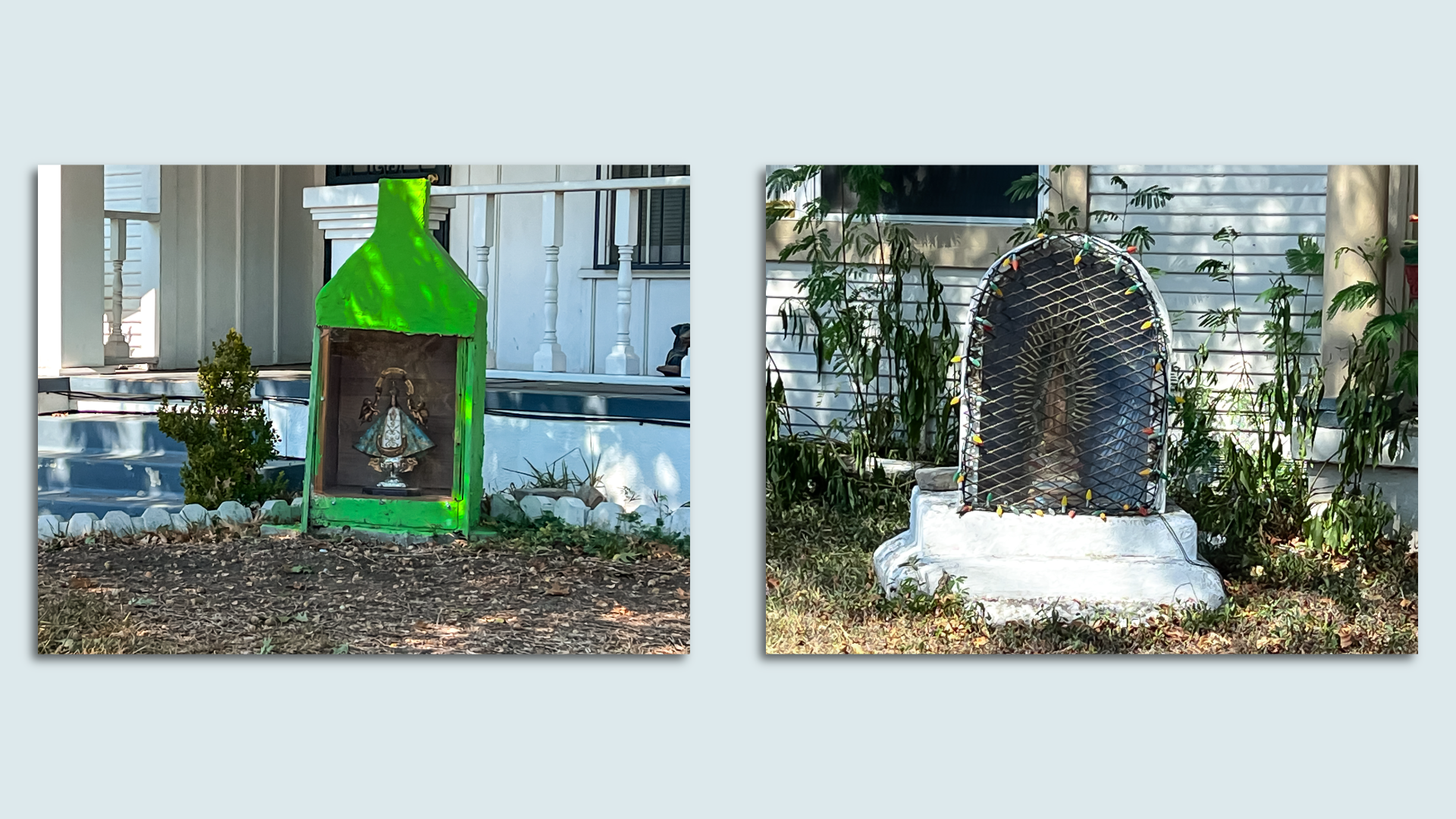
Two shrines outside of homes on the South Side. Photos: Madalyn Mendoza/Axios
San Antonio's Latinidad comes alive in many forms — in the rhythms of a cumbia circle, the warmth of a tamalada and the quiet presence of front yard shrines dedicated to Catholic figures — an often overlooked yet powerful expression of cultural identity.
Why it matters: These sacred spaces not only affirm cultural identity but also serve as expressions of religious devotion, community and life events.
- Yet, their stories may be fading as San Antonio's neighborhoods change.
Catch up quick: The shrines go by many names, sometimes called "capillas," and range in size and decoration. They're often dedicated to La Virgen de Guadalupe.
- Some families adorn their statues with handmade clothing or strands of their own hair.
- While shrines aren't exclusive to Latino communities, they became especially popular in cities with large Mexican American populations, like San Antonio, during the 1940s, Kathy Vargas, a photographer and art professor at the University of the Incarnate Word, tells Axios.
Flashback: Vargas photographed more than 200 shrines on the West and South sides during the 1980s. She also met with families who built shrines.
- "The shrines were emblematic of three things: Latinos live there, to proclaim belief, and that a miracle happened there," she says. "It became a communal thing — people who didn't have shrines would stop at someone else's to pray. It was a very loving thing."
- Miracles included paying off a mortgage, recovering from illness or honoring a son's return from Vietnam.
Between the lines: As San Antonio's Latino families increasingly embrace mainstream American culture, the tradition of building these shrines is waning.
- Vargas notes that people might not be as religious as they were before.
- Today, people are more likely to view milestones such as buying a home or earning a degree as personal responsibilities, rather than miracles worthy of shrine-building, she says.
Reality check: As neighborhoods change, with generational homeowners selling and housing stock being flipped, many of these shrines — and the stories they hold — risk being lost.
Worthy of your time: San Antonio's Office of Historic Preservation encourages residents to add stories and images of their yard shrines to the Scout SA map, which aims to preserve the authenticity of our neighborhoods.
- The office highlights how the shrines have inspired Chicana artists like Amalia Mesa-Bains, who is known for her altars and ofrendas.
- Some of her work is on view now at the San Antonio Museum of Art.
💭 Madalyn's thought bubble: Though I've never prayed at a yard shrine, they've been a constant reminder of my roots — from Chihuahua Street on the West Side to Crystal Street on the South Side. For generations before me, they held the power of prayer, but for me, they hold the power of place.
- As Vargas put it, "When Latino people gather together, they're going to feel more free to be Latino."