San Antonio classrooms see increased cooling demand


Add Axios as your preferred source to
see more of our stories on Google.
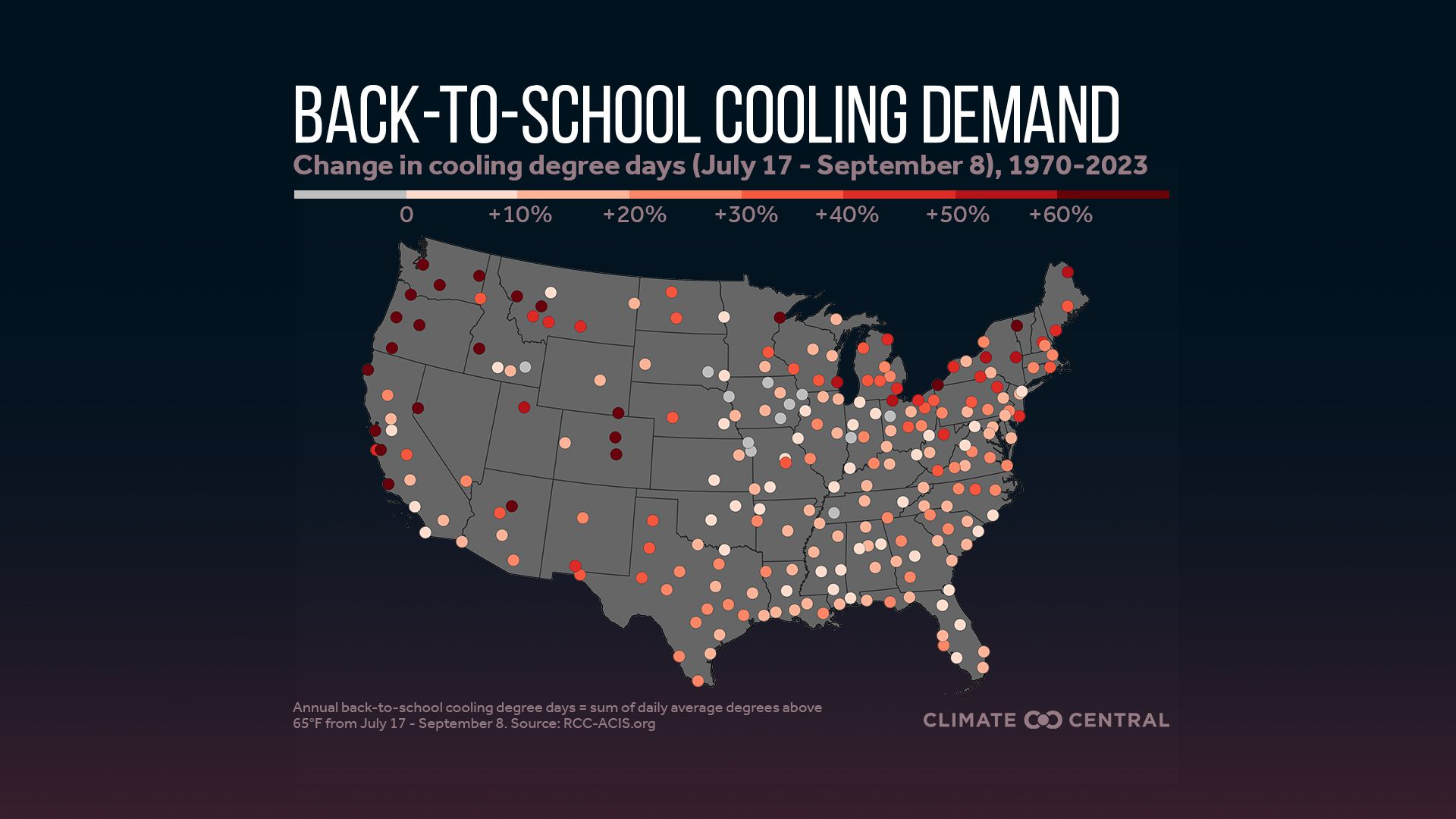
Graphic: Climate Central. Note: Cooling degree days reflect the sum total, in degrees, that daily average temperatures in a time period need to be cooled to reach 65 degrees.
San Antonio classrooms need more air conditioning during the back-to-school season now compared to past decades, according to a new analysis.
Why it matters: Maintaining a comfortable and healthy environment is key to kids' educational success. But that's growing harder amid a warming climate and deferred maintenance at aging schools.
The latest: San Antonio Independent School District warned families this week that it could have to relocate students to other campuses in case of air conditioning issues as the school year began in a heat wave, according to a letter shared with Axios.
- No one had to relocate to a different campus in the end, district spokesperson Laura Short tells Axios.
- Custodians began checking classroom temperatures at 5am on the first day of school on Tuesday, per the letter. They had portable AC units ready to go in case of problems.
By the numbers: There was a 22% increase in back-to-school cooling demand in San Antonio between 1970 and 2023, according to a new Climate Central report.
How it works: The nonprofit climate research group's analysis is based on a metric called "cooling degree days" (CDD), which measures the difference between a location's daily average outdoor temperature and 65°F — "considered the ideal indoor temperature," per the report.
- "For example, a day with an average temperature of 90°F has 25 CDD (90°- 65°)."
What they did: To get annual demand, CDD values were added together for every day from July 17 to Sept. 8 to capture the general back-to-school period.
The big picture: Climate Central found that cooling demand between late July and early September increased in 95% of nearly 250 U.S. locations analyzed between 1970 and 2023.
Between the lines: Back-to-school cooling demand was around 34% higher over the last decade largely due to human-caused climate change, Climate Central estimates.
- That's based on the group's Climate Shift Index, which seeks to measure how climate change has affected daily temperatures.
Flashback: Cooling issues aren't the only concern. SAISD canceled classes in January when it experienced districtwide heating failures that kept classrooms cold during freezing weather.
What they're saying: Like other buildings, schools must adapt to a changing climate — and that can mean costly upgrades.
- "Buildings can be retrofitted with better windows and insulation to reduce energy waste, and existing fossil-fuel burning systems can be replaced with safer, more energy-efficient options," per Climate Central.
What's next: SAISD superintendent Jaime Aquino told families in the letter that bringing the district's heating and cooling systems up to standard could cost $575 million.
- The district is planning a bond to pay for it, though it's unclear when.