San Antonio turns to faith leaders amid mental health access challenges


Add Axios as your preferred source to
see more of our stories on Google.
As Texas adults struggle to access mental health care, people in San Antonio are turning to faith leaders, new data shows.
Why it matters: Delayed or forgone treatment is often linked to insurance status and medical debt, fueling a treatment gap that cuts across demographic groups.
The latest: Texas is ranked last in the country for mental health care access for adults, per a new Mental Health America report. The Lone Star State also ranks in the bottom five for availability of mental health workers.
- In San Antonio, 77% of area churchgoers are very likely to turn to their faith leaders when experiencing financial, family, work-related or personal concerns, according to a new survey from The Congregational Collective.
What they're saying: "With the increase in need for mental health care, combined with the growing shortage of mental health care providers, it's crucial that we innovate and broaden the definition of health care to reach more people," Jaime Wesolowski, president of Methodist Healthcare Ministries, which helped found The Collective, said in a statement.
- "We know that mental health care challenges inequitably impact those who are already the least served."
Context: The H. E. Butt Foundation launched The Congregational Collective, a nonprofit, last year. It aims to provide churches with the resources and skills necessary to support the mental health needs of their congregations.
- A 12-to-18-month pilot program, ongoing now, will inform what type of training churches might need.
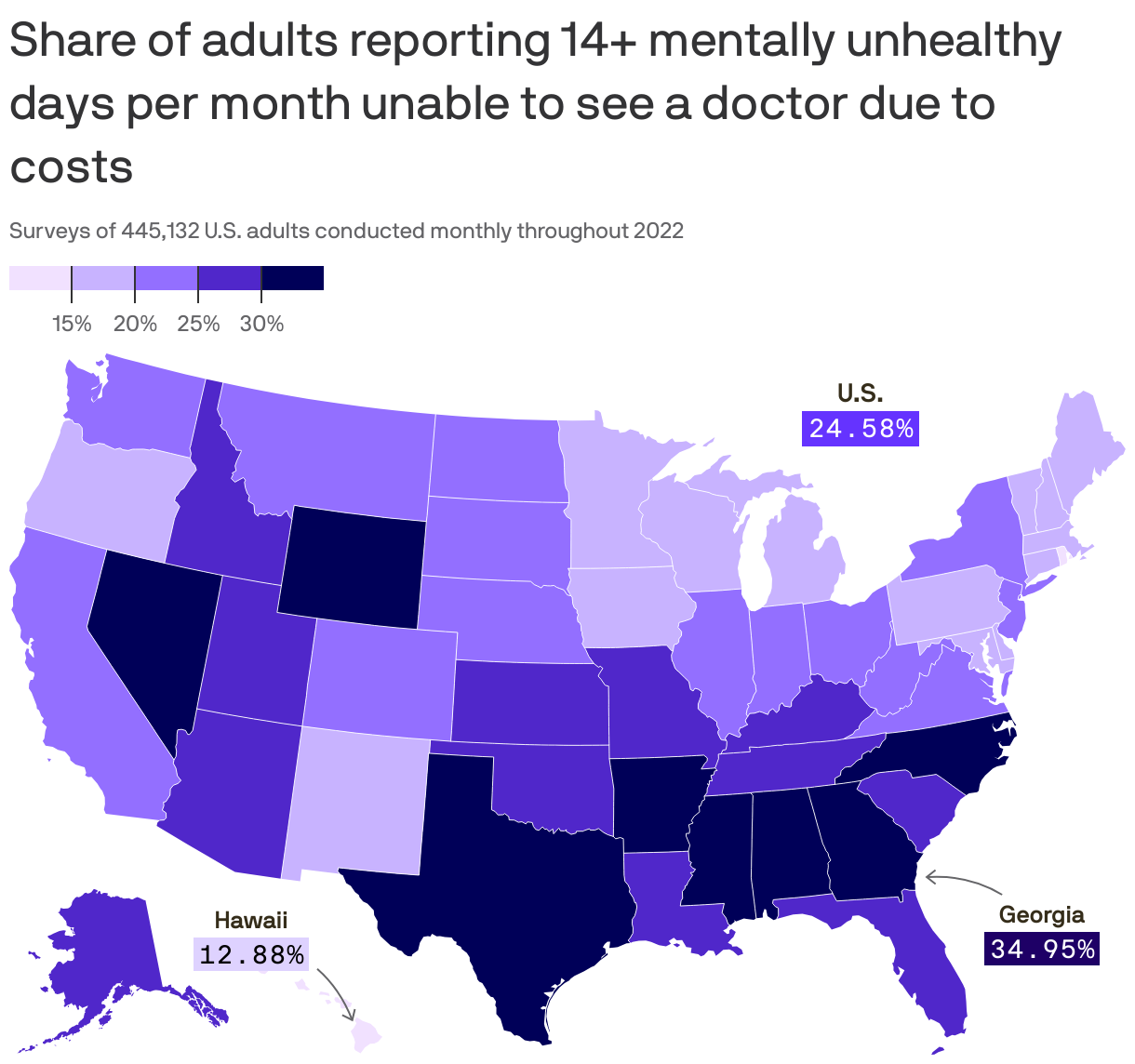
The big picture: Almost 1 in 4 American adults with frequent mental distress reported not seeing a doctor because of the cost, Mental Health America found in a survey based on 2022 federal data.
Zoom in: In San Antonio, African American (78%) and Latino (64%) respondents were twice as likely to first turn to their minister, priest or other faith leader, The Congregational Collective found.
How it works: Survey respondents were members of eight churches across the San Antonio area, representing a variety of sizes and demographics, that are also taking part in The Collective's pilot program that began this year.
- 1,653 people responded to the survey over three weeks in February and March.
By the numbers: 88% of San Antonio-area respondents said their church should address mental health.
- 74% said they or someone they know has experienced emotional or mental health concerns over the last year.
Reality check: Just 36% of local respondents said their church promotes awareness of mental health.
Between the lines: Private insurers aren't required to cover mental health services. In Texas, 16.5% of people with private medical insurance don't have mental health coverage.
The bottom line: "The sooner people can get help from the people they turn to and trust, the better the outcomes will be," David Rogers, president of the H. E. Butt Foundation, said in a statement.