New data shows higher cancer death rates for Texas women


Add Axios as your preferred source to
see more of our stories on Google.
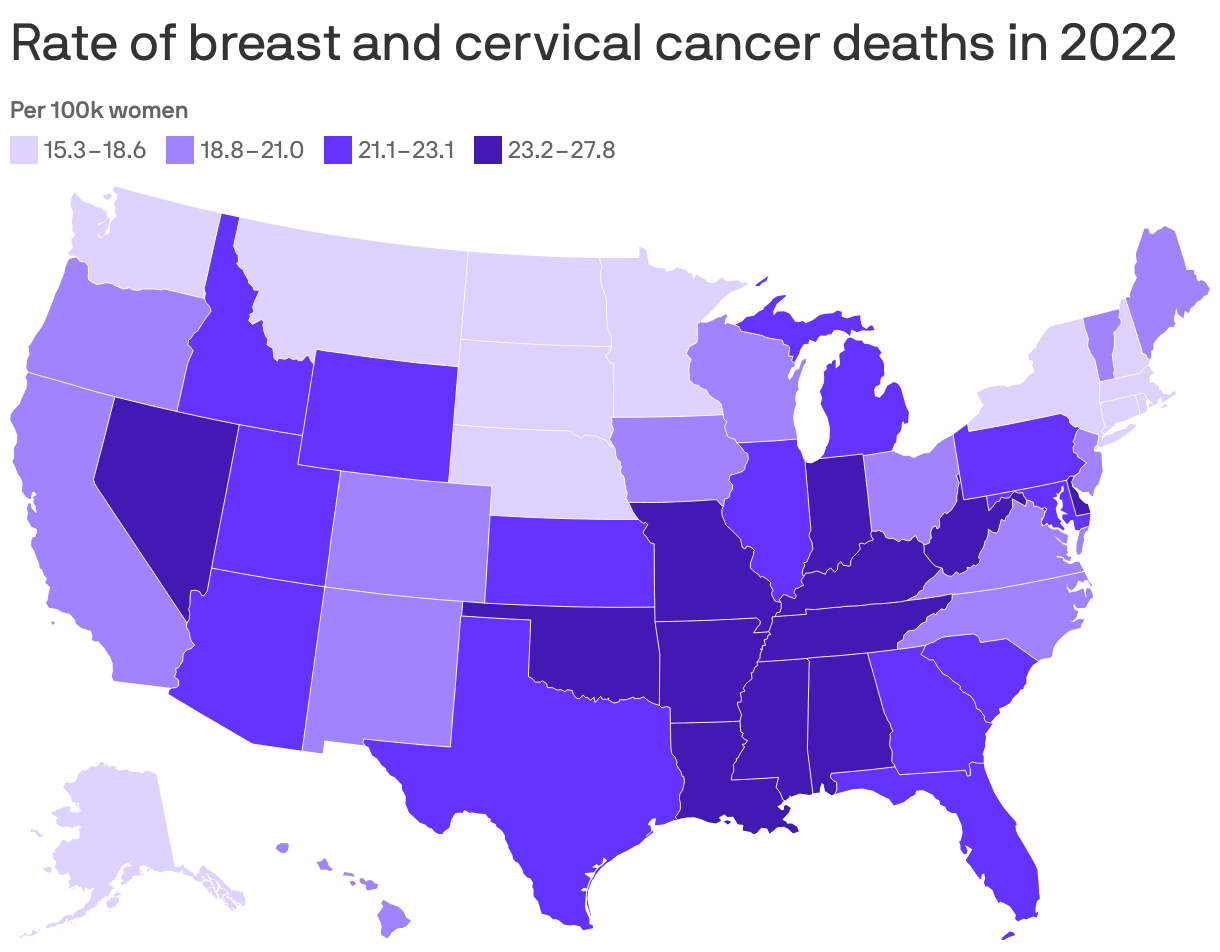
Women in Texas and a cluster of southern states are more likely to die from breast and cervical cancer due to disparities in screenings and other preventive care, according to a new analysis of 2022 federal data by the Commonwealth Fund.
Why it matters: The findings underscore that where a woman lives is becoming a key determinant in how dangerous it is to give birth or if she'll die from cancers considered treatable with proper screening and routine care.
The big picture: States with higher breast and cervical cancer death rates tend to have lower cancer screening rates, the analysis noted.
- Many also have lagging vaccinations for the human papillomavirus, a major cause of cervical cancer, separate United Health Foundation data shows.
Threat level: Nationwide death rates for breast cancer and cervical cancer — a combined 20.8 per 100,000 female residents — are decreasing, per the National Cancer Institute, as treatments advance and as free or low-cost screenings increase.
- Texas saw 21.6 deaths from cervical and breast cancer combined per 100,000 female residents in 2022, the Commonwealth Fund found.
Between the lines: It's a trend that could intensify as OB-GYNs and applicants to medical residencies in other specialties increasingly move away from states with restrictions on abortion.
- "Rather than policies that might help narrow the divides [in women's health], we're seeing policies that can actually widen and deepen those divides," report author Sara Collins told Axios.
Zoom out: Texas ranked 50 of 51 states (including Washington, D.C.) for women's health overall. It's the worst in coverage, care and affordability, per the Commonwealth report.
- Mississippi was the worst.
By the numbers: Texas has not expanded Medicaid coverage to cover people living below 138% of the poverty line like 41 other states, a resistance that hits Black and Hispanic communities the hardest.
- 22% of women ages 15-44 lack health insurance in Texas, compared to 3% in Massachusetts, which ranked best for women's health.
- 27% of women in Texas ages 18-44 reported needing to see a doctor in the last 12 months but not being able to due to cost, compared to 12% in Massachusetts.
What we're watching: How the San Antonio City Council spends a $500,000 Reproductive Justice Fund, which was created to address health gaps.
- Applications for the fund closed Friday.