San Antonio's fastest-growing demographic groups


Add Axios as your preferred source to
see more of our stories on Google.
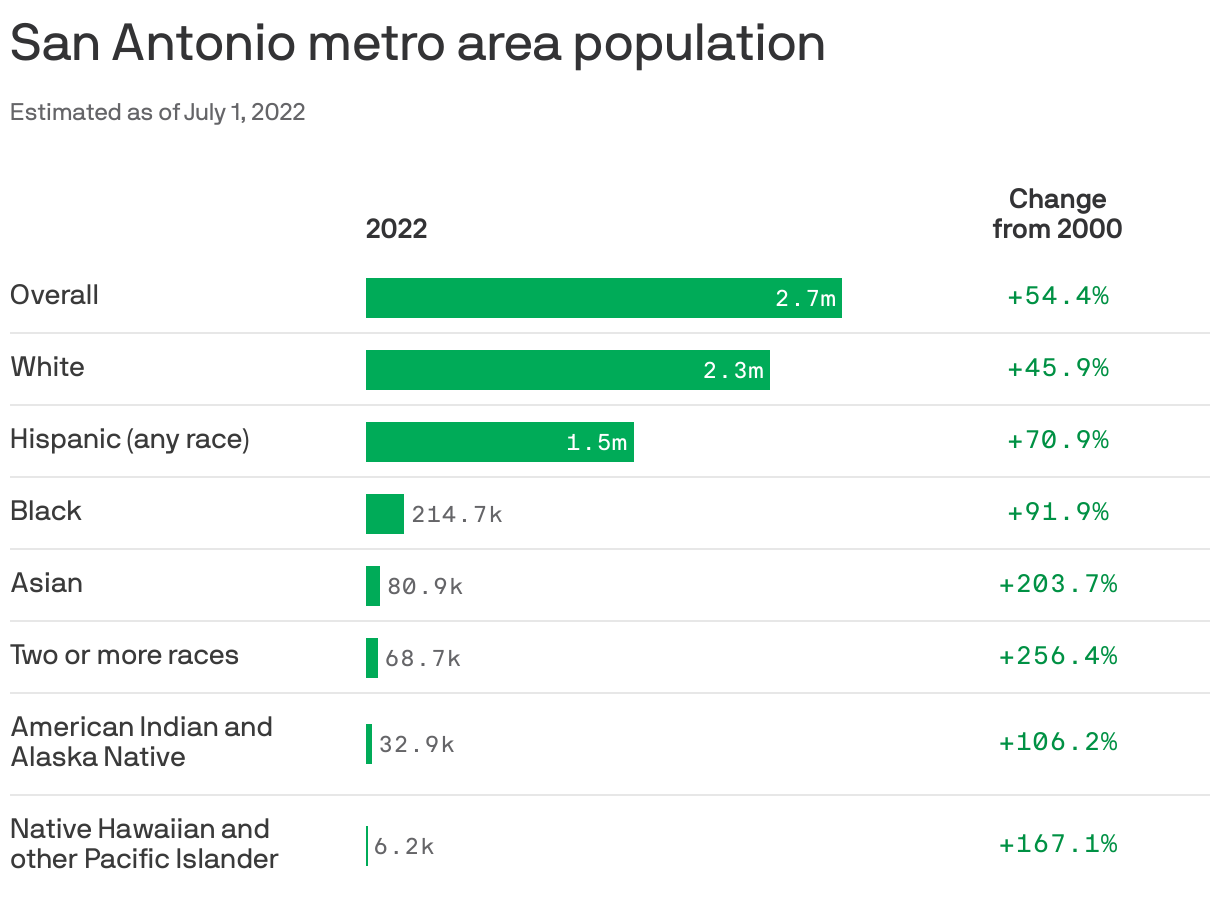
The San Antonio metro area's residents who identify as two or more races, Asian and Native Hawaiian and other Pacific Islander populations saw the biggest percentage increases between 2000 and 2022, per a new analysis from Axios' Kavya Beheraj and Alex Fitzpatrick.
Why it matters: Such demographic data is a vital snapshot of how San Antonio's racial and ethnic makeup is changing over time, helping to inform policies and programs across the city.
By the numbers: The number of residents who identify as two or more races grew by +256.4%, to 68,7000. The Asian population grew about 203%, to 80,900.
- And the Native Hawaiian population grew about 167.1%, to 6,200.
The big picture: Nationwide, the country's Pacific Islander, Asian and Hispanic populations saw the biggest percentage increases between 2000 and 2022.
- The number of Native Hawaiian/Pacific Islanders grew about 120%, to nearly 879,000, while the Asian population grew about 105%, to 21 million.
- The Hispanic population grew about 80%, to nearly 64 million.
- The Black population grew 31%, to 45.4 million.
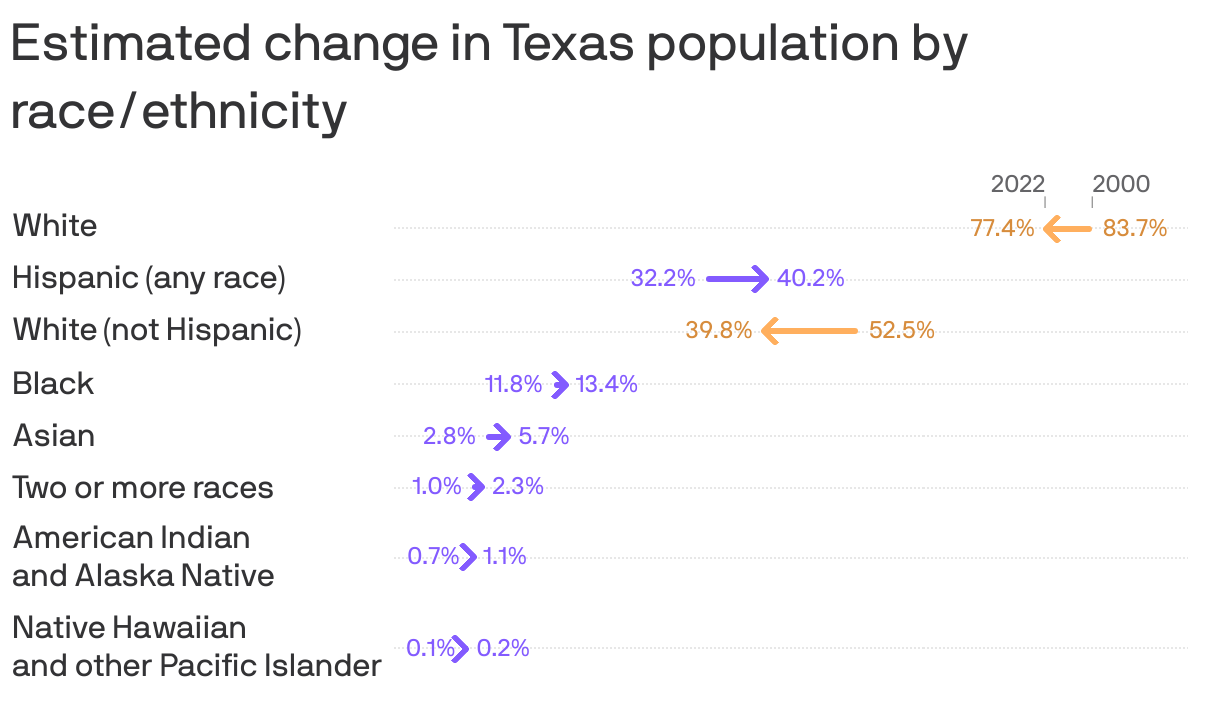
Zoom out: At 40.2%, Hispanic residents in Texas now officially make up the largest share of the state's population, edging out non-Hispanic white Texans, who made up 39.8%, the Texas Tribune reports.