Springtime means more snake sightings in Texas

Add Axios as your preferred source to
see more of our stories on Google.
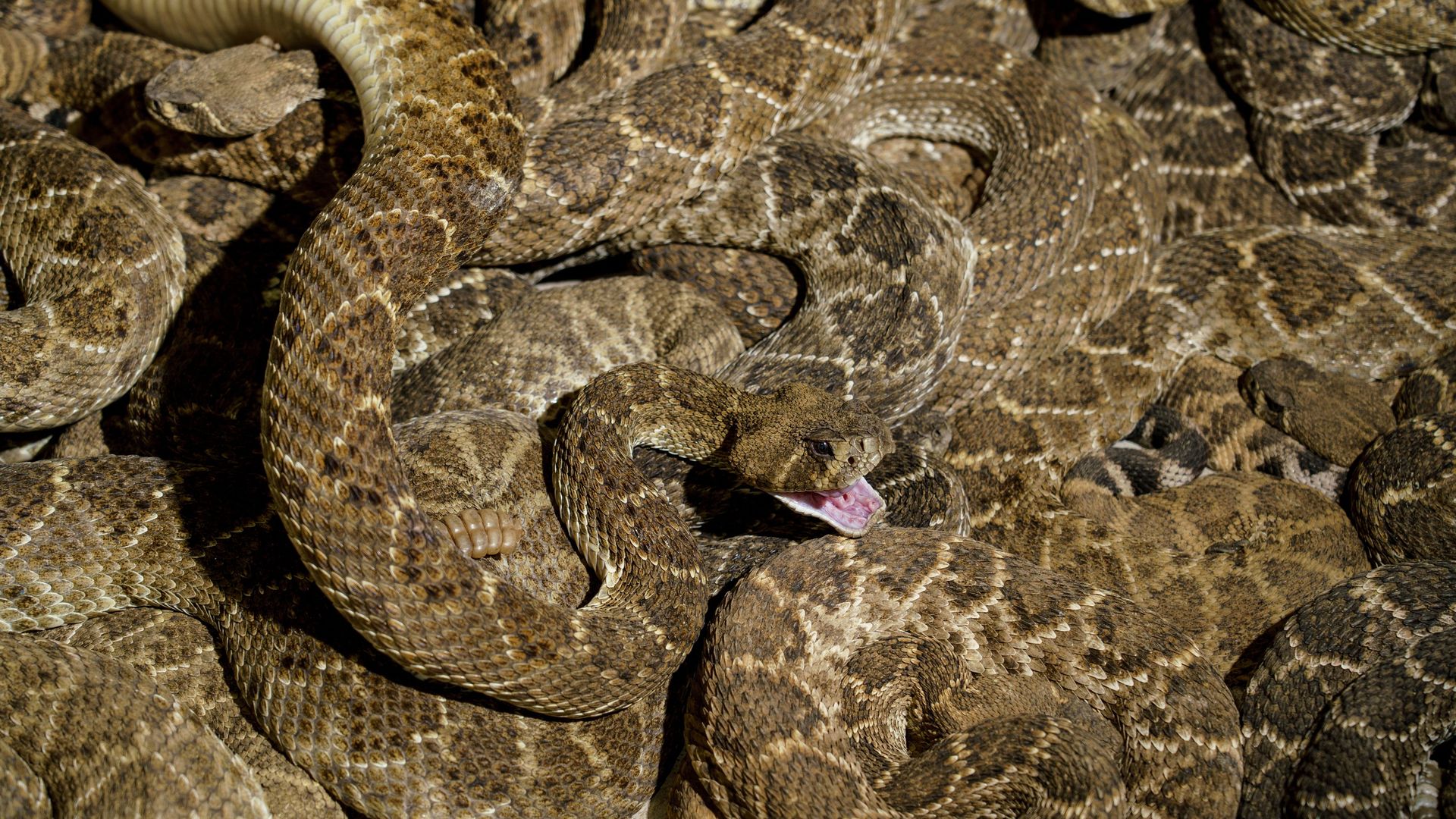
Western diamondback rattlesnakes. Photo: Paul Ratje/AFP via Getty Images
It's springtime, which means there's a higher chance of spotting a snake slithering around Central Texas.
Why it matters: About 7,000-8,000 people in the U.S. are bitten by a venomous snake each year, resulting in about five deaths, per the Centers for Disease Control and Prevention.
Yes, but: While Texas is home to 105 species and subspecies of snakes, only 15 are potentially dangerous to humans.
Threat level: Lerrin Johnson, Texas Parks and Wildlife spokesperson, tells Axios that people are seldom harmed by snakes.
- A 2016 nationwide study of childhood bites found that a quarter happened in Florida and Texas alone.
Between the lines: Snakes, which are cold-blooded, do not tolerate extreme temperatures well and are most active when seeking prey. Snake sightings are more common in the spring as flowers, which sustain rodents, flourish, Johnson says.
Zoom in: Brett Parker, owner of Hill Country Snake Removal, tells Axios the four venomous species that could be found in San Antonio are the western diamondback rattlesnake, broad-banded copperhead, Texas coral snake and cottonmouth, also known as water moccasin.
What they're saying: Parker, who is based in Canyon Lake, says most of his calls are for New Braunfels, but even people in urban parts of San Antonio can "absolutely" see snakes.
- "They can make their way into the middle of neighborhoods sometimes," Parker adds.
- A residential area near a greenbelt or a microhabitat of wildlife could be snake habitat.
Be smart: Parker advises against approaching snakes if you can't identify the species, and avoid walking barefoot outside. He also says it's important to teach kids early on about snakes.
- Keeping grass cut short and clear of rock piles is also a safe practice for reducing snake encounters.
- Johnson says having a plan similar to a fire drill for snake emergencies, such as knowing which hospitals treat snake bite victims, is also a good idea.
- Since snakes are most active when seeking prey, Johnson suggests identifying what's attracting rodents to your property, if you're seeing more of the reptiles.
If you get bit: Call 911, try to stay calm, remove any tight jewelry before swelling begins, and keep the bite lower than your heart, the U.S. Forest Service advises.