Louisiana redistricting fight heads to full Senate vote

Add Axios as your preferred source to
see more of our stories on Google.
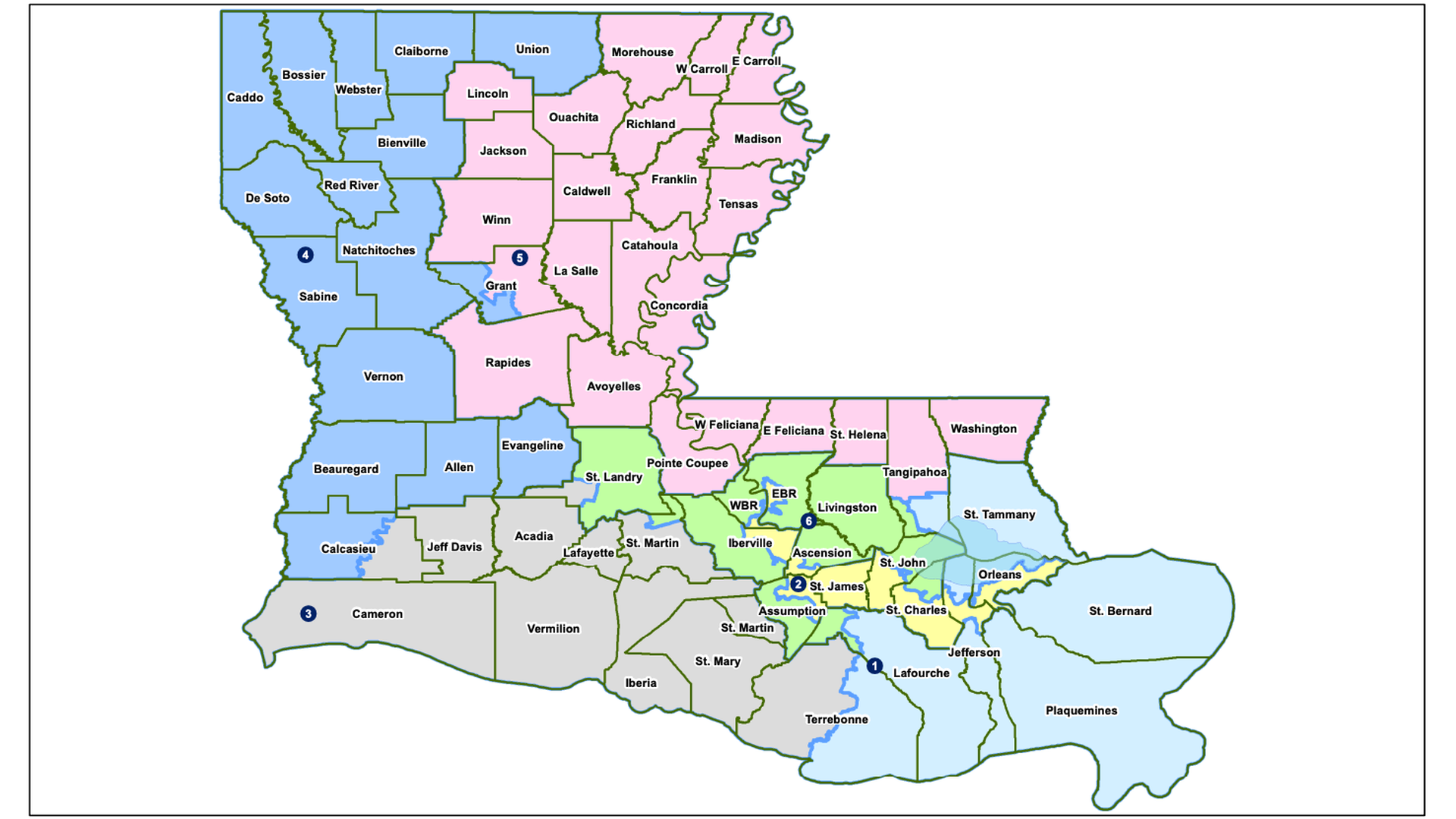
The Louisiana congressional map as proposed by Sen. Jay Morris in Senate Bill 121. Image: Louisiana Legislature
Louisiana lawmakers are scheduled to vote Thursday on a new congressional map that would eliminate one of the state's two majority-Black U.S. House districts.
Why it matters: The map would likely flip the 6th Congressional District, which is currently held by Democrat Cleo Fields, to a Republican seat — as part of a national midterm directive from President Trump.
The big picture: The proposal would return Louisiana closer to its 2022 congressional map, before courts ordered lawmakers to create a second majority-Black district.
- Under Republican Sen. Jay Morris' plan, the state would have one majority-Black district stretching from New Orleans to Baton Rouge. Most of the district's population would be in Orleans and Jefferson parishes.
- Fields' current district, which snakes across north and central Louisiana under the current map, would be significantly redrawn to have a white majority and different parishes.
Catch up quick: A state Senate committee voted 4-3 along party lines overnight Tuesday to approve the map and send it to the full Senate.
- They killed a map that had two "opportunity" districts after hearing hours of testimony from residents who supported the proposal.
- If the Senate approves the proposed map Thursday, it will head to a state House committee next week.
- Lawmakers are racing to approve a new congressional map before the legislative session ends June 1.
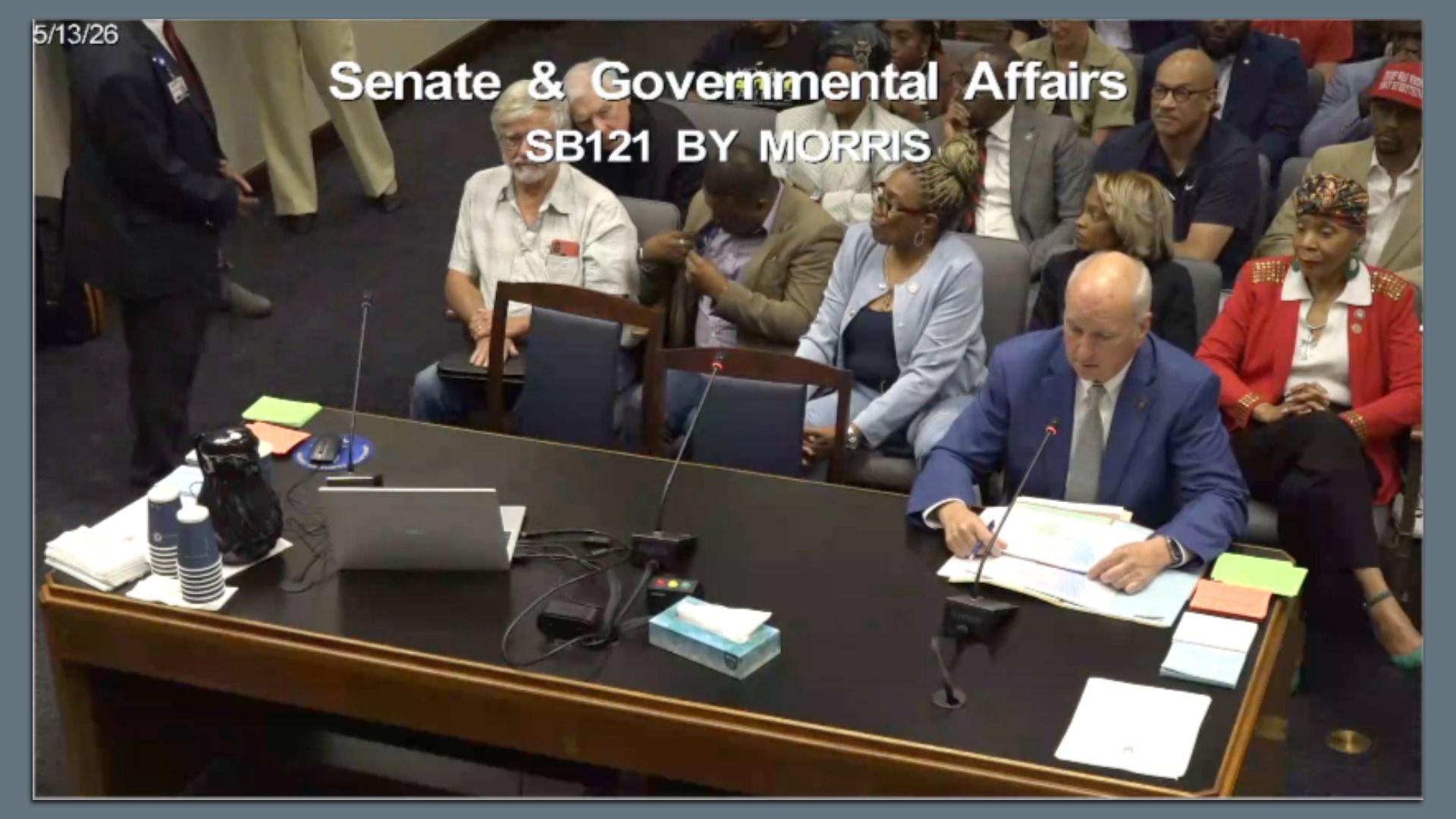
Zoom in: Morris told the committee early Wednesday that he based the proposed map on political affiliations, population cores, communities of interest and the 2022 map.
- The courts say congressional lines can be drawn to favor political parties but not racial groups, Morris argues.
Yes, but: Critics say that distinction is difficult to separate in Louisiana, where race and partisan affiliation often overlap.
- Historically, white residents in Southern states lean Republican, while Black residents largely vote for Democrats.
Friction point: Gov. Jeff Landry says a new map is needed before the state can hold U.S. House elections, which he suspended on April 30 after the U.S. Supreme Court's Callais decision.
- He says he is following the Supreme Court ruling to remove race as a factor.
- Opponents argue the proposal isn't an accurate reflection of the state's voters, who are one-third Black. Louisiana has one of the highest percentages of Black residents in the U.S.
Between the lines: Louisiana is part of a broader GOP push to redraw congressional maps ahead of the 2026 midterms in states where Republicans control state government.
- The state's leading proposal, like other midterm redistricting efforts in the South, favors Republicans.
- "We may not always have the votes, but we always have our voice," U.S. Rep. Troy Carter told a standing-room-only crowd Monday night at a Democratic town hall at Dillard University.
- Democrats have been responding by packing state Capitol meetings, signing a gubernatorial recall petition, and hosting town halls. A recall petition for Attorney General Liz Murrill was filed Wednesday, too.
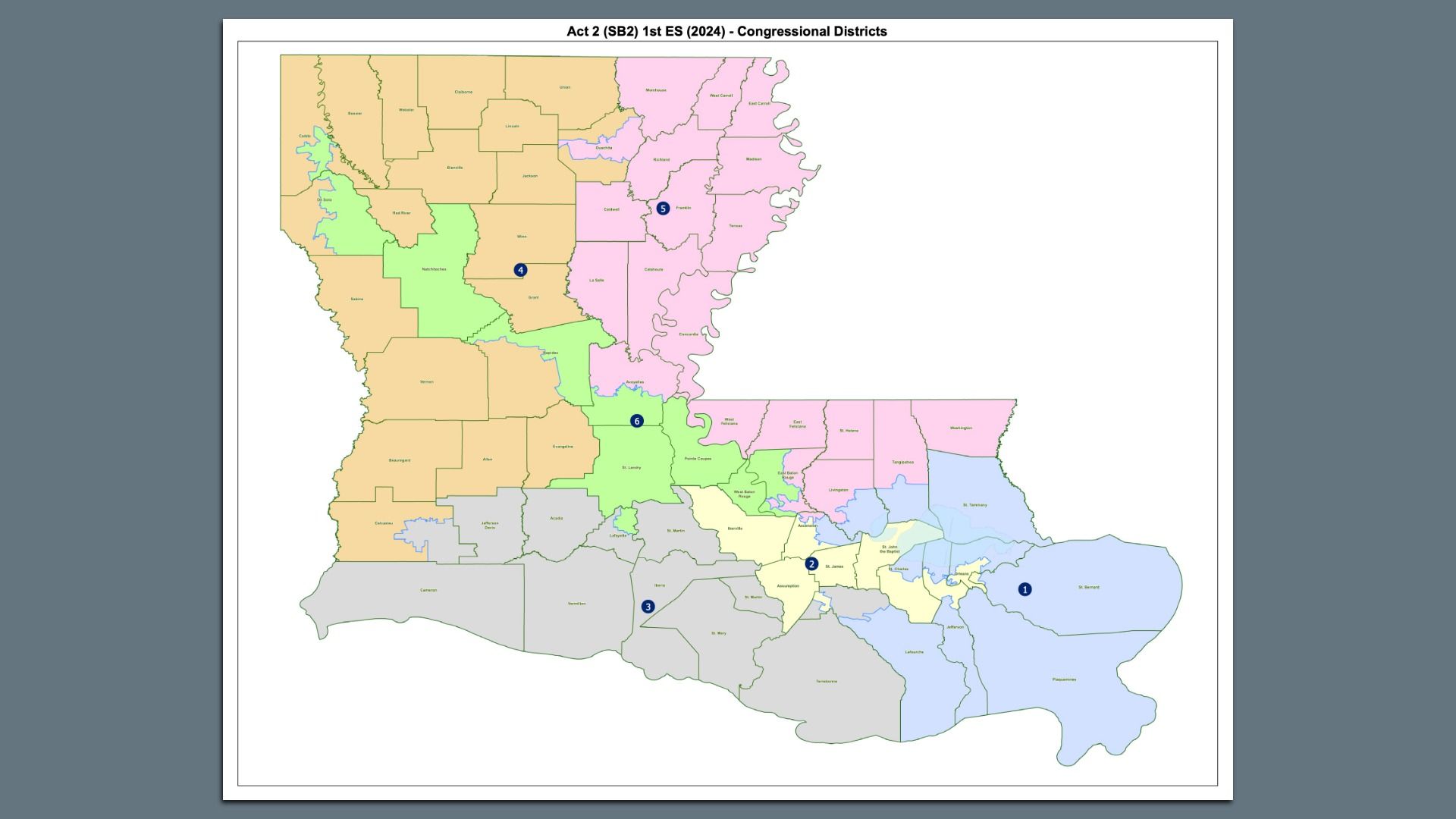
How it works: Louisiana gets six voting districts for the U.S. House. See the current map.
- Currently, four are majority-white and represented by white Republicans: Steve Scalise, Mike Johnson, Clay Higgins and Julia Letlow.
- Two are majority-Black and represented by Black Democrats: Carter and Fields.
- Fields' district was added in 2024 in response to a lawsuit from Black voters arguing they were underrepresented.
Zoom out: At least 42,000 ballots had already been cast when Landry suspended the election.
- He defended the decision Sunday on "60 Minutes," saying those ballots will be "discarded" and residents will need to vote again when there's a new map.
What's next: The Senate and the House must approve the same version of the map. Once that happens, the bill heads to the governor.