New Orleans' most misunderstood pest is back

Add Axios as your preferred source to
see more of our stories on Google.
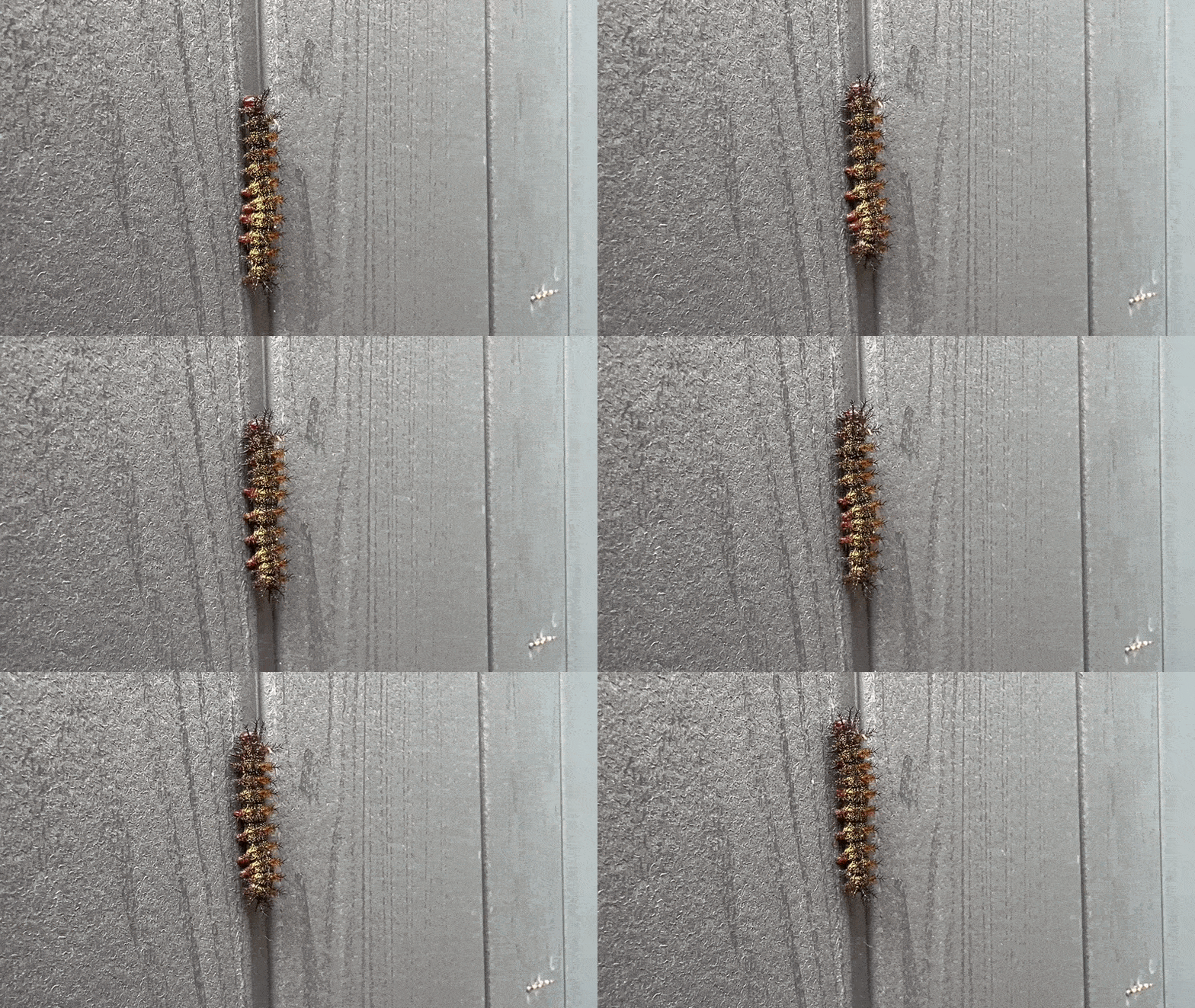
Buckmoth caterpillars have gotten an unfair reputation as villains, an Audubon entomologist says, when they are really just "clumsy babies."
Why it matters: The stinging caterpillars are currently terrorizing New Orleans.
The big picture: The spiky caterpillars can't help themselves, says Brad Hiatt, the assistant curator of entomology at the Audubon Insectarium.
- They emerge from the ground near live oak trees as the weather gets warm and climb up the trunks.
- "They're a little clumsy," he says. "They don't see very well. They're exploring."
- When something bothers them, like the wind, they get scared and let go, he says, falling onto the ground or on people.
- Their venomous spines are pressure sensitive, so they sting as a bodily function, not as an act of aggression, he says.
Zoom in: The native caterpillars have been out in full force for at least the past two weeks, which may correlate with the warmer weather, he says.
- Last month was one of the hottest Marches on record, according to Fox 8.
- Hiatt says last fall also had more adult buckmoths, so it makes sense that this spring would have a bigger emergence of their offspring.
What to do: Don't walk barefoot around live oak trees right now and use an umbrella if you're standing under one for a while, he says.
- If you get stung, use tape to remove the spines. More treatment options.
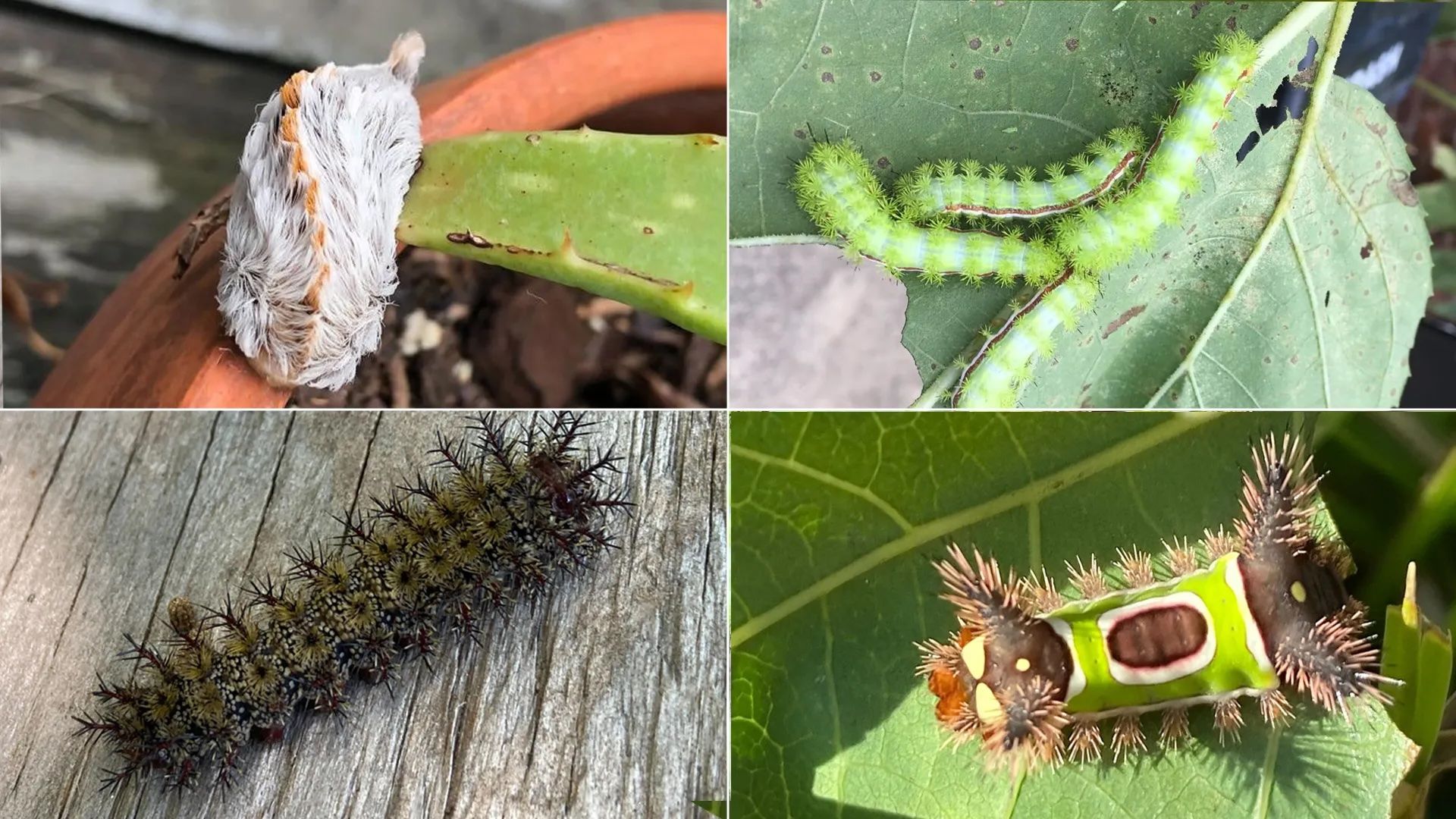
Zoom out: Buckmoths are among a handful of common stinging caterpillars in New Orleans.
- The caterpillar forms of the puss moth, IO moth and saddleback also have venomous spines and hairs that cause pain when touched.
- The puss moth caterpillar, also called an asp, is the most venomous of the bunch.
- New Orleans has other stinging caterpillars, but they aren't as common.
Go deeper: More about the stinging caterpillars