New Orleans delays decision on facial recognition expansion

Add Axios as your preferred source to
see more of our stories on Google.
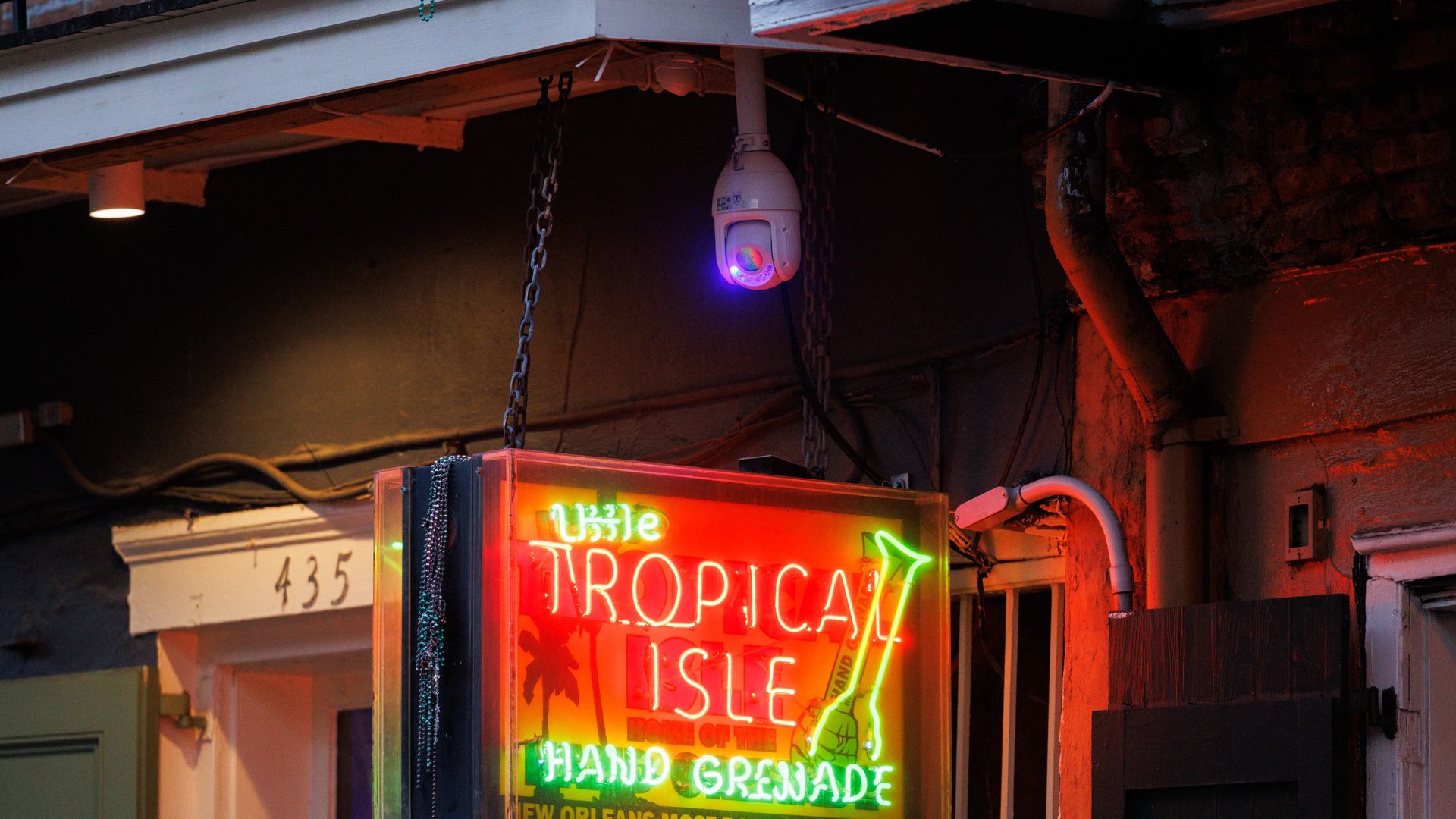
A Project NOLA security camera on Bourbon Street. Photo: Edmund D. Fountain for The Washington Post via Getty Images
The New Orleans City Council is holding off on a decision for now about whether the city should expand facial recognition options for policing.
Why it matters: Law enforcement agencies want more latitude to fight crime, but the ACLU and other groups are concerned about privacy and civil rights violations.
The big picture: Council members Oliver Thomas and Eugene Green wrote an ordinance this year that would have expanded how NOPD could use facial recognition.
- The discussion was postponed several times before Thomas withdrew the ordinance last month.
- A spokesperson for his mayoral campaign told Axios this week that the ordinance needs "further study on impacts."
- The statement also cited studying the legalities of a new state law related to federal immigration enforcement.
Catch up quick: A 2022 City Council ordinance regulates how the city uses facial recognition software, according to The Lens.
- Before then, it wasn't allowed, but police had been using it for years.
- Mayor LaToya Cantrell requested to reverse the ban, The Lens said.
Zoom out: Project NOLA, a privately run camera network, is at the heart of the latest discussion.
- The nonprofit has the ability to run real-time facial recognition searches on its network.
- It sends live alerts to NOPD officers when the cameras detect a match, but NOPD superintendent Anne Kirkpatrick paused those in April amid questions about legality after a Washington Post story.
- She then asked the council to loosen the rules, according to The Times-Picayune.
The intrigue: It's likely the first AI-enhanced live surveillance system to be used in a major American city, according to the Washington Post.
- It's been active in New Orleans since 2022, Project NOLA director and founder Bryan Lagarde tells Axios.
Zoom in: Project NOLA still sends facial matches to Louisiana State Police and federal agencies, Lagarde says.
- Project NOLA also is sending crime footage to NOPD, as it has for the past 15 years, he says.
- The group, which doesn't have a formal agreement with the city, focuses on felony crimes, he says.
How it works: Project NOLA has about 5,000 cameras on homes, business, churches and other independent hosts, he says.
- About 200 are able to run the AI-powered facial recognition software, he says. They are mainly in the French Quarter, Warehouse District and CBD.
- When authorities put out a public alert for someone wanted in a felony, Lagarde and another supervisor put that data into the system, he says.
- The cameras use a proprietary "mashup of multiple algorithms" to find the person. Project NOLA then sends the possible matches, along with the location, to law enforcement officers.
Yes, but: He doesn't want NOPD to have direct access to the facial recognition technology or have the ability to do their own searches.
- He says that's because he wants "to protect people's privacy."
- The network's oversight, he says, is provided by the people who host his cameras.
- "If for any reason they believe that we may have violated their trust, they can turn the cameras off," he says.
State of play: Kirkpatrick is in favor of using facial recognition during policing and made her case before the City Council in June, according to The Times-Picayune.
- Her idea is for the city to create its own camera network. NOPD did not respond to requests this week about the status of that project.
- It's been a hot-button project as the city recovers from the New Year's Day terrorist attack and the May jailbreak.
- Kirkpatrick said the department used the facial recognition technology the day of the outbreak to identify one of the 10 inmates who escaped.
- "This is the exact reason why facial recognition technology is so critical," Kirkpatrick said at the time.
The other side: "We cannot ignore the real possibility of this tool being weaponized against marginalized communities, especially immigrants, activists and others whose only crime is speaking out or challenging government policies," said Alanah Odoms, the executive director of the ACLU of Louisiana, this year.
Meanwhile, Project NOLA was at the focus of another discussion last week — using its crime footage for entertainment purposes.
- Lagarde says someone at City Hall shared Project NOLA's video from a crime scene with the producers of the reality TV show "Homicide Squad." He's asked the council to change the law to prevent this in the future.
- The council held off on making any policy change at the meeting, WWL says. Watch council president JP Morrell's discussion.
The bottom line: With AI-powered surveillance already in use, New Orleans is being forced to play catch-up on the policy side.