5 places to go bird-watching near New Orleans

Add Axios as your preferred source to
see more of our stories on Google.
We're hating on the Falcons this week so a grumpy grackle feels appropriate. Who dat! Illustration: Lindsey Bailey/Axios
Louisiana has a new bird-watching trail where you can see more than 470 species of feathered friends.
Why it matters: The weather is finally cooling off and it's time soak up every moment of fall.
The big picture: Louisiana is part of the Mississippi Flyway, one of the primary migration routes for North American birds.
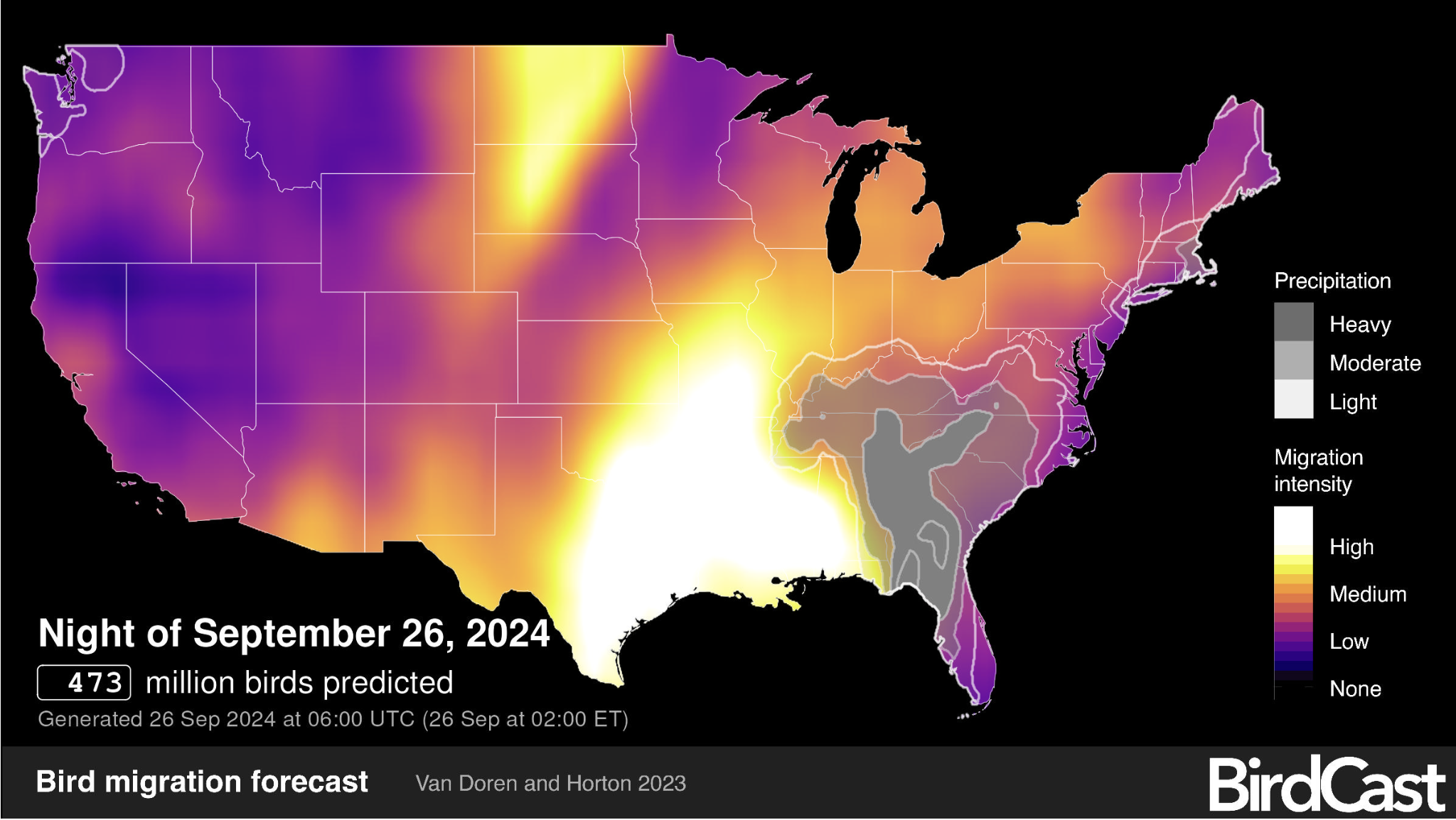
- Migration intensity is currently high in metro New Orleans with more than 30,000 birds expected to be on the move nightly, according to BirdCast, a collaboration with the EPA and several research groups.
- The most migration traffic is usually 2 to 4 hours after sunset.
Between the lines: Hurricane Francine messed up migration for several birds.
- Here's the map for southeast Louisiana of the unusual species that were reported off-course after the storm.
Zoom in: The state used federal pandemic money to create the birding trail and launch a website, BirdingLouisiana.com.
- The strategy is to help rural and underserved communities in Louisiana, Lt. Gov. Billy Nungesser said in a press release.
How it works: A team of birding experts assessed public nominations and chose 256 spots across the state to include in the trail.
- The website tells you what species you can find at each spot along with their bird sounds.
State of play: Here are five spots on the trail within driving distance of New Orleans.
- Bogue Chitto State Park in Washington Parish: More than 170 species live here, including wild turkeys, ruby-throated hummingbirds and anhingas.
- Abita Creek Flatwoods Preserve in Abita Springs: More than 100 bird species live here, including the elusive Bachman's sparrow and Henslow's sparrow.
- Bonnet Carre Spillway in Norco: More than 260 species have been observed in the area, including bald eagles, Baltimore orioles and barn owls.
- Big Branch Marsh National Wildlife Refuge in Lacombe: More than 20 species of geese, ducks and scoter (seaducks) live here, along with shorebirds and wading birds.
- Bluebonnet Swamp Nature Center in Baton Rouge: About 180 species live here, including red-tailed hawks, barred owls and the tufted titmouse. It's popular with warbler species during migration.
By the numbers: Outdoor recreation's economic impact is growing in Louisiana.
- It 2022, it generated $7.9 billion in gross domestic product, according to the state's tourism office. That's an increase of 18.9% from 2021.
What's next: Conservationists say peak migration is the most important time to turn off non-essential lights from 11pm to 6am.
- Lights can attract and disorient nocturnally migrating birds, BirdCast says.
- Groups are also looking at how they can make buildings and windows more bird-friendly.