Louisiana is a COVID hotspot right now


Add Axios as your preferred source to
see more of our stories on Google.
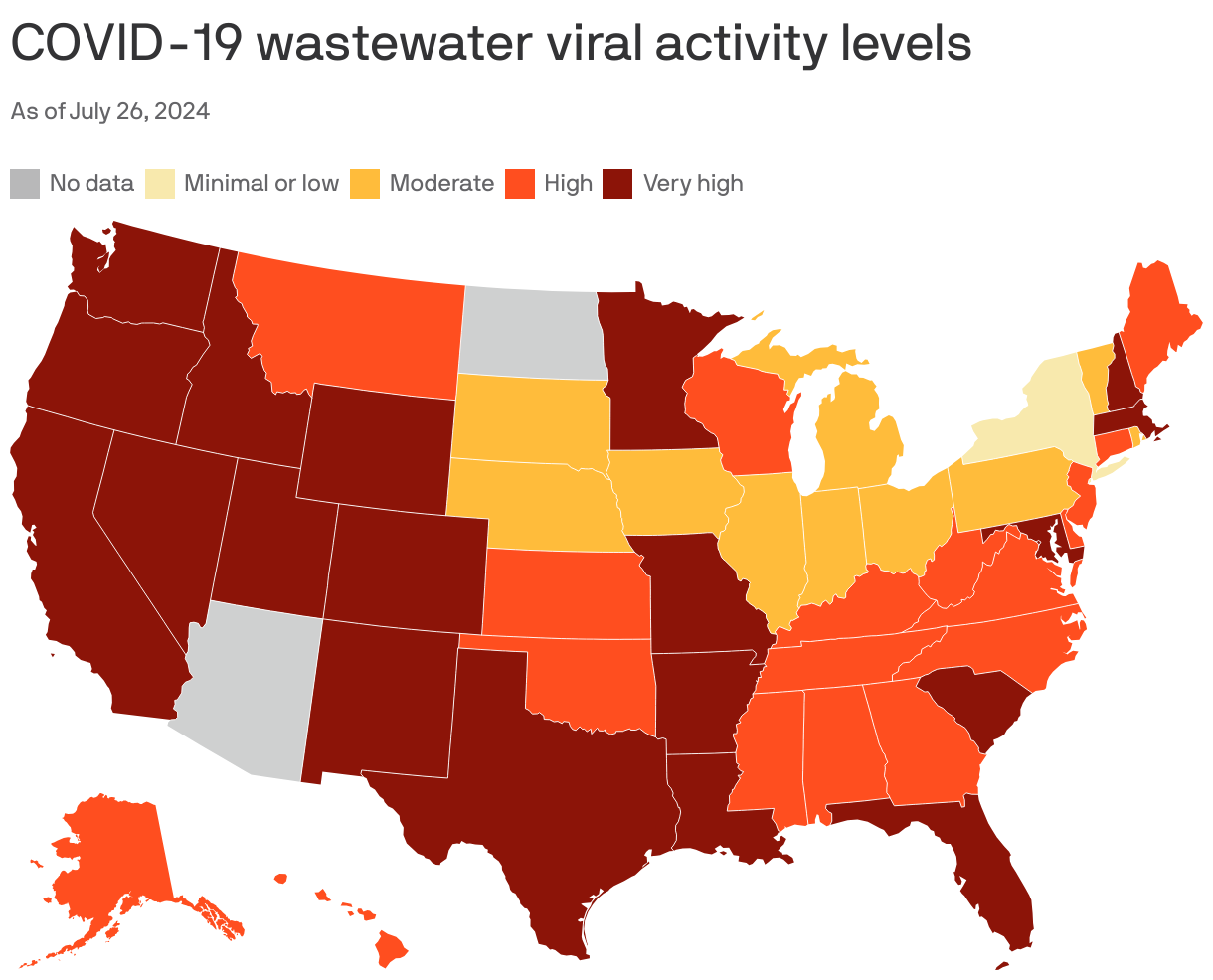
The summer's COVID-19 wave is continuing, and Louisiana is one of the states with "very high" levels of virus activity, per Centers for Disease Control and Prevention data.
Why it matters: Your cold may actually be COVID.
The big picture: The virus is especially prevalent right now across the western U.S. and the South, in particular a region that includes New Mexico, Texas, Oklahoma, Arkansas and Louisiana, where test positivity topped 25%, per agency data.
- The national rate for the same time period is 16.3%.
Case in point: Ochsner, Louisiana's largest health system, had about five to 10 COVID patients statewide a few months ago, writes Emily Woodruff with NOLA.com | The Times-Picayune.
- By early August, about 130 hospitalized patients have COVID.
Zoom in: Louisiana's positivity rate was 18.7% at the end of July, the state Health Department said Friday. It has been steadily climbing since May.
- Flu and RSV numbers remain low.
- However, the numbers could change as more data is collected, the agency says.
By the numbers: Louisiana's 33 wastewater tracking sites are reporting increased viral activity as well, according to CDC data.
- For the last week of July, the level was almost double the national rate and was higher than the regional rate.
Between the lines: Almost 80% of circulating COVID variants are KP variants, which are descendants of the highly contagious JN.1 strain that surged over the winter and are among the so-called FLiRT variants.
Threat level: COVID-19 cases have risen in the U.S. each summer since the pandemic began.
- Hospitalizations remain low nationally. However, the virus still poses a risk to the elderly and immunocompromised.
What's next: If you test positive for COVID, the latest guidance from the CDC says you should stay home and away from others.
- The recommendations suggest returning to normal activities when, for at least 24 hours, symptoms are improving overall, and if a fever was present, it has been gone without use of a fever-reducing medication.
- Once people resume normal activities, they are encouraged to take additional prevention strategies for the next five days to curb disease spread, such as taking steps for cleaner air, enhancing hygiene practices, wearing a well-fitting mask, keeping a distance from others and/or getting tested for respiratory viruses.
Go deeper