Coffee prices are rising in Miami amid inflation, Trump tariffs


Add Axios as your preferred source to
see more of our stories on Google.
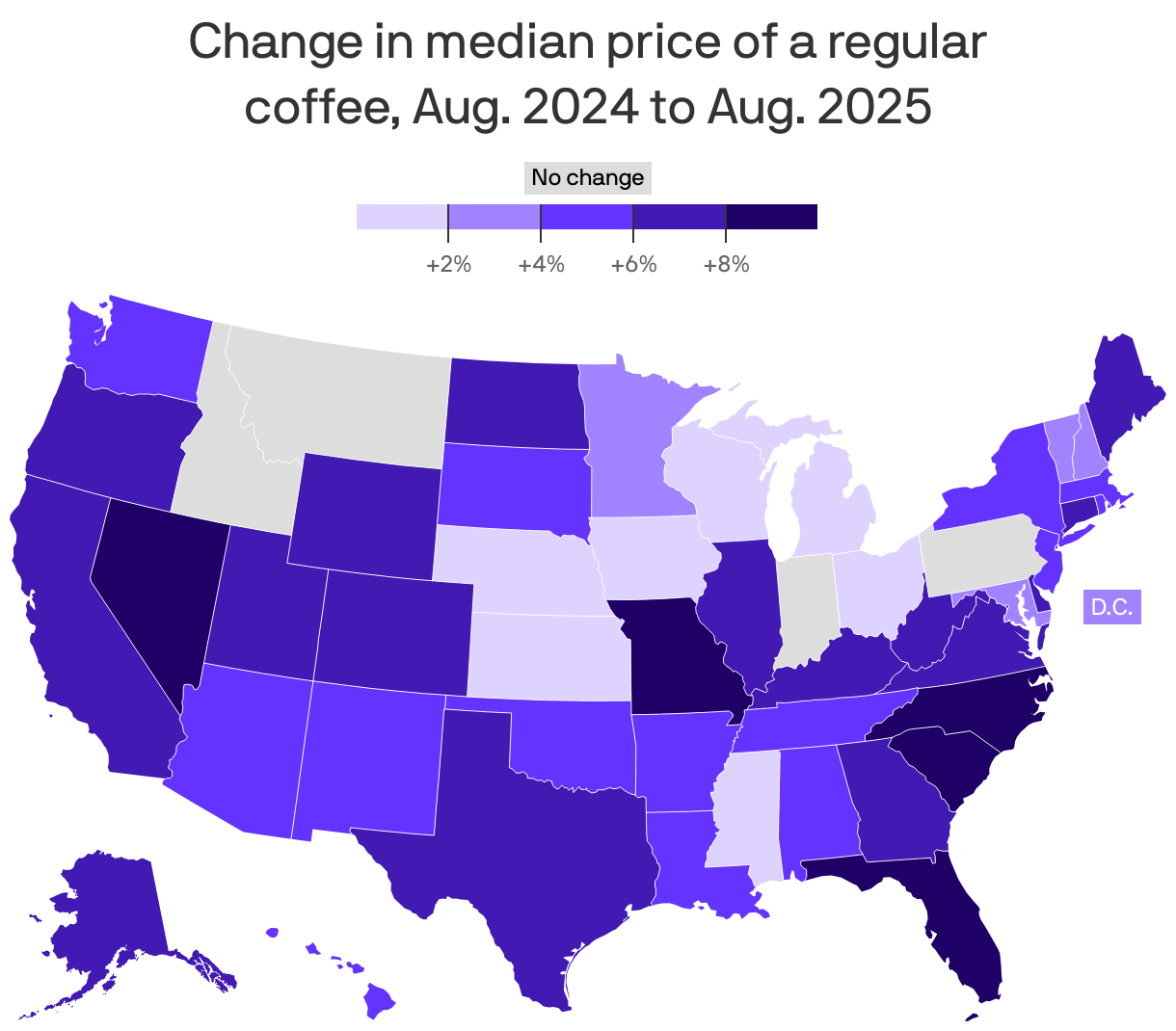
Your morning cup of coffee got more expensive this year, according to new Toast data.
Why it matters: Coffee is among many commodities affected both by general inflation and the Trump administration's import tariffs.
- Coffee plants are also vulnerable to extreme weather tied to climate change, including droughts and heat waves.
The big picture: Coffee prices rose in almost every state over the last year, per Toast, mirroring the surge in the underlying commodity's price this year.
- The median nationwide cost of a regular cup of coffee hit $3.52 this past August, Toast says, up about 3% from the same time last year.
- Median cold brew costs hit $5.47, up 4.6%.
- That is compared with general inflation of around 2.9%.
Hot coffee prices rose the most in South Carolina (+9.6%), Nevada (+9.0%) and Florida (+8.3%).
Zoom in: In Miami, the average price of a regular hot coffee was $4.18 in August — about 4% higher than last year.
- At Panther Coffee, which operates six Miami cafés, a small cup of hot drip coffee cost $4 as recently as Sept. 28, according to a photo of the menu posted on Yelp.
- Today, it costs about $4.50, per UberEats.
What they're saying: Panther Coffee co-founder Joel Pollock tells Axios he had to raise prices about 15% to help absorb his skyrocketing costs.
- "We put it off as long as we could," Pollock said. "Nobody likes it, nobody feels good about raising prices."
- Pollock says coffee's rising commodity price, along with tariffs, has made it about 90% more expensive for him to purchase his specialty coffee beans.
State of play: Brazil, the world's top coffee producer, was hit with a 50% tariff in August.
- That month, its specialty coffee exports to the U.S. dropped 70% compared to July, according to the Brazilian Specialty Coffee Association.
Threat level: Pollock says he received a shipment from Brazil a few days before the tariffs went into effect on Aug. 1, saving him about $68,000.
- He is trying to make the shipment last and has paused some orders from Brazil.
- Panther Coffee also sources raw beans from countries like Nicaragua, which has an 18% tariff, and Colombia (10%).
- A recent shipment from Nicaragua was "pretty close to double the price ... it used to be," Pollock said.
- "We're eating a lot of margin and really trying to sort of maintain an equilibrium and see if things level out."
What's next: The Trump administration has recently opened the door to lower tariffs on coffee and other items, but that is dependent on dealmaking with other countries.