Your cup of coffee may get a "tariff surcharge"

Add Axios as your preferred source to
see more of our stories on Google.
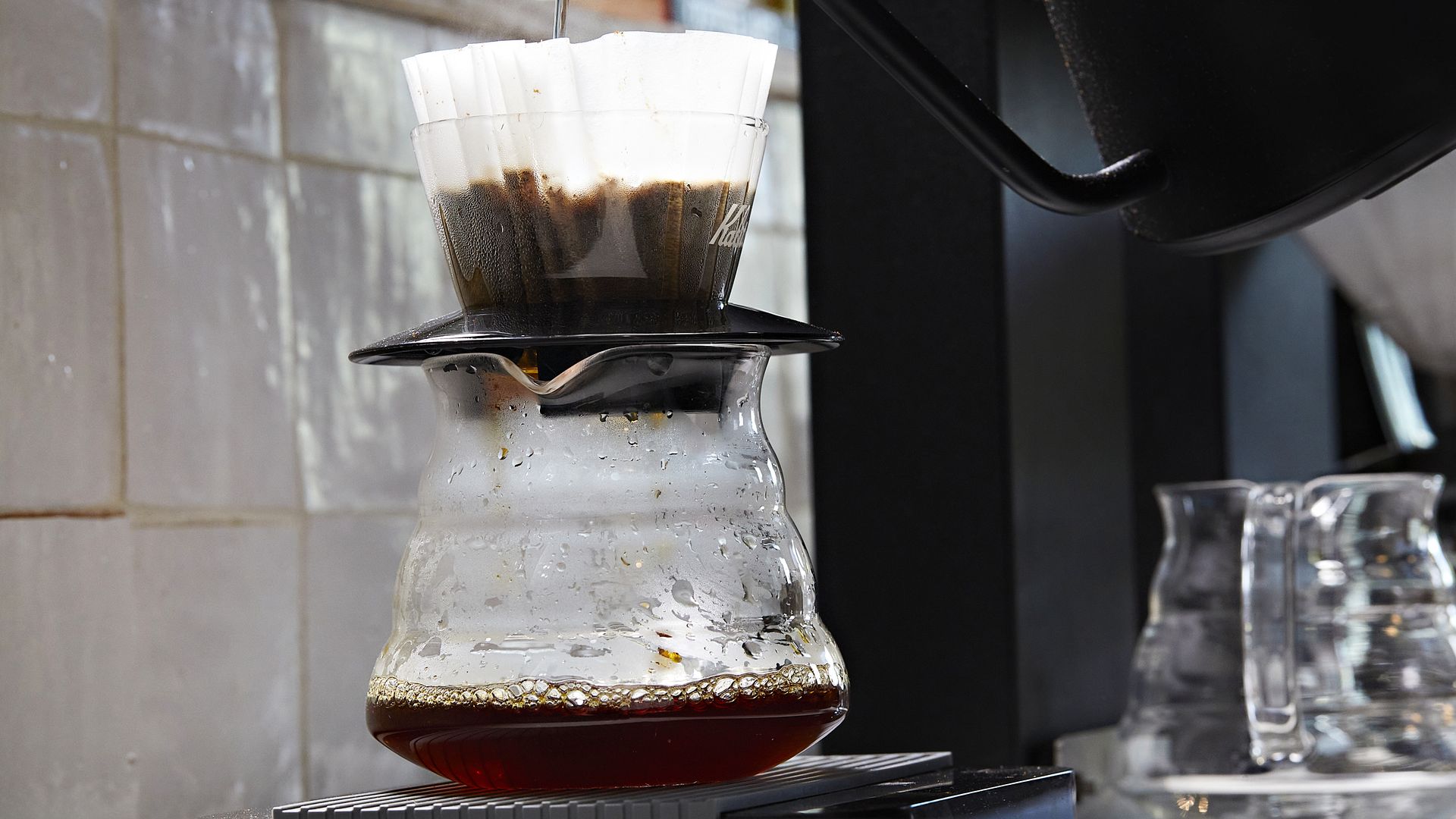
Photo: Deb Lindsey for The Washington Post via Getty Images
Coffee is more expensive than ever. That was before tariffs.
Why it matters: Coffee roasters and importers say President Trump's tariffs will raise the price of a cup of joe and make specialty blends scarcer.
Driving the news: Trump on Wednesday paused his sweeping reciprocal tariffs (except on China), but kept in place a 10% base global tariff.
- Coffee-producing countries hit with those higher reciprocal tariffs, like Vietnam (46%) and Indonesia (32%), will have some relief for at least 90 days. But the baseline tariff is still expected to spike coffee prices.
Zoom in: Your latte receipt could come with a tariff surcharge.
- That's an idea local roaster Swing's Coffee is considering, along with directly baking tariff costs into prices.
- "We have no choice but to increase prices," says Mark Warmuth, owner of the roaster and local café headquartered in Alexandria. Prices could go up in early summer after they receive new harvests slapped with tariffs in May.
Globalization has been good for java heads: Specialty blends combine beans from, say, Sumatra and Guatemala, like the $14 High Mountain Blend from Swing's. But pricing that gets tricky when tariffs vary widely from country to country.
- It's unknown whether the higher reciprocal levies on some countries will be dialed back up — and to what level — at the end of the 90-day pause.
What they're saying: Ben Weiner, who is based in D.C. and runs Gold Mountain Coffee Growers, says the tariffs are "a tax on every coffee drinker in the United States."
- Weiner helps Nicaraguan coffee farmers sell directly to roasters, and he believes that on top of existing volatility (fertilizer costs have shot up lately), tariffs could push the price of a latte up "anywhere from $2.50 to $4 more."
- His enterprise, which fills 10 shipping containers of coffee a year, is now exploring expanding its sales outside the U.S. — it already has buyers in Spain, Canada, and Singapore.
Between the lines: The U.S. grows little to no coffee, especially outside Hawaii.
The bottom line: Big players like Starbucks and McDonald's are more able to eat the costs of the tariffs, which will squeeze smaller and independent coffee shops, says Charles Skuba, an international trade professor at Georgetown University's McDonough School of Business.
- And machines, paper supplies, and interior decor, often made in China, will get a tariff price kick that could be passed along to customers.
- "This uncertainty is still with us," Skuba says.