30 over 30: Wheeler Mission's evolution

Add Axios as your preferred source to
see more of our stories on Google.
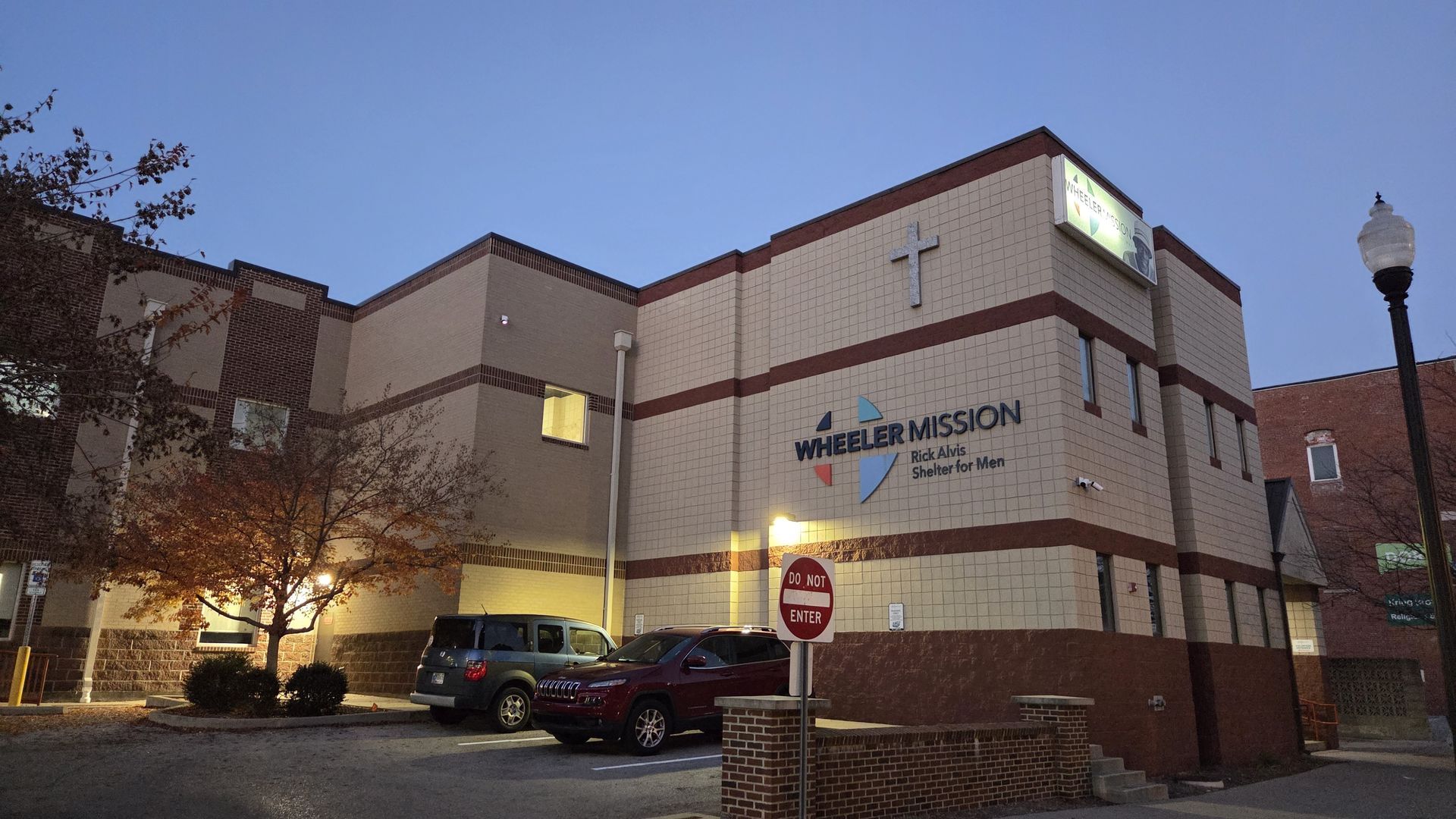
Wheeler Mission's Rick Alvis Shelter for Men. Photo: Justin L. Mack/Axios
Welcome back to Axios Indianapolis' "30 Over 30," a series celebrating the icons that have shaped our city for 30 years or more.
Wheeler Mission has spent more than 130 years adapting to Indianapolis' changing needs. It evolved from a small rescue home for women into one of Indiana's largest providers of shelter and recovery services.
Why it matters: The mission's longevity is a testament to its ability to adapt and Indianapolis' willingness to support that work.
Flashback: Wheeler, a Christian organization whose services include faith-centered recovery programs, celebrated its 133rd birthday just last month.
- On Oct. 13, 1893, members of the Meridian Street Women's Christian Temperance Union established the Door of Hope, a home for women facing hardship.
- William V. Wheeler, a local hardware salesman and lay preacher, left his job to become the mission's full-time superintendent in 1895. It was renamed Wheeler Rescue Mission after his death in 1908.
- The organization's downtown Delaware Street building was completed in 1929, expanding its ability to provide shelter and services.
Catch up quick: Over the decades, Wheeler broadened its reach through partnerships and mergers, including The Care Center in 2001 and Lighthouse Mission in 2006.
- The 2021 completion of a $14.8 million expansion of its Center for Women & Children tripled the facility's capacity, reflecting a growing focus on serving women and families experiencing homelessness.
By the numbers: Wheeler's 2025 annual report recorded 406,897 meals served, 249,398 nights of shelter and 12,921 individuals assisted.
- There were 635 guests placed in stable housing and 223 program completions, illustrating how the mission has expanded from providing immediate relief to helping people build longer-term stability.
- The 2025 report also counted more than 130 church partners, 38,734 volunteer hours and 16,791 volunteer opportunities filled.
- That volunteer time was valued at more than $1.3 million.
How it works: Programs such as Foundations and the Compass Family Program support guests and families working toward stability. Wheeler also offers residential addiction recovery programs.
- Wheeler's Cornerstone Living initiative adds supportive, affordable housing for people transitioning out of residential programs.
- The goal is to help people maintain the progress they've made after leaving the shelter system.
Context: In 2023, Rick Alvis retired after nearly 33 years as president and CEO. When Alvis became CEO in 1990, Wheeler had 17 employees and a $700,000 budget. By 2022, it had about 175 employees and a nearly $16 million budget.
- Perry Hines succeeded him as the organization's first Black CEO.
- In 2024, Wheeler renamed its two shelters the Rick Alvis Shelter for Men and Julie Alvis Center for Women & Children.
The bottom line: From a small rescue home to a citywide safety net, Wheeler's evolution reflects both Indianapolis' changing challenges and its enduring spirit.