16 Tech helps startups turn ideas into products

Add Axios as your preferred source to
see more of our stories on Google.
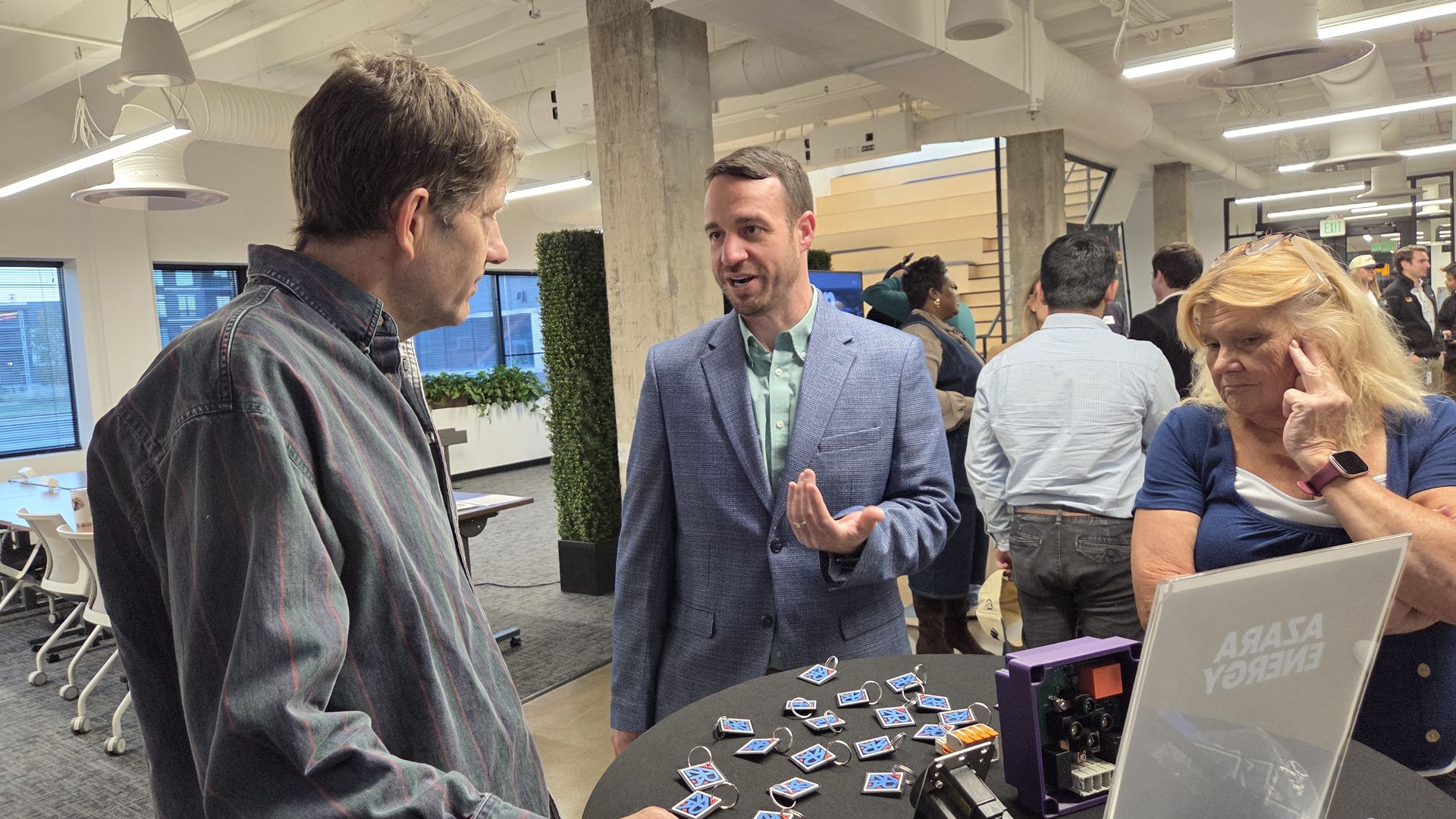
Azara Energy founder Michael Zwach speaks during the 16 Tech Traction showcase. Photo: Justin L. Mack/Axios
Eight Indiana startups have showcased their progress after nine weeks of developing physical products through 16 Tech's inaugural Traction program.
Why it matters: Traction aims to help Indiana founders build companies and jobs closer to home.
Follow the money: Funded through a $40,000 Indiana Economic Development Corporation Community Collaboration Fund grant, Traction helps early-stage hard-tech founders move from validated ideas toward market-ready products.
- 16 Tech director of entrepreneurship Andrew Lehman says the goal is to remove practical barriers that can keep promising businesses from getting off the ground.
- "It's such a diverse group of ideas and people, which I think made it a really great mix of folks holding each other accountable," Lehman said. "Somebody mentioned this became their entrepreneurial family, and I love that. Peer-to-peer support is just as important as any of the other support."
How it works: Participants received makerspace memberships, one-on-one coaching, working sessions and connections to manufacturers, investors and other ecosystem partners.
- They could also qualify for up to $5,000 in milestone-based, non-dilutive funding to cover expenses such as materials, prototyping and patent filings.
Zoom in: The cohort spanned several industries, illustrating the range of physical-product innovation happening in Indiana.
- Azara Energy: The Fort Wayne startup is developing a smart electrical outlet that monitors temperature and can cut power if it detects dangerous overheating, including during high-demand EV charging.
- Deborah Diagnostics: The medtech startup is developing a medical diagnostic product.
- Infragilis Beauty: Founder Patricia Bentley is developing the HALO Assistive Haircare System, a hands-free hair-washing and styling aid designed to help people with limited mobility maintain independence in personal care.
- Let's Get Mouthy: Founders Ruth Bear and Sam Limbo created an anatomically accurate mouth model that helps speech therapists teach clients to position their tongues, teeth and other mouth parts to make sounds.
- MusiTech: The startup is developing a product for musicians to help them quietly practice at home, including a penguin-shaped saxophone case showcased at the event.
- Piedra Engineering: The company is building a sensor-based hardware system that uses edge computing to process data close to where it's collected.
- PilliPop: Founder Aspen Villas is developing a phone grip and stand that opens into a compartment for medication or small essentials, with plans to add sensors and app-based medication reminders.
- Tandem Robotics: The company is developing a mobile robot designed to support family caregivers of people with Alzheimer's disease and dementia.
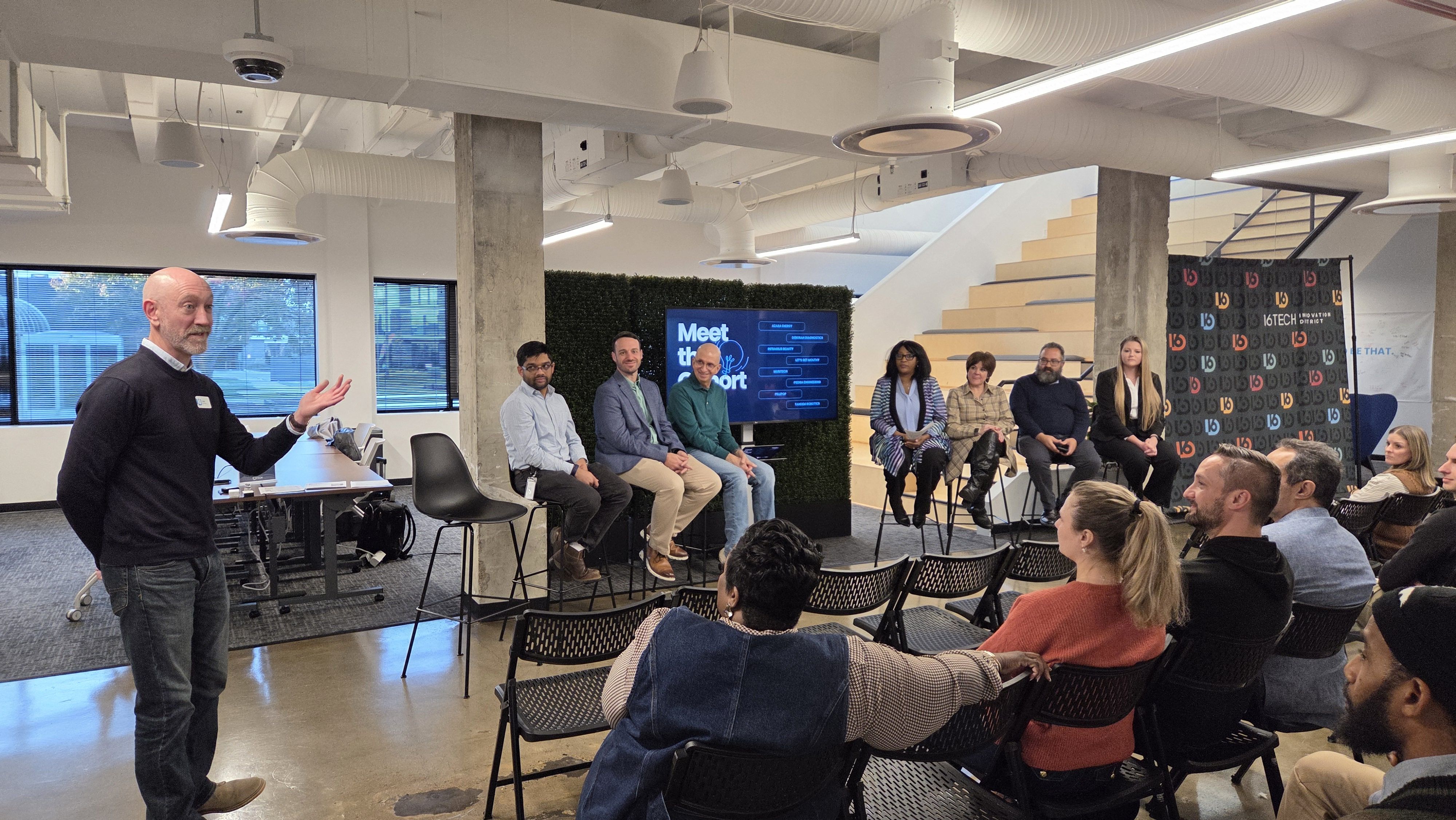
What they're saying: The community nature of the cohort was especially valuable for founders working on physical products, which can require specialized equipment and insight that traditional programs can't always provide.
- Villas said the program provided opportunities to experiment with different molds while developing the product's silicone construction. She also described Sunday work sessions with another participant as a source of motivation and collaboration.
- "Don't be afraid to try new things and definitely don't be afraid to fail," Villas said, describing the perseverance required to build a business.
- Bear and Limbo said the program offered something their previous startup accelerator lacked: mentors and fellow entrepreneurs with proven hardware expertise.
The big picture: Traction arrives as Indianapolis and the state work to convert their considerable research and industrial expertise into more homegrown technology companies. TechPoint's 2026 Entrepreneurship in Indiana Report identifies that as a gap in the state's innovation economy.
- Central Indiana's invention activity is approximately 2.9 times the national average per job, but only 16% of the region's research output has an observable connection to commercial applications.
- Indiana ranked 16th nationally for its rate of new entrepreneurs in 2025, but 45th for first-year startup job creation.
- The report also identifies insufficient early-stage funding, limited founder networks and difficulty accessing experienced mentors as barriers to company creation.