Indianapolis is looking to learn from August floods

Add Axios as your preferred source to
see more of our stories on Google.
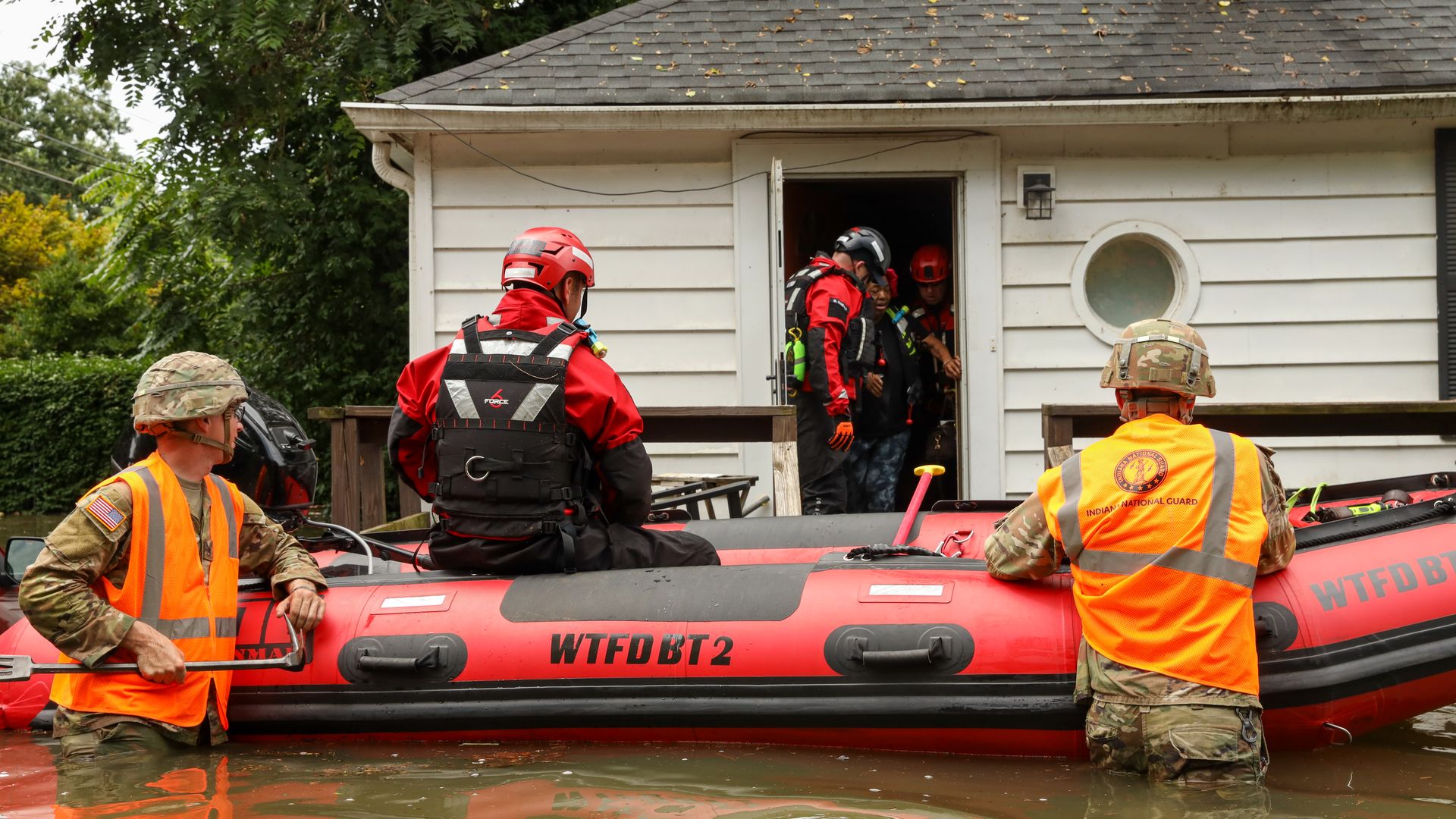
Photo: Courtesy of the Indianapolis Fire Department
Indianapolis is looking at how it can be better prepared if — or, most likely, when — another extreme storm hits the region.
Why it matters: City leaders are looking to learn from the August floods that broke a 113-year record on the White River, displaced hundreds of Indianapolis residents and were linked to multiple deaths statewide.
- Janet McCabe of Indiana University's Environmental Resilience Institute presented the latest findings from a team of researchers at IU, Purdue and Notre Dame to a City-County Council committee this week.
The big picture: Extreme rainfall events like the one that drove the White River flooding have gotten more common over the last several decades. According to McCabe, they will continue to become increasingly common.
- The researchers are working on a new climate outlook report for the state, which predicts average temperatures will continue to rise — a condition that breeds more extreme precipitation events.
- "The warmer the atmosphere, the more water it can and does hold," McCabe said. "When you have a rain or snow event, there's more water in the atmosphere to come down in a … short period of time."
What they're saying: "These are not abstract ideas anymore. There is real risk. Real danger," said City-County Councilor John Barth, who chairs the Environmental Sustainability Committee. "I want to use this committee to crank up the urgency on this."
What's next: Barth said an after-action report on the city's response to the August floods will be presented in the future.
- In the meantime, he said he plans to continue bringing in experts to help the city be better prepared for the next extreme weather event.