1-minute voter guide: Central Indiana school referendums

Add Axios as your preferred source to
see more of our stories on Google.
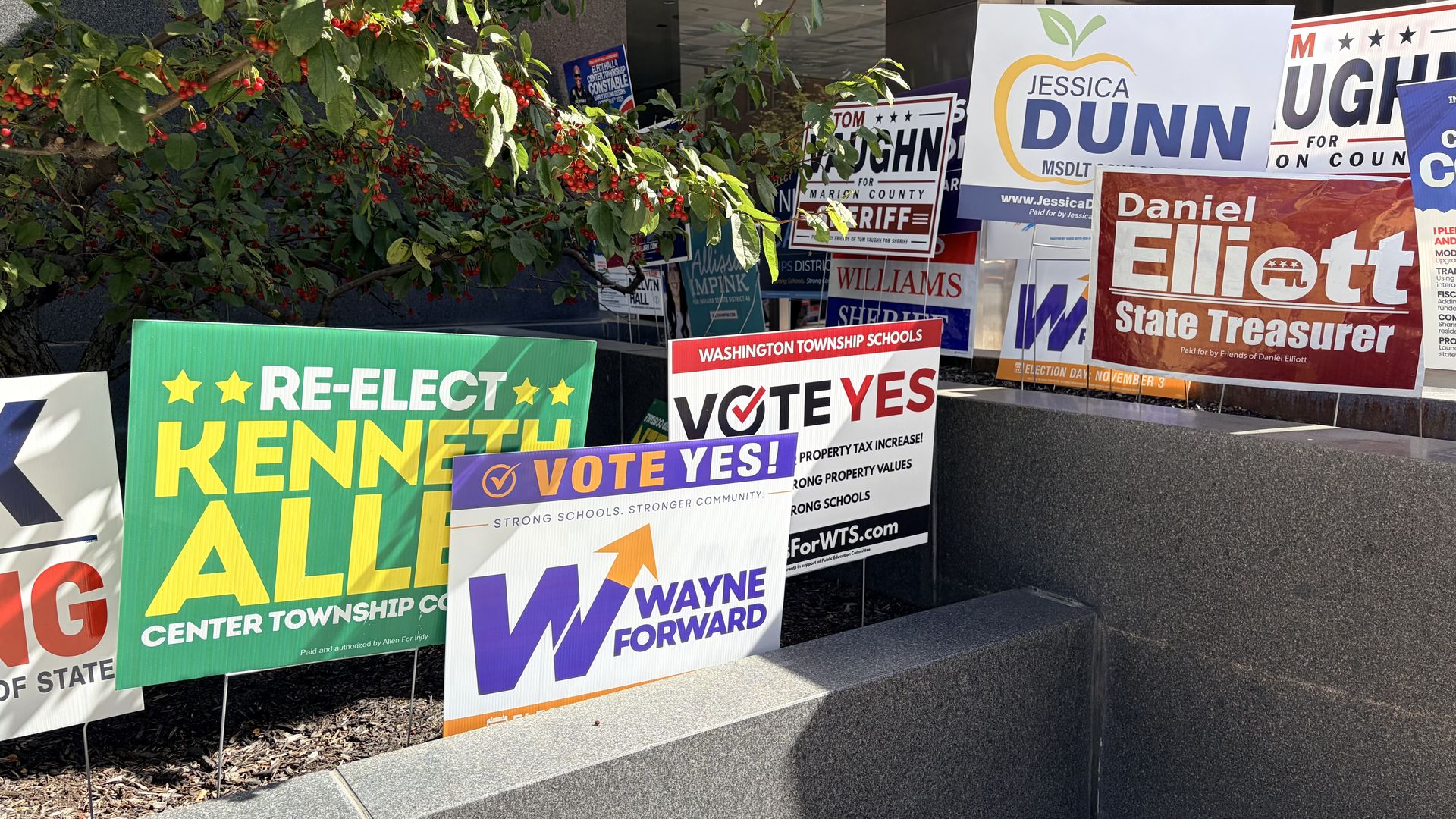
Photo: Arika Herron/Axios
Many central Indiana voters will have school referendums on their ballots.
Why it matters: Much is at stake — from teaching positions to bus service — according to the districts asking for the property tax increases.
The big picture: More than three dozen school districts around the state are running referendums this year — a record number for a single election cycle.
- Districts are trying to offset funding losses caused by state policy changes, particularly the property tax law known as Senate Enrolled Act 1.
- The law cuts the amount of revenue schools and other local governments receive from property taxes.
- It also requires districts to share those dollars with charter schools over the next several years as the full effect of the law phases in.
Yes, but: The next election cycle may see more, says Terry Spradlin, executive director of the Indiana School Boards Association.
- "It's actually surprisingly low," Spradlin tells Axios.
- One-third of the districts are seeking a referendum for the first time. The rest, Spradlin said, are seeking a renewal. Changes to when districts can place a referendum on the ballot mean some needed to seek a renewal earlier than they otherwise would have.
What they're saying: "We need to make the case, to make a compelling case and educate voters," Spradlin said.
Zoom in: Between Marion County and the doughnut counties, 16 districts are running referendums.
- Boone County: Zionsville.
- Hamilton County: Carmel-Clay, Hamilton Southeastern, Noblesville, Sheridan and Westfield.
- Johnson County: Clark-Pleasant and Franklin Community.
- Madison County: Anderson and Elwood.
- Marion County: Beech Grove, the Indianapolis Public Education Corporation and Decatur, Washington and Wayne townships.
- Shelby County: Shelbyville Central.
The intrigue: The Indianapolis Public Education Corporation is seeking a $95 million referendum to be split between Indianapolis Public Schools and surrounding charter schools.
- If passed, IPS would receive about half of the proceeds — a little more than $46 million annually. It would still have a $20 million budget hole to close.
What's next: Early voting is underway. Election Day is Nov. 3.