Indianapolis' proposed Opportunity Zones

Add Axios as your preferred source to
see more of our stories on Google.
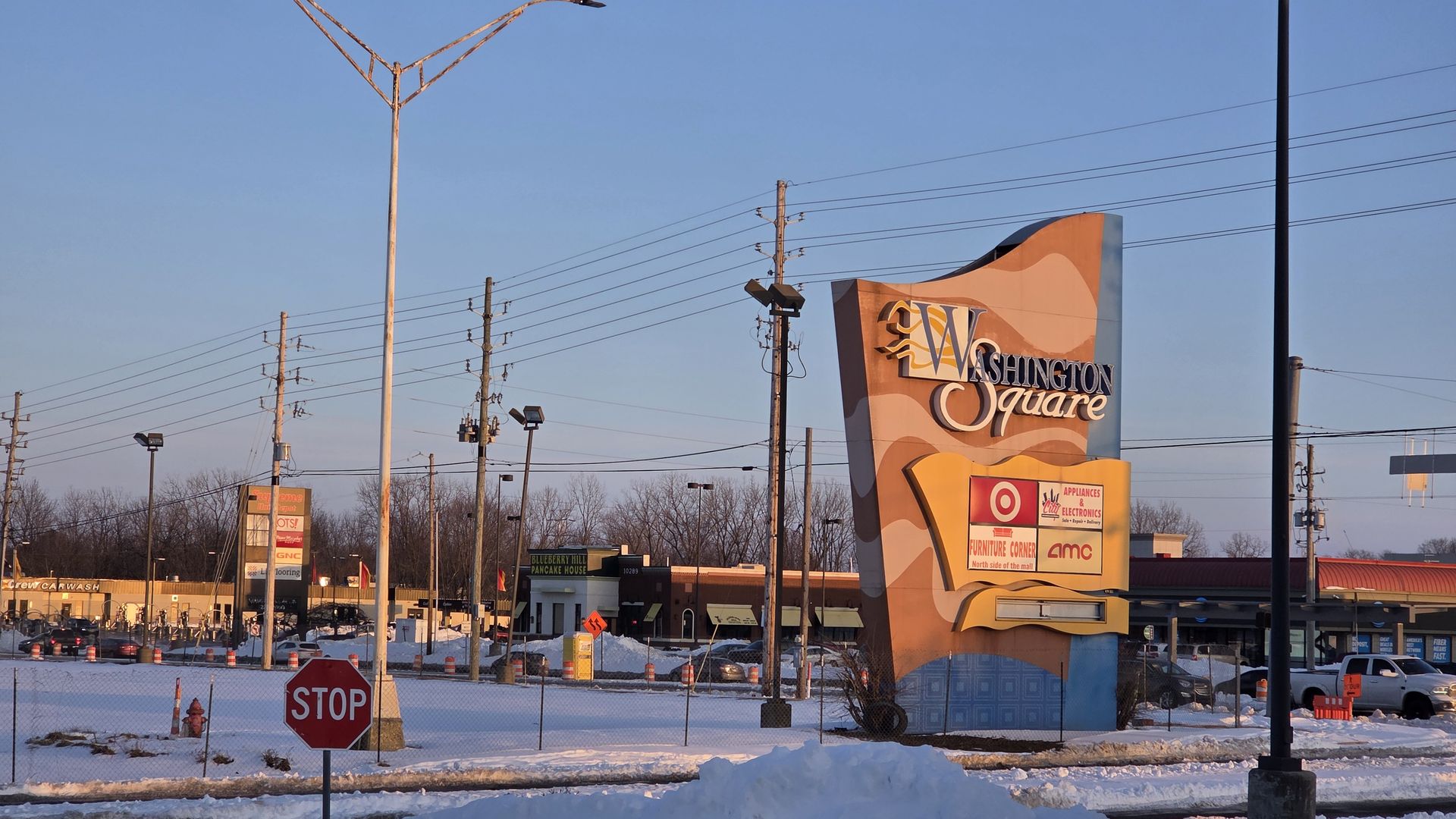
Washington Square was included in the 29 Marion County census tracts nominated to become one of the city's next Opportunity Zones. Photo: Justin L. Mack/Axios
Indiana nominated 126 census tracts for federal Opportunity Zone designation, including 29 in Marion County.
Why it matters: The tax benefits that come with the designation could set the stage for a wave of private investment in some of Indianapolis' most economically challenged neighborhoods.
Driving the news: Indiana submitted the nominations Sept. 25, covering all or part of 61 Hoosier cities and towns in 47 counties.
- Marion County's nominations stretch across areas including Mapleton-Fall Creek, Near Eastside, Riverside, West Indianapolis, Lawrence, Near Northside and Garfield Park.
- Across Central Indiana, an area in southern Johnson County near Bargersville and Center Grove has been nominated, as well as a Boone County census tract near Lebanon and Center Township.
- During Indiana's public input period, 88 individuals and organizations submitted 350 recommendations covering 234 unique eligible tracts.
Zoom in: Indianapolis City-County Councilor Michael-Paul Hart pushed for the census tract surrounding Washington Square to be included.
- He has led recent efforts to revitalize the far east side shopping center, including a site assessment conducted early this year and the crafting of a vision plan unveiled in August.
- In a blog post published Sunday, Hart called the area's inclusion "a big win for Washington Square."
What he's saying: "That needs a little explaining, because an Opportunity Zone is not a grant and it is not a pot of government money waiting to be spent," he wrote. "In plain English, it changes the math. And the math has always been the problem at Washington Square."
- "It does not guarantee redevelopment. But it makes Washington Square more competitive for the private investment we have been working to attract. Now we need to go get it."
Context: The federal Opportunity Zone program was introduced during the first Trump administration to encourage investments in lower-income areas.
- The program — made permanent in the 2025 One Big Beautiful Bill Act — lets taxpayers defer certain capital gains by reinvesting them in Qualified Opportunity Funds, which finance eligible property or businesses in Opportunity Zones.
By the numbers: The first round included more than 8,700 Opportunity Zones, including more than 150 in Indiana.
Between the lines: Qualified Opportunity Funds held more than $108 billion in total assets at the end of 2024. But Urban Institute senior fellow Brett Theodos, who has studied the program, previously told Axios that assessing the impact of that money nationwide is difficult due to poor tracking.
- The Urban Institute only has that information for the state of Ohio, per Theodos. What that data tells us is that the vast majority of these investments are turning into apartment projects.
- In Ohio, investment also disproportionately flowed to tracts that had already shown signs of growth. Two-thirds of opportunity zones in Ohio received no investments.
- "This is a once-a-decade chance to shape the biggest federal place-based program in the country that moves billions of dollars into or around the state," Theodos told Axios. "So [tract] selection is of critical importance that everyone should be attending very carefully."
What's next: Treasury certification is the final federal step. Under federal guidance, certification could occur as late as Dec. 28 if both available extensions are used.
- If approved, Indiana's new Opportunity Zones will run from Jan. 1, 2027 through Dec. 31, 2036.