What Hoosier flood victims need to know about getting help from FEMA

Add Axios as your preferred source to
see more of our stories on Google.
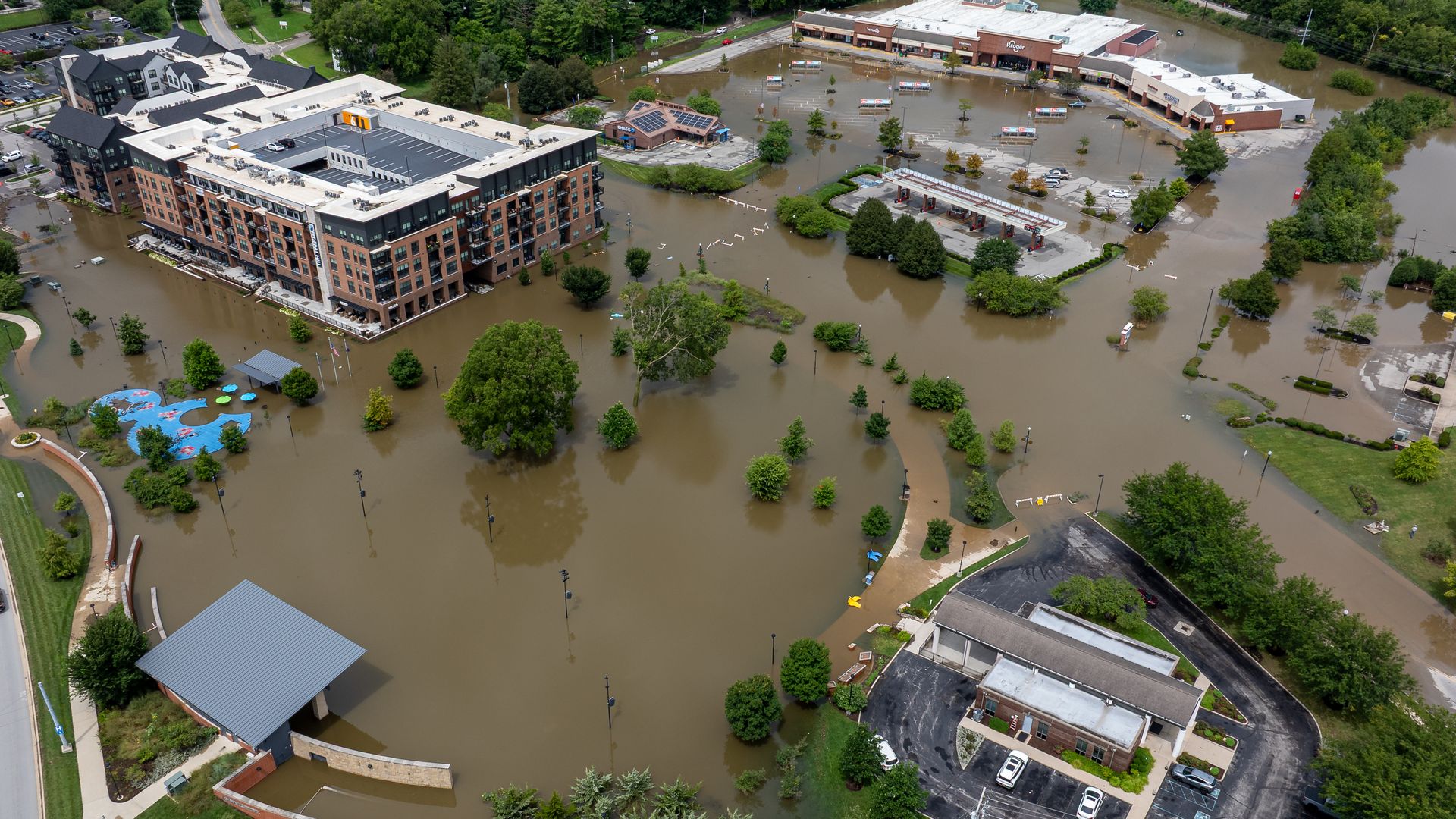
Flooding after heavy rain in Noblesville. Photo: Michael Hickey/Getty Images
Experts say residents in need of federal disaster aid now available to storm victims in Marion and 20 other Indiana counties should take a proactive approach to the process.
Why it matters: With statewide damage believed to be in the billions, the road to relief opened by this week's major disaster declaration could be one the hardest-hit Hoosiers travel for years.
What they're saying: "The first thing is to be asking questions to find out what you're eligible for, and not make assumptions," Doug Noonan, a professor of public and environmental affairs at IU Indianapolis, tells Axios.
- "And that can be one of the hardest parts. You've just been hit with a really bad event … and then you go in thinking now you can get some help only to find out you're not eligible, or you're not in the right county. Then it's just a sucker punch."
Driving the news: Gov. Mike Braun's request for an expedited major disaster declaration through FEMA was approved Tuesday, unlocking assistance to individuals and households in the following counties:
- Marion, Carroll, Dearborn, Decatur, Delaware, Fayette, Franklin, Hamilton, Hancock, Henry, Lake, LaPorte, Madison, Morgan, Porter, Pulaski, Randolph, Rush, Tipton, Union and Wayne.
- Hamilton, Delaware, Fayette, Franklin, Henry, Lake, LaPorte, Madison, Porter, Tipton and Wayne counties were also approved for assistance to repair disaster-damaged public facilities.
How it works: Noonan said before applying for assistance, the first step should be contacting your insurance provider and filing a claim as soon as possible.
- Federal support is meant for expenses not covered by an insurance policy, and FEMA is prohibited from duplicating benefits, which could lead to a denial.
- You'll also need to provide information like damage descriptions, annual household income and bank account information to get assistance via direct deposit and if you need accommodation because of a disability.
Between the lines: Money is administered in the form of a grant that does not need to be repaid.
- Aid is also not considered taxable income, so accepting a FEMA grant won't affect Social Security benefits, Medicare, Medicaid, Supplemental Nutrition Assistance Program (SNAP) or other federal assistance programs.
Pro tips: Noonan says detailed documentation is key.
- If you suspect damage, inspect your property thoroughly — including places you might not normally look. Water can cause damage that isn't immediately obvious, including problems that can worsen into mold or other long-term issues.
- He also urges Hoosiers to think of the federal declaration as an important milestone, but not the end of the disaster.
- "The recovery process is not measured in days or weeks or months," he said. "It's definitely measured in years."
By the numbers: In his request, Braun said storms killed eight people, injured three others and completely destroyed 44 structures.
- Preliminary estimates put statewide residential property losses between $550 million and more than $5 billion — including an estimated $36 million in Indianapolis.
What's next: Apply for relief at DisasterAssistance.gov, on the FEMA app or by calling 800-621-3362.