30 over 30: Indiana Black Expo's mission endures through reinvention

Add Axios as your preferred source to
see more of our stories on Google.
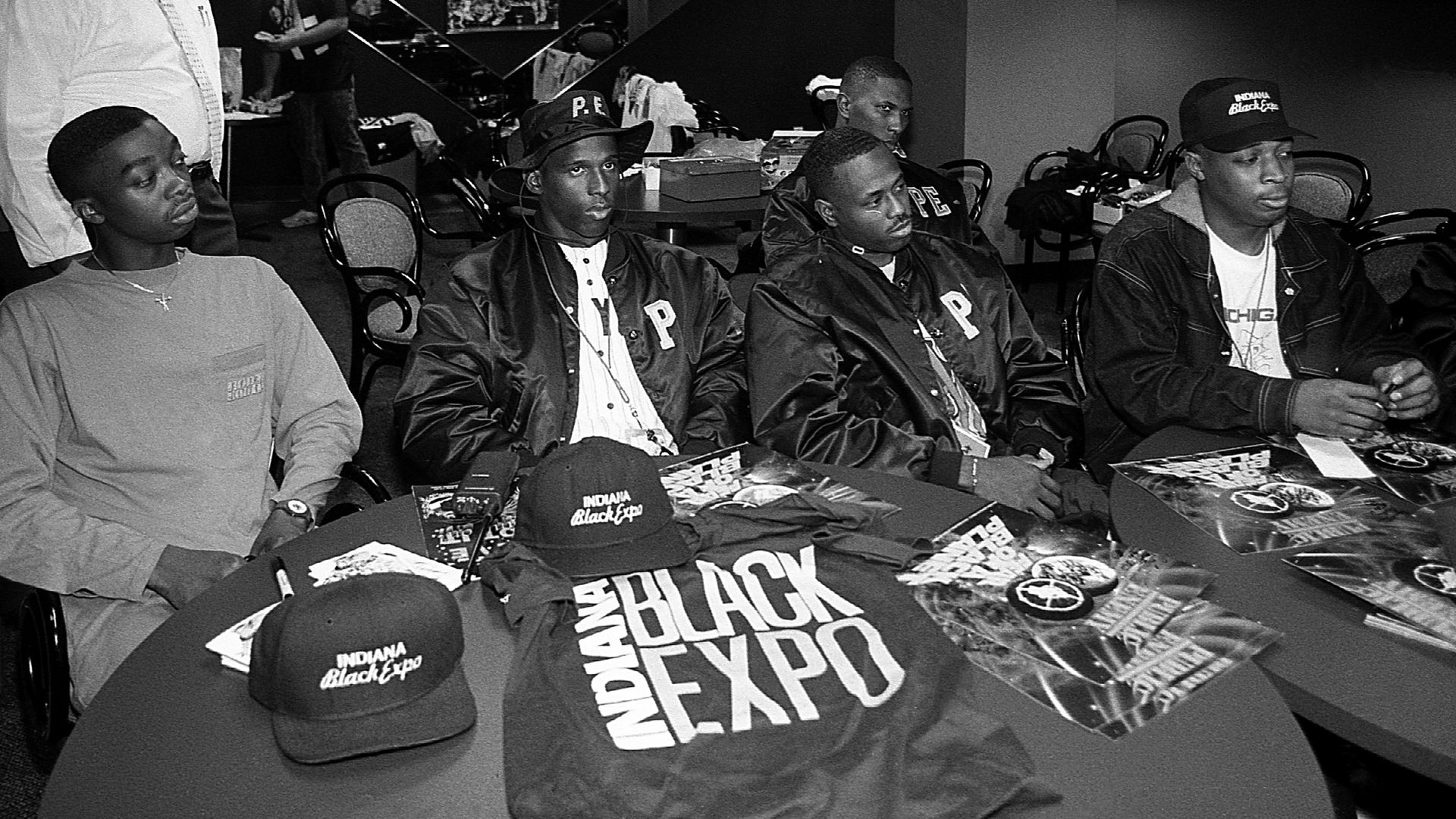
Rapper and activist Chuck D of Public Enemy (far right) sits with comedian Chris Thomas and the S1Ws during a press conference for Indiana Black Expo 1990 backstage at Market Square Arena. Photo: Raymond Boyd/Getty Images
Welcome back to Axios Indianapolis' "30 Over 30," a series celebrating the icons that have shaped our city for 30 years or more.
After more than 50 years of working to advance Black life in the Hoosier State, the Indiana Black Expo is making hard calls today to keep the mission moving forward for another 50.
Why it matters: IBE is one of Indiana's largest and longest-running civic organizations, touching small businesses, young people, seniors and voters statewide.
- Leaders said the stakes are too high to stop fighting. But transformation will remain a vital — and necessary — part of its evolution.
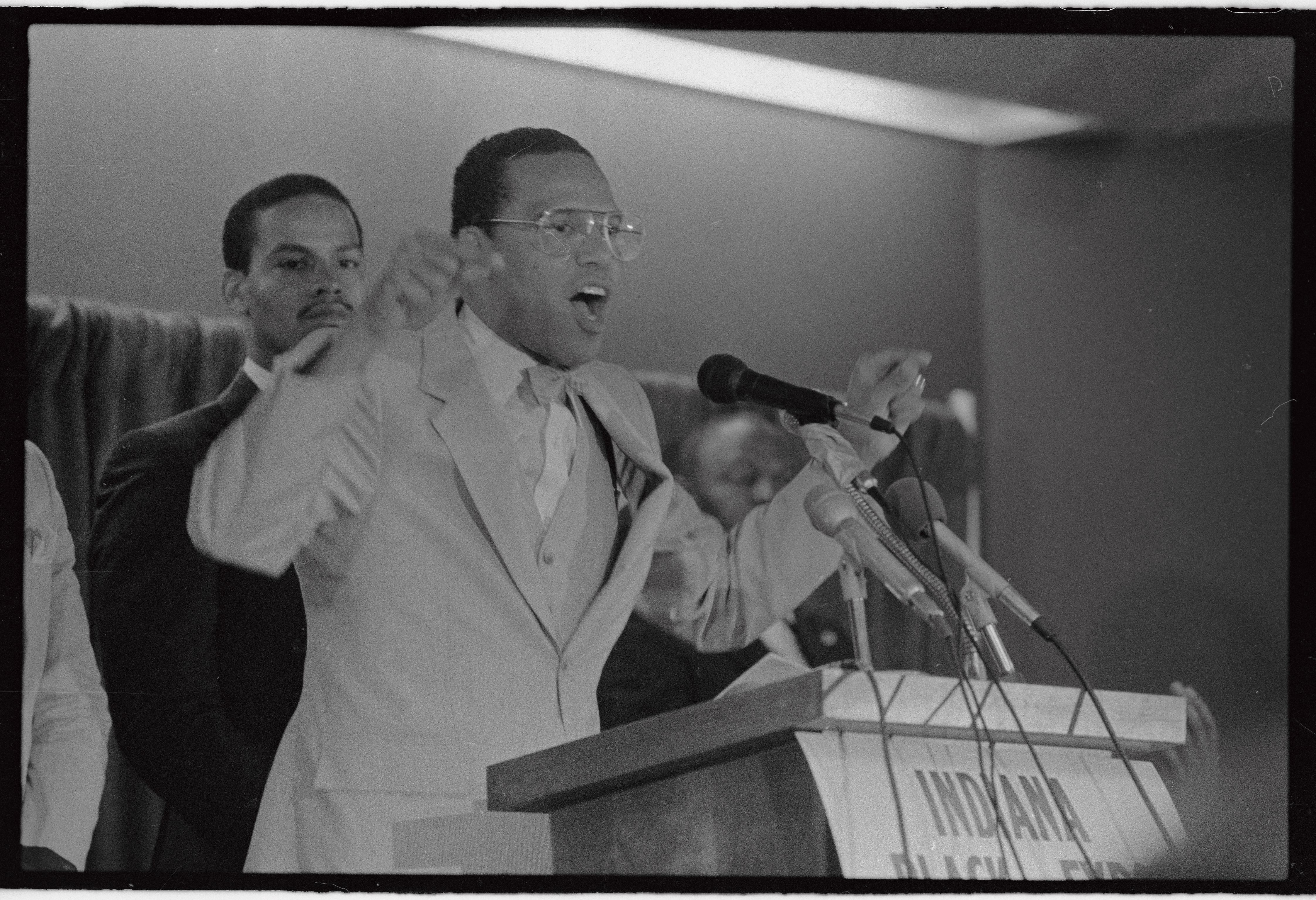
Flashback: Civic and religious leaders formally founded IBE in 1971, modeling it after the work of the Jesse Jackson-led Operation PUSH in Chicago in the late 1960s.
- IBE's first one-day exposition was held at the Indiana State Fairgrounds on June 19, 1971, with an ABA game and a Donny Hathaway concert as the headliners.
- Two years later, IBE was incorporated as a nonprofit.
President and CEO Alice Watson says IBE exists "to advance and empower African-American youth and families, and those who are underrepresented and marginalized in our communities."
- She delivered that message during a fireside chat while hosting community members for a May open house at the organization's recently renovated 43,000-square-foot headquarters on the east side.
What she's saying: "What we need in our community more than anything is to address the inequities... the voices of need, not the voices of opinion," Watson said, noting that constant reinvention is required when leading a trailblazing organization.
- "I think that we've always managed to do that, keeping with the mission."
- In particular, investing in the next generation is a through line of IBE's efforts.
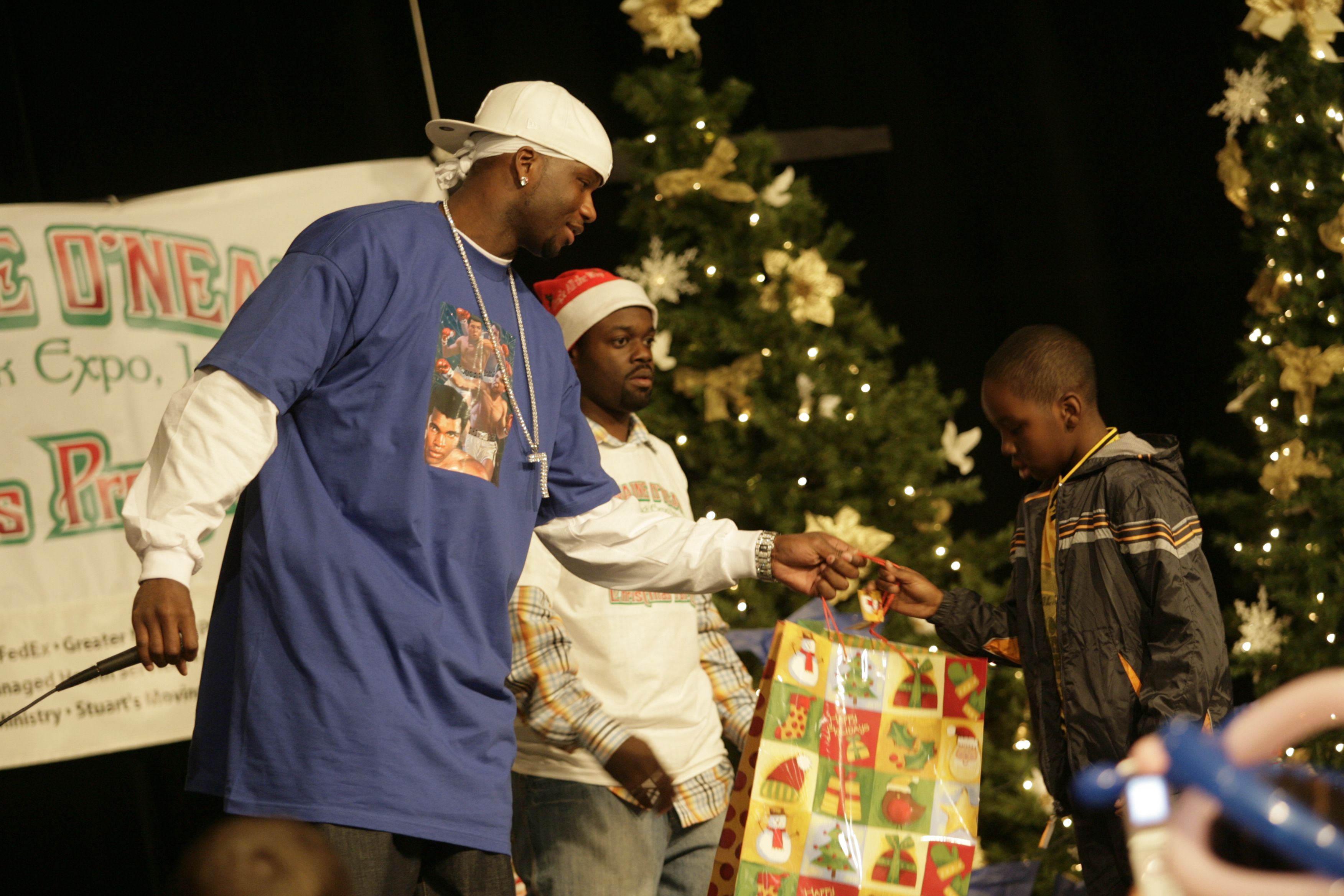
Zoom in: The Youth Leadership Summit works with 250 kids a year on through mentorship and post-secondary planning.
- Its Performing Arts Academy folds entrepreneurship and technical training into arts instruction. Watson described teaching kids who "are laying down beats" how to manage money as artists, or pivot into stage and media roles if music doesn't pan out.
Between the lines: Business ownership and civic involvement are also pillars of IBE's future.
- After watching Black-owned businesses get shut out of pandemic-era relief, IBE launched the Black Business Training Institute to help more than 300 entrepreneurs get certified or secure loans.
- According to Watson, fewer than 5% of roughly 2,000 businesses IBE steered toward Indiana's Restart Initiative could actually access funds, often due to "bad advice" from accountants.
- Meanwhile, the nonprofit's "Taking Your Seat" institute pushes young adults to serve on school boards and city councils.
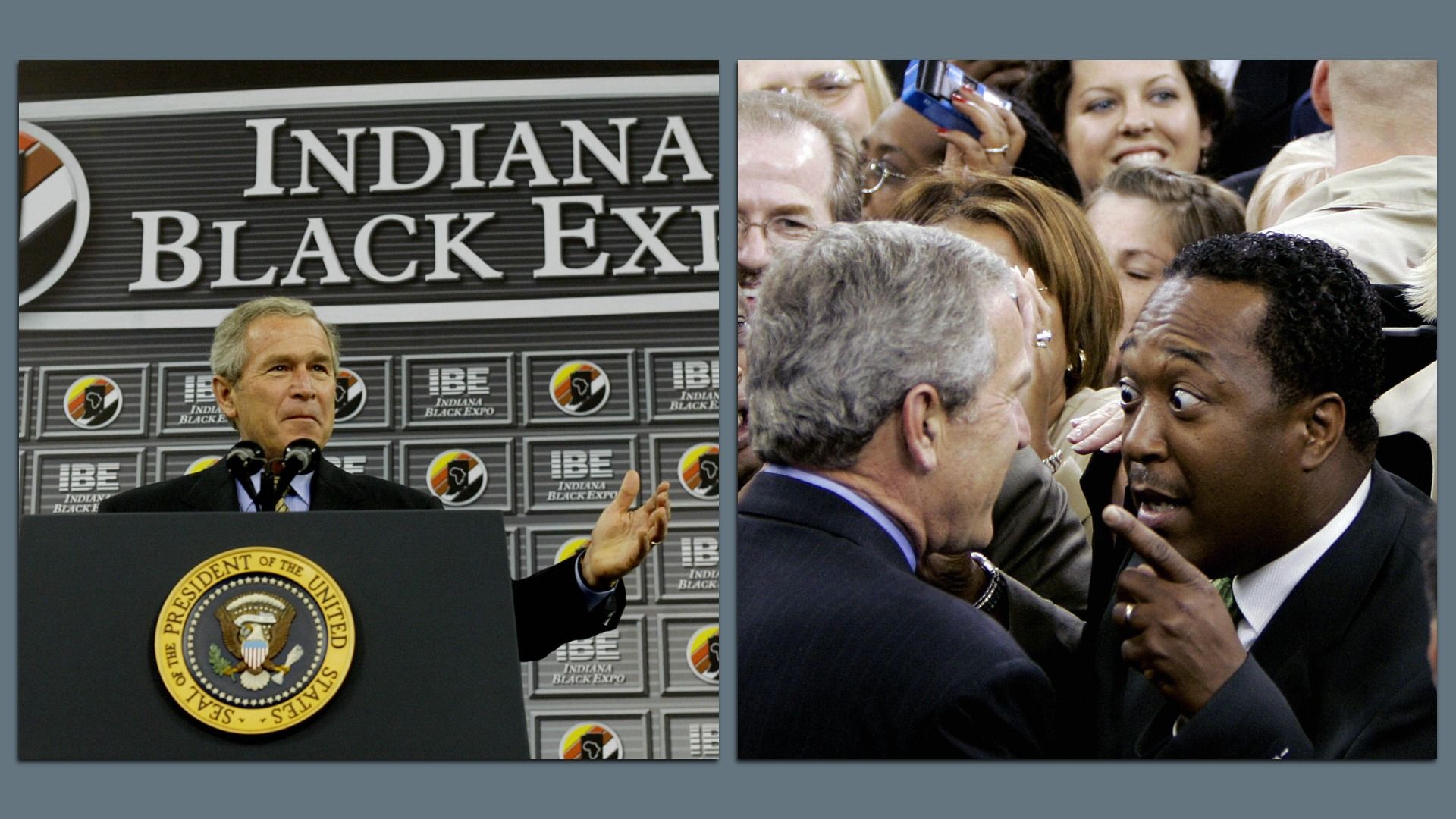
Yes, but: Not every part of the IBE's past will be part of its future. For more than 40 years, the Circle City Classic football game has been a fall battle between HBCU teams.
- This September, it will be a high school and girls flag football showcase at Lucas Oil Stadium, a change made to save money.
- Watson said IBE lost nearly $700,000 in Classic sponsorship tied to the retreat from DEI funding.
- The change follows a massive shift in 2024 when the Friday night music performance, long referred to as the "free concert," moved from American Legion Mall to Carroll Stadium and began charging admission.
State of play: Watson said the Classic's attendance cratered, driven in part by travel costs and competition from 27 other classics and larger homecomings nationwide.
- So Watson said her team asked a blunt question: "What is the purpose for Circle City Classic?"
- They concluded the mission of exposing kids to HBCUs and Lucas Oil Stadium could survive even if the football game couldn't pay for itself.
- The Classic Parade and other weekend staples will remain. A new HBCU basketball invitational is also planned for 2027.