IU Health opens one of nation's first FDA-cleared 3D-printing studios

Add Axios as your preferred source to
see more of our stories on Google.
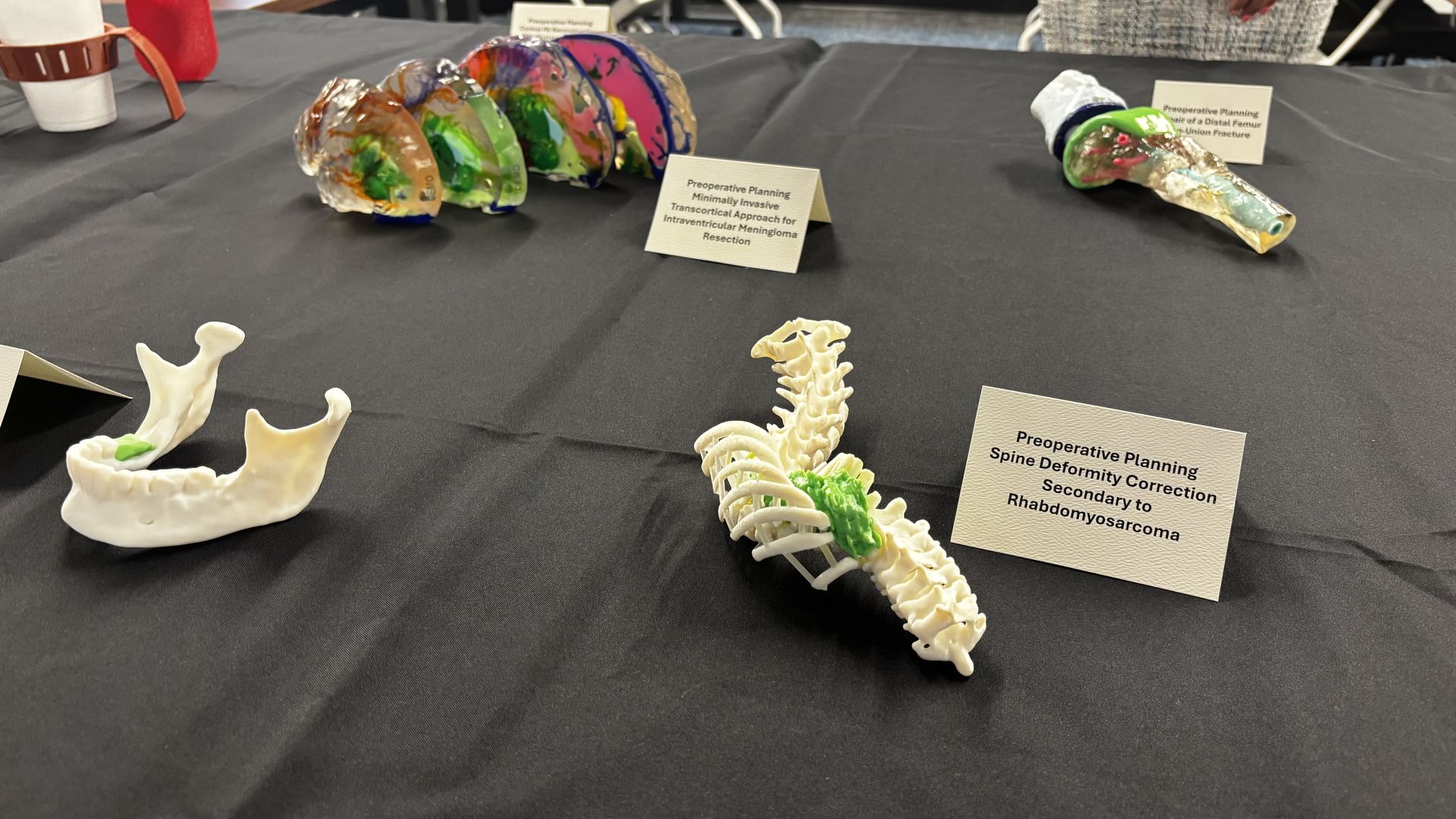
3D-printed models on display at IU Health's 3D Print Studio. Photo: Arika Herron/Axios
Jeremy Herrmann says he started to really understand the potential of IU Health's new 3D-printing technology when he was able to hand his infant patient's mother an exact model of the heart vessels he was preparing to operate on.
Why it matters: Patients can now see and understand complex surgeries before they happen, and surgeons are completing some operations faster.
- "I quickly realized the power of being able to hold this model of what we were proposing to do," said Herrmann, a pediatric cardio-thoracic surgeon, "and it truly was a significant moment."
Models like that one are changing how doctors communicate with patients and their families, Herrmann said.
- Plus, since the new 3D Print Studio opened in January, IU Health says surgeons using the technology have seen an average reduction in operation time of 62 minutes.
State of play: The 3D Print Studio received FDA clearance in January, making it among the first hospital-based, FDA-cleared 3D-printing programs in the country.
- What began as one employee's side project with two printers in a hospital basement is now a cutting-edge program housed in the 16 Tech Innovation District, being used by 16 IU Health departments.
- In the six months since receiving approval, the team has printed 92 models — everything from infant heart vessels to a full adult human spine.
What they're saying: "There's been so many movies where you see somebody hurt and all of a sudden they scan (them) and immediately they've got a new body part, they've got a way to cure them. And I thought, 'That'll never happen in my lifetime,'" Dennis Murphy, CEO of IU Health, said at a ribbon cutting for the studio last week.
- "Today we are seeing one more step towards that in our lifetimes, and I can't be happier to say that this innovation is occurring here."
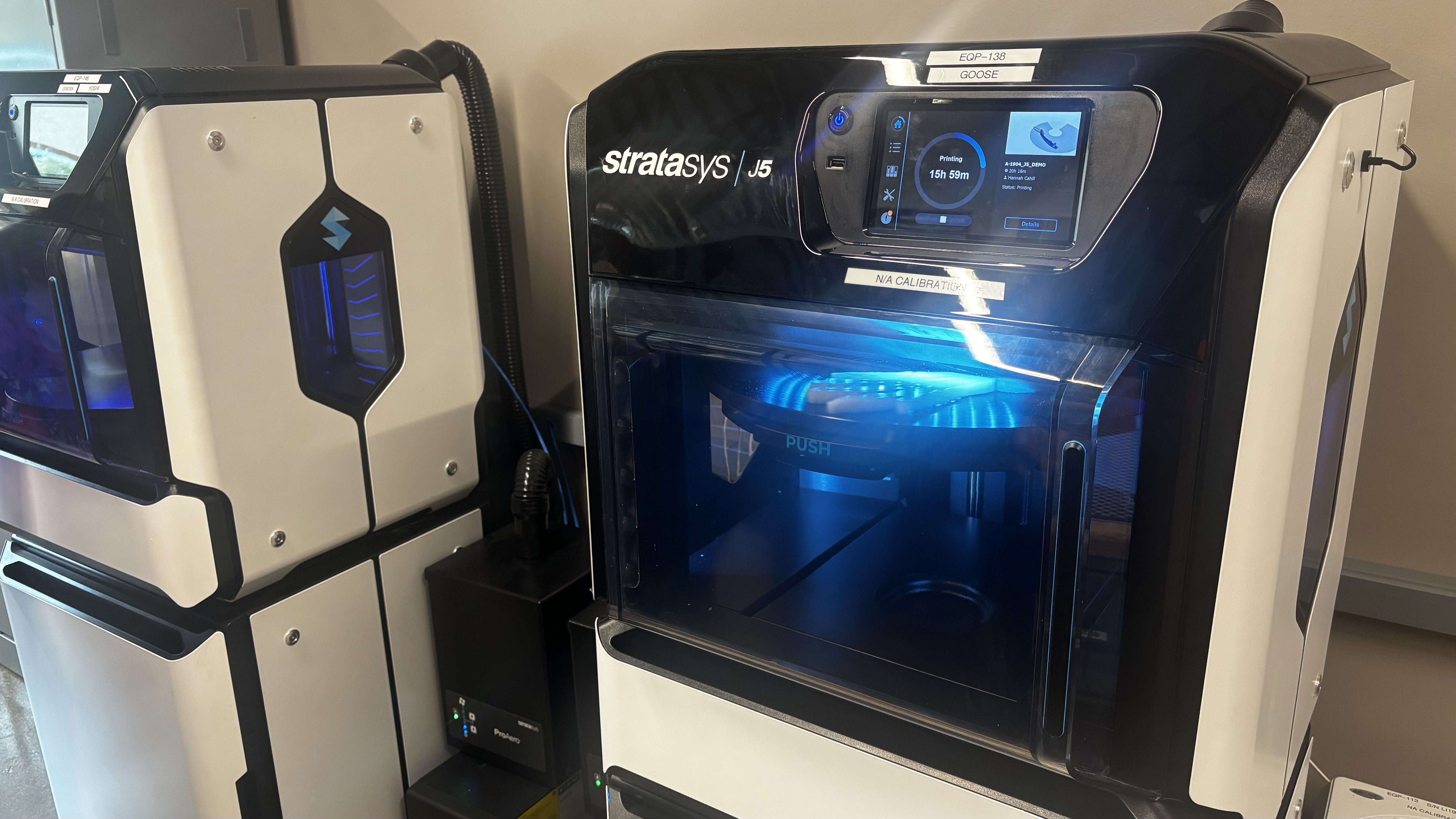
Zoom in: Advanced imaging, generally already on hand in complex surgical cases, gets input to a software program by engineers who prepare the printing file.
- That process can take anywhere from 30 minutes to several days, depending on how complicated the project is, says Hannah Cahill, a senior clinical engineer.
- Then, the printing on either a stereolithography or other multi-material machine begins — a process that can take hours to days. The largest projects are printed at a facility in Ohio and shipped to the hospital.
- During Axios' visit to the studio, a lower arm and hand bone model was four hours into a 20-hour print.
"Our mission is to democratize access to patient-specific, personalized medical devices, leveraging 3D-printing technology," said Gary Turner, vice president and general manager of Ricoh 3D for Healthcare, a partner in the studio.
- The progress toward personalized medicine at IU Health, Turner said, can serve as a model for other providers across the country.