Keeping Indy's pastor pipeline from closing


Add Axios as your preferred source to
see more of our stories on Google.
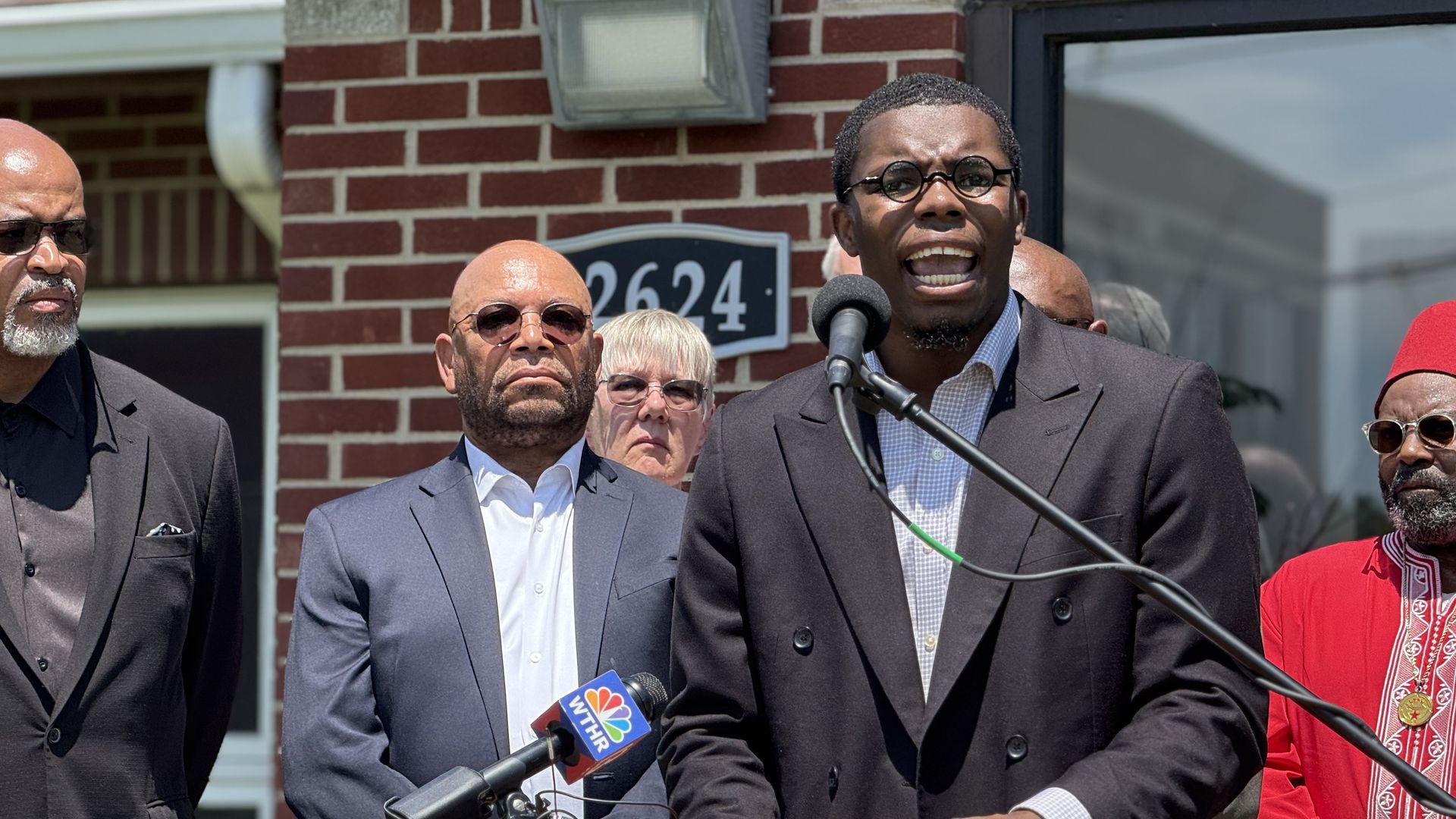
Rev. Jarrod Hubbard of Mt. Pisgah Baptist Church and members of the Black Church Coalition speak out in May against a data center planned for the Martindale-Brightwood neighborhood. Photo: Courtesy of Jarrod Hubbard
Fewer Americans want to become pastors, but young people like Indianapolis native Rev. Jarrod Hubbard are working to close the leadership vacuum inside one of the country's oldest civic institutions.
Why it matters: As the pastor role becomes lower-paid and higher-risk, the U.S. isn't just losing clergy — it's losing a key layer of local support, especially in rural and Black communities.
What they're saying: "The reality is that we're all in this together. If we truly want the world to be a better place, it's going to take everybody," Hubbard, 25, told Axios.
- "The Baptists, the Buddhists, the Pentecostals, the Presbyterians, the Muslims, the Methodists … it's going to have to take everybody from every strand of life to turn the world inside out. Because it's outside in, currently."
State of play: Churches are trying to fill pulpits while older clergy retire, congregations shrink and burnout rises.
- More than 4 in 10 clergy surveyed in fall 2023 said they had seriously considered leaving their congregations since 2020, per data from the Hartford Institute reported by the Associated Press.
- The leadership crunch comes as the U.S. saw 15,000 churches close last year and as a record 29% of Americans now identify as religiously unaffiliated.
- The share of religiously unaffiliated Hoosiers is 31%.
By the numbers: U.S. Master of Divinity enrollment at accredited schools under the Association of Theological Schools (ATS) fell 14% from 2020 to 2024.
- Graduate-level and college-level enrollment at Catholic seminaries were down significantly in the 2024-2025 academic year, the Center for Applied Research in the Apostolate at Georgetown University said.
- Black Protestant enrollment in ATS Master of Divinity and professional M.A. programs fell 31% from 2000 to 2020.
Caveat: Seminary enrollment numbers don't tell the full story because many clergy are pursuing an alternative education path to becoming licensed rather than traditional ordination.
- Those programs are cheaper, more flexible and often appeal to older second-career pastors.
Friction point: Rural churches are hit first because many share pastors, rely on part-time clergy or ask one minister to cover multiple congregations.
- When those facilities close, towns can lose informal hubs for food aid, child care, disaster relief and elder care.
- The Black church also faces a squeeze. The Brookings Institution notes that Black churches have long served as public health and community service infrastructure in places underserved by government systems.
For Hubbard, the associate pastor of congregational life and administration at Mt. Pisgah Baptist Church in the Martindale-Brightwood neighborhood, the loss of new leaders extends beyond staffing and services.
- "There is a sort of audacity, a sort of resilience, a sort of spirit that comes out of ministries spearheaded by young people," Hubbard said, pointing to the civil rights and feminist movements as examples of young leaders driving change.
Flashback: Hubbard first felt the call to preach when he was 8.
- He gave his first trial sermon in his home church at 11 and had his first opportunity to proclaim as a minister at 15.
- "During my time coming up, there were a lot more young people entering ministry, becoming more aware of that call and actually trying to walk it out," said Hubbard, who noted he was often one of the youngest people in his seminary classes.
- "In order for ministry, and in order for the world, to really evolve and change, you need young leaders."