How Indy's rising electricity bills stack up


Add Axios as your preferred source to
see more of our stories on Google.
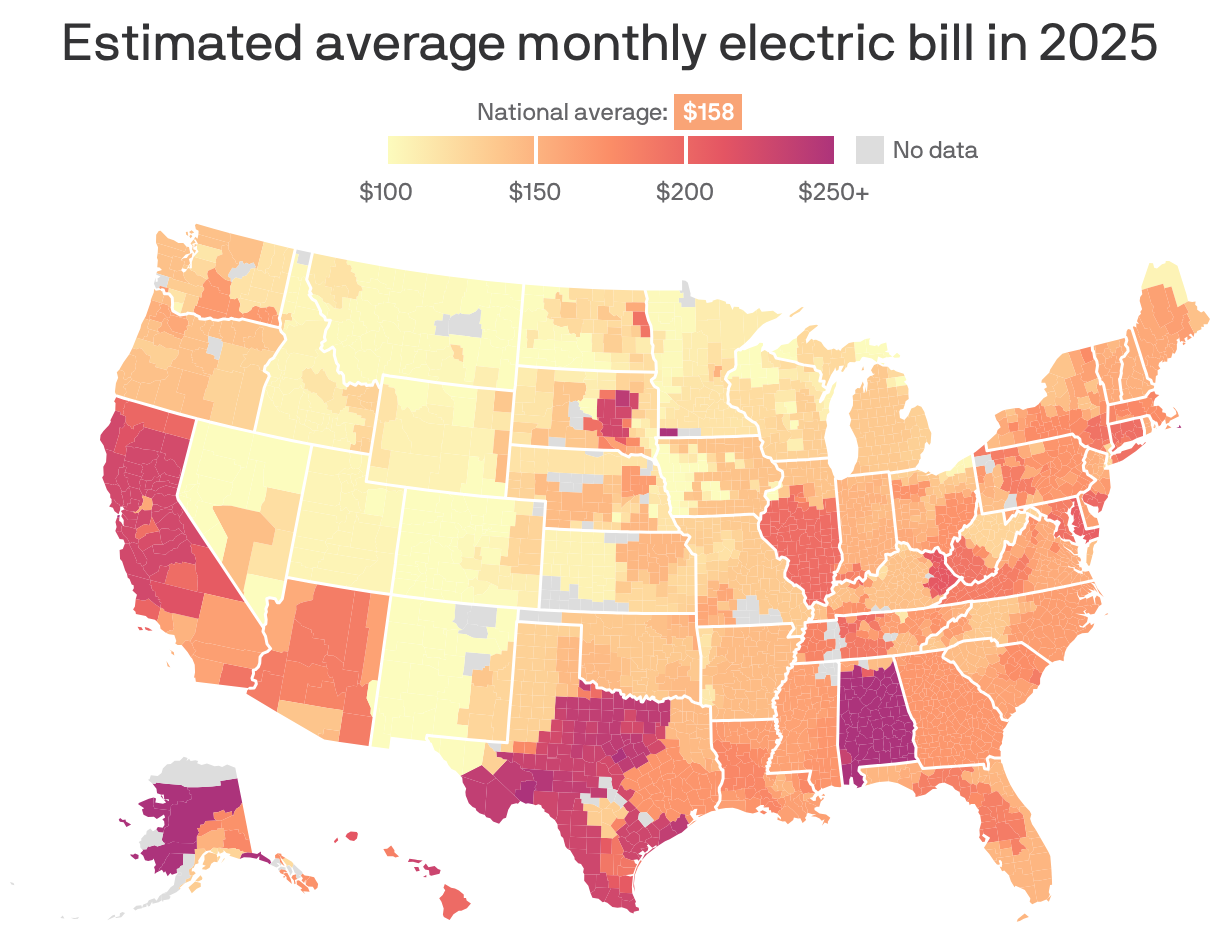
The average Marion County electric bill has gone up by more than 25% over the past five years.
Why it matters: More than 500,000 Indy-area AES customers will find out this month whether their bills will get even higher as a rate hike requested one year ago nears the decision deadline.
By the numbers: Marion County residents spent an estimated average of $126 per month on their home electric bills in April, per an Axios analysis of data collected and shared by climate newsroom Heatmap News.
- That's up about 10% from the average $115 per month spent last April, and up about 27% since April 2021.
Zoom out: Nationwide, Americans spent an average estimated $158 per month on home electricity last year, up 24% from 2022.
- Nantucket County, Massachusetts, ($296) had the highest estimated average monthly electric bills in the continental U.S. in 2025.
- Vanderburgh County had the most expensive power in Indiana, at an average of $188 per month.
State of play: Tensions over rising energy bills and power-hungry AI data centers have emerged as a key political issue in the Hoosier state.
- Earlier this year, the Indiana Office of Utility Consumer Counselor launched an investigation into the affordability of energy bills charged by the state's five largest investor-owned utilities.
- Lowering energy costs was among the top priorities for Gov. Mike Braun and both Democratic caucuses and House Republicans this year.
Zoom in: AES filed a regulatory rate review in June 2025 to increase costs for Indianapolis-area customers by 13.5%.
- The company said the increase is needed to cover operational expenditures and investments to improve service reliability.
Yes, but: A proposed settlement filed in October would lessen the requested increase, so a customer using 1,000 kilowatt-hours per month would see their bill increase by about $10 instead of $21.
- According to AES, the settlement rate adjustment averages 3.35% annually over a two-year period.
- The deal also would prohibit AES from seeking another base rate increase before January 2030.
Between the lines: In addition to the city and AES, parties listed as in agreement with the settlement are Walmart, Rolls-Royce Corp. and the AES Indiana Industrial Group, which includes Allison Transmission, Eli Lilly and Co., Indiana University, Ingredion, Marathon Petroleum and Messer LLC.
- Kroger was not a party to the settlement but participated in negotiations and has voiced no opposition.
The other side: The Indiana Office of Utility Consumer Counselor, ratepayer advocacy group Citizens Action Coalition and others stand against the settlement.
- They argued that Hoosiers are already stretched too thin and instead propose a reduction to current base rates.
What's next: The Indiana Utility Regulatory Commission deadline to make a final decision in the case is June 24.