Carmel firefighters debut augmented reality helmets

Add Axios as your preferred source to
see more of our stories on Google.
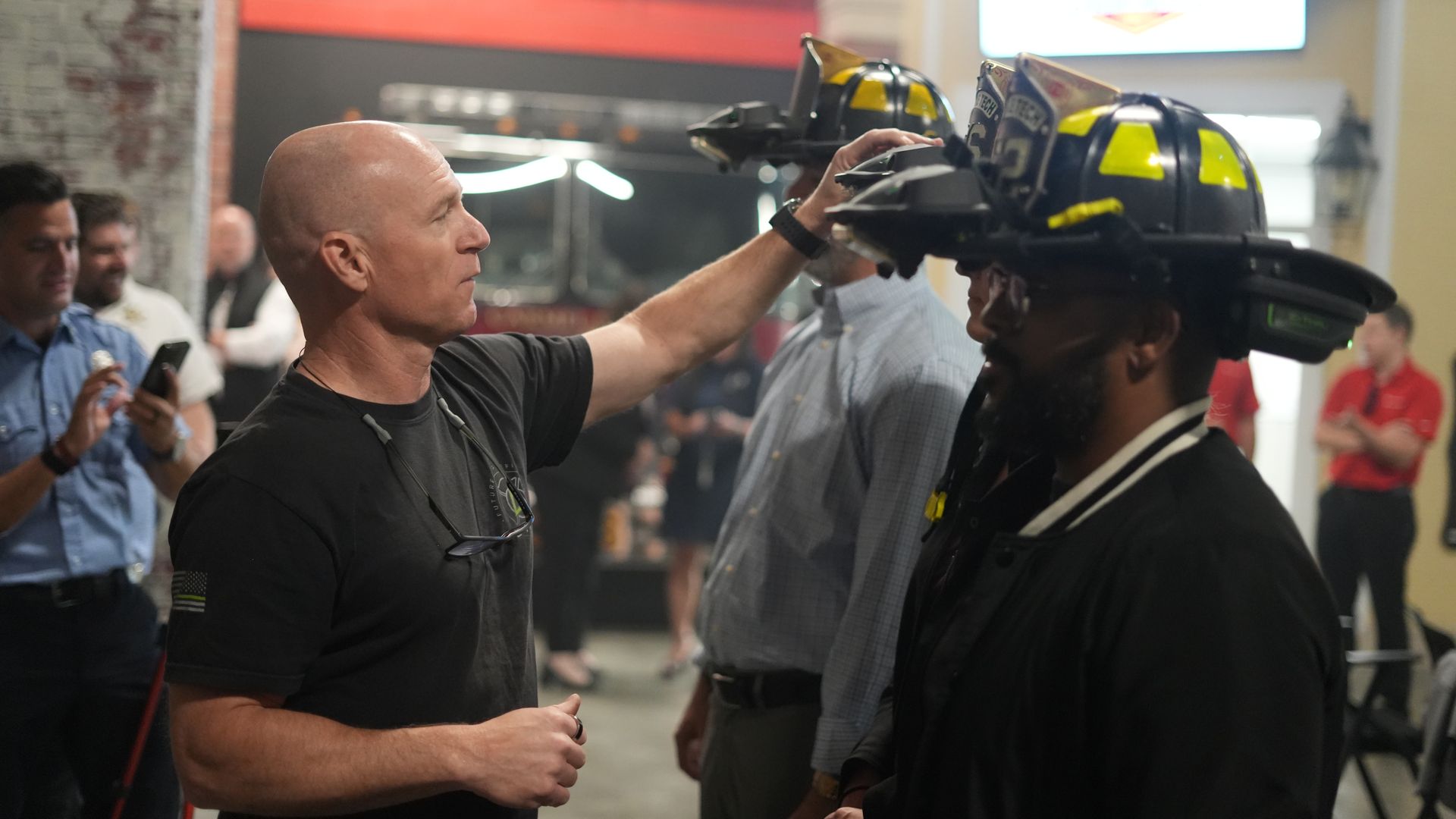
Axios Indianapolis reporter Justin L. Mack and others get fitted with augmented reality helmets by Qwake chief deployment officer Brandon Smith. Photo: Courtesy of the city of Carmel
Carmel firefighters will soon be among the first in the U.S. to use augmented reality helmets to see and communicate in low-visibility conditions.
The big picture: The 10 cities using the technology could shape its nationwide deployment as first responders increasingly turn to AR and AI to save lives.
Driving the news: Carmel Fire Department leaders on Friday showcased the Qwake Technologies C-THRU helmets their firefighters will use this summer.
- Developed over more than a decade under a $10 million contract from the U.S. Department of Homeland Security, the helmets are designed to provide firefighters with instant information about a scene while reducing operational risk.
- The cost of the equipment is partially covered by a contribution of more than $200,000 from the Heroes Club of Carmel.
💭 Justin's thought bubble: I was one of about two dozen people who demoed a C-THRU helmet during Friday's presentation, and the best way I can describe it was giving firefighters Predator vision.
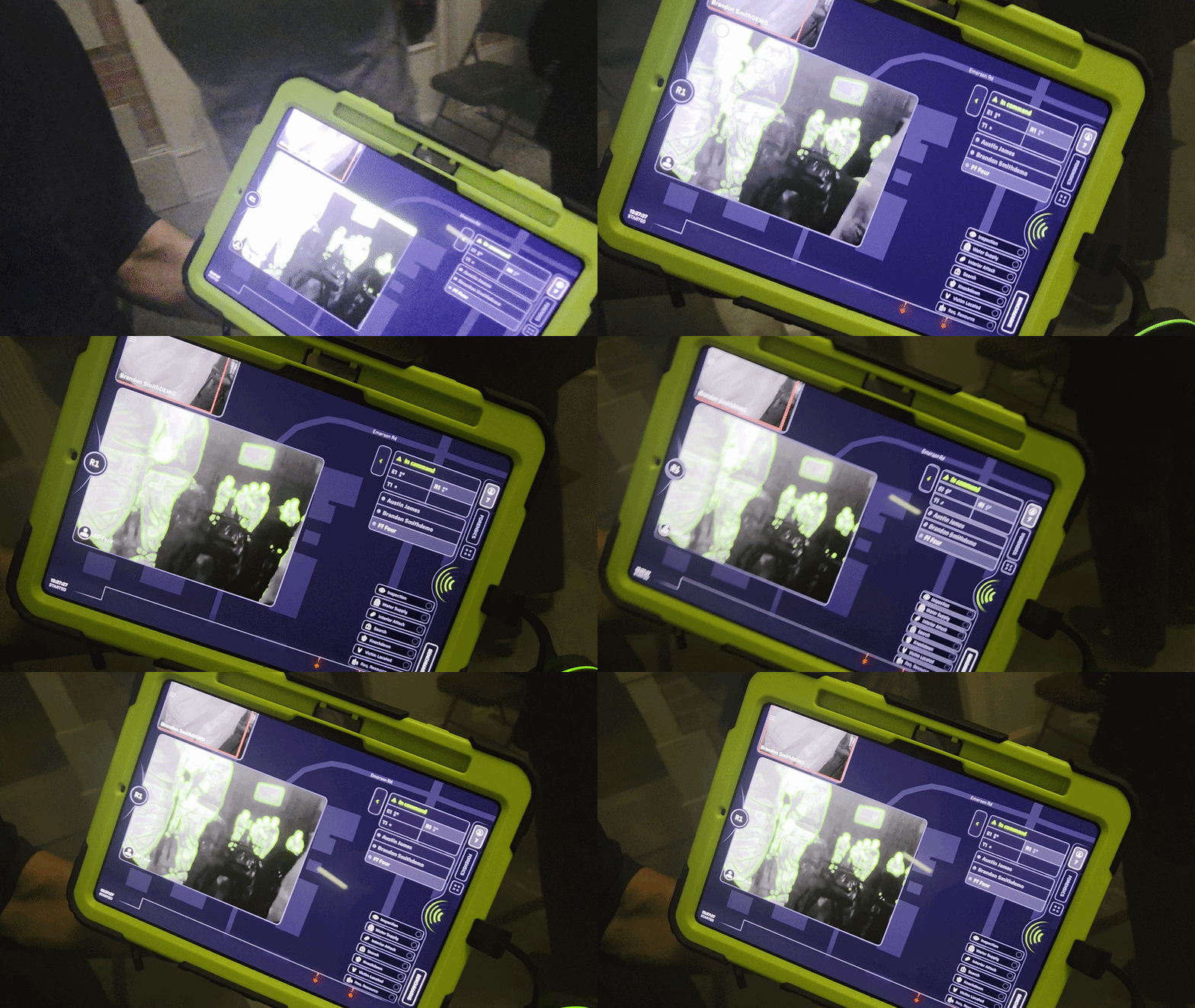
- The amount of information that comes pouring into the eyepiece is staggering, turning a pitch-black room filled with theatrical smoke into a colorful AR world of thermal outlines and drop-down notifications.
How it works: A screen that flips down from the helmet's brim allows firefighters to see people, walls, doorways and other objects through thick smoke and darkness.
- They can use it to record and investigate a scene hands-free.
- Communication is enhanced by the ability to send visual distress calls directly on the display. An arrow on the screen provides turn-by-turn directions to exits.
- Outside the structure, incident commanders can watch a live feed from each helmet and issue commands.
What they're saying: CFD chief Joel Thacker told Axios that the time saved by this technology not only helps firefighters locate victims more quickly but also reduces the time they spend potentially inhaling deadly toxins while surveying a scene.
- "It opens up your view; you're able to conduct a search in half the time," he said. "In 34 years, I've seen the transition from us having nothing to the thermal cameras that we have now, which are great. But we're crawling into houses on one hand while operating it, and it can be time-consuming."
Threat level: More than 550 people have died in Indiana house fires since 2019.
What's next: Qwake cofounder and CEO Sam Cossman said they are continuing to add capability through development, such as using AI to predict potential structural collapses.
- "We'll be working with Carmel to roll that out for the rest of the world," Cossman said.
Yes, but: It's a bit bulky in its current state, one of the many things Cossman and his team will be working on with departments like Carmel.
- "This is just the beginning," he said. "This is like the first iPhone for the fire service."