Inside the "scrappy" effort to build Indy's City-County Archives

Add Axios as your preferred source to
see more of our stories on Google.
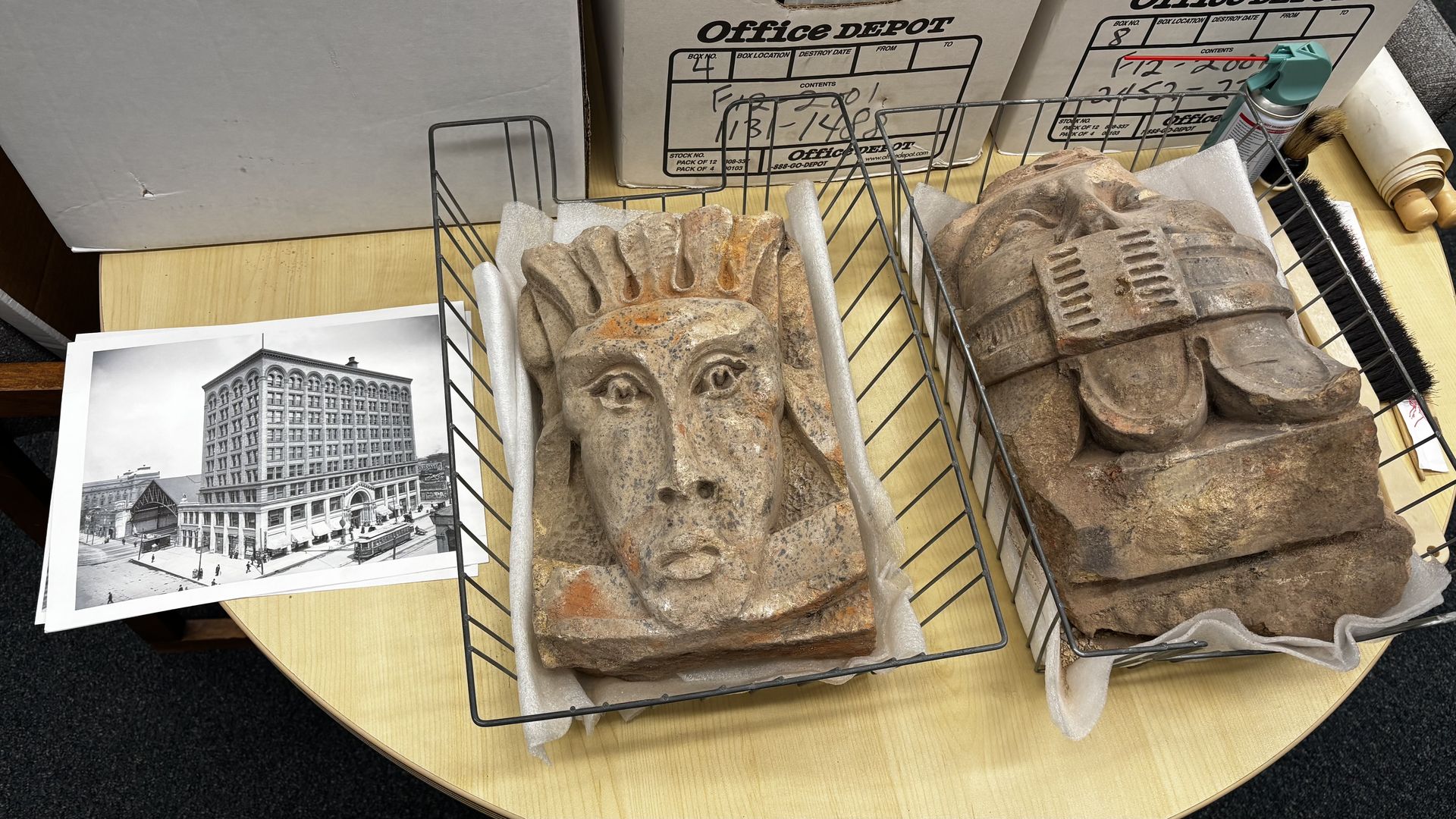
Terracotta details from a long-ago demolished building were unearthed during recent construction and brought to the City-County Archives. Photo: Arika Herron/Axios
The City-County Building has a secret. Lots of them, actually.
Why it matters: Inside courtrooms abandoned when the Criminal Justice Campus opened in 2022 sits a trove of Indianapolis history — 150 years of records, maps and photographs.
State of play: The courtrooms now house the City-County Archives, a new effort to centralize and preserve Indianapolis' historical records.
- The project is led by Jordan Ryan, who began as a consultant in 2021 and has worked with the Department of Metropolitan Development.
- As requests poured in from other agencies, it became clear the city needed a central archive.
- It became clear, she said, that the city needed someone — and somewhere — to centralize record archiving across departments.
So, she was hired, and the deluge of records from dozens of city-county agencies began.
- "We've got a 150-year backlog and we're like two years old," Ryan said.
- She started with one courtroom in 2024 and has since expanded to four more.
- Last year, she added archivist Deedee Davis to her team — bringing the total to two employees.
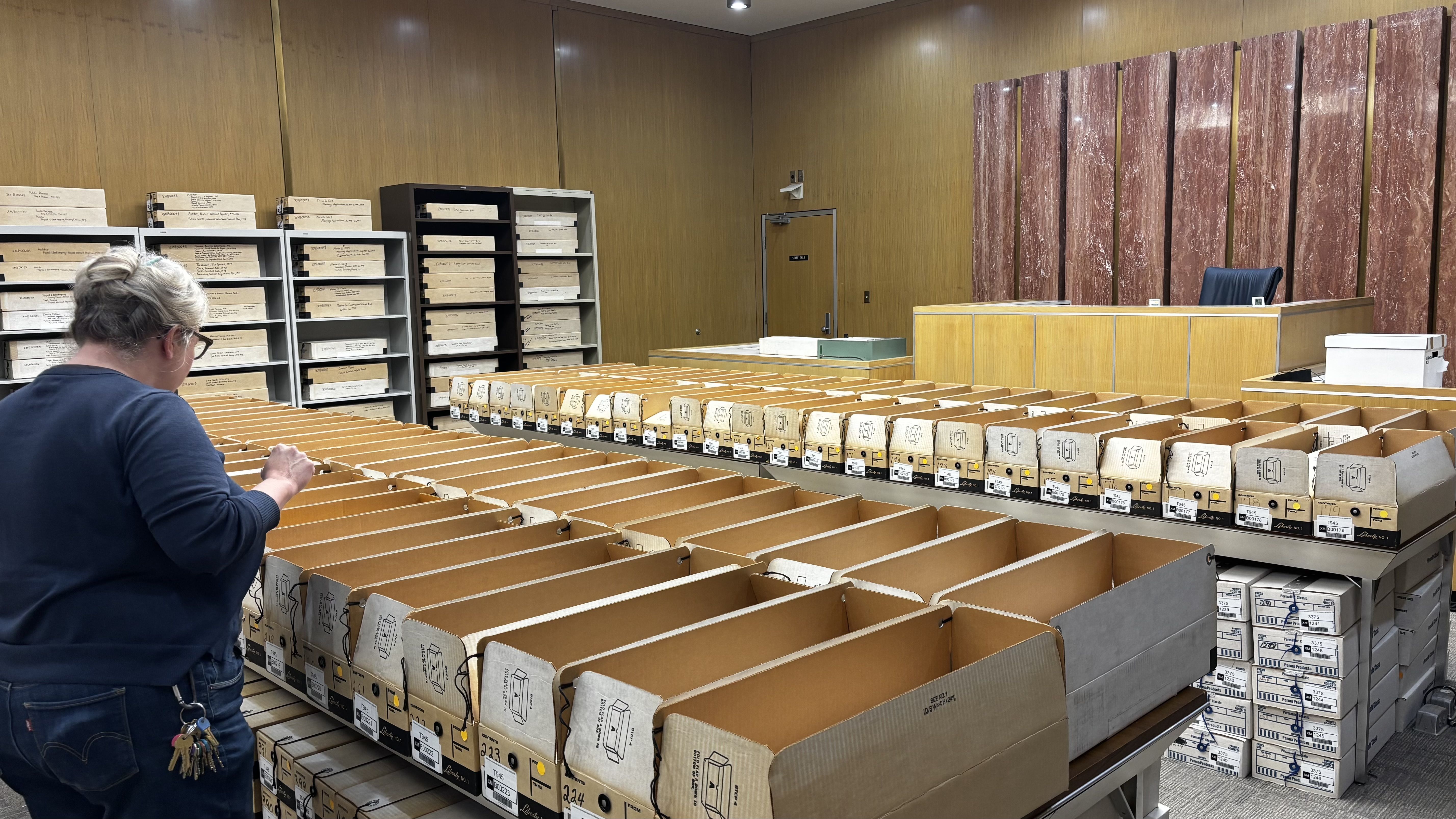
"It's a scrappy operation," Davis told Axios during a recent tour.
- There's one courtroom full of hundreds of boxes of microfilm records, permeated by the vinegar smell of decaying cellulose acetate film.
- Another is stacked with massive jail log books going back to the 1800s, handwritten records of individuals arrested for offenses like drunkenness and prostitution.
- Another room is stacked with dirt-coated boxes of paper records from the Department of Public Works. "One of these boxes had raccoon prints on it," Davis said.
- There are illustrations, photographs, and detailed maps that chart the city's progress from a small, planned town surrounded by farmland to a sprawling metropolis.
Between the lines: Beyond organizing the city's records, there's the matter of deciding what to keep.
- While record retention laws dictate what must be kept, Ryan said, historical value, research interest and internal reference questions are guiding decisions about what else to preserve.
- In the last year, many of those questions have been about Greenlawn Cemetery.
- They've led the city's efforts to track down records from the city's first public burying grounds to learn about the graves being uncovered as the city works on the Henry Street Bridge project.
What's next: Right now, the archives are open by appointment only as the two-woman team and a handful of volunteers make their way through the mountains of materials awaiting examination.
- Ryan is looking at existing archives, such as the Indiana State Archives, which is currently getting a new home downtown by the state library, and other municipal archives around the country, for models to guide their work.
- In a distant future, the goal would be to have a public-facing portion.
- "The state library just celebrated its 200th birthday," Ryan said, "and we're in diapers."