Here's how many out-of-staters are moving to Indianapolis


Add Axios as your preferred source to
see more of our stories on Google.
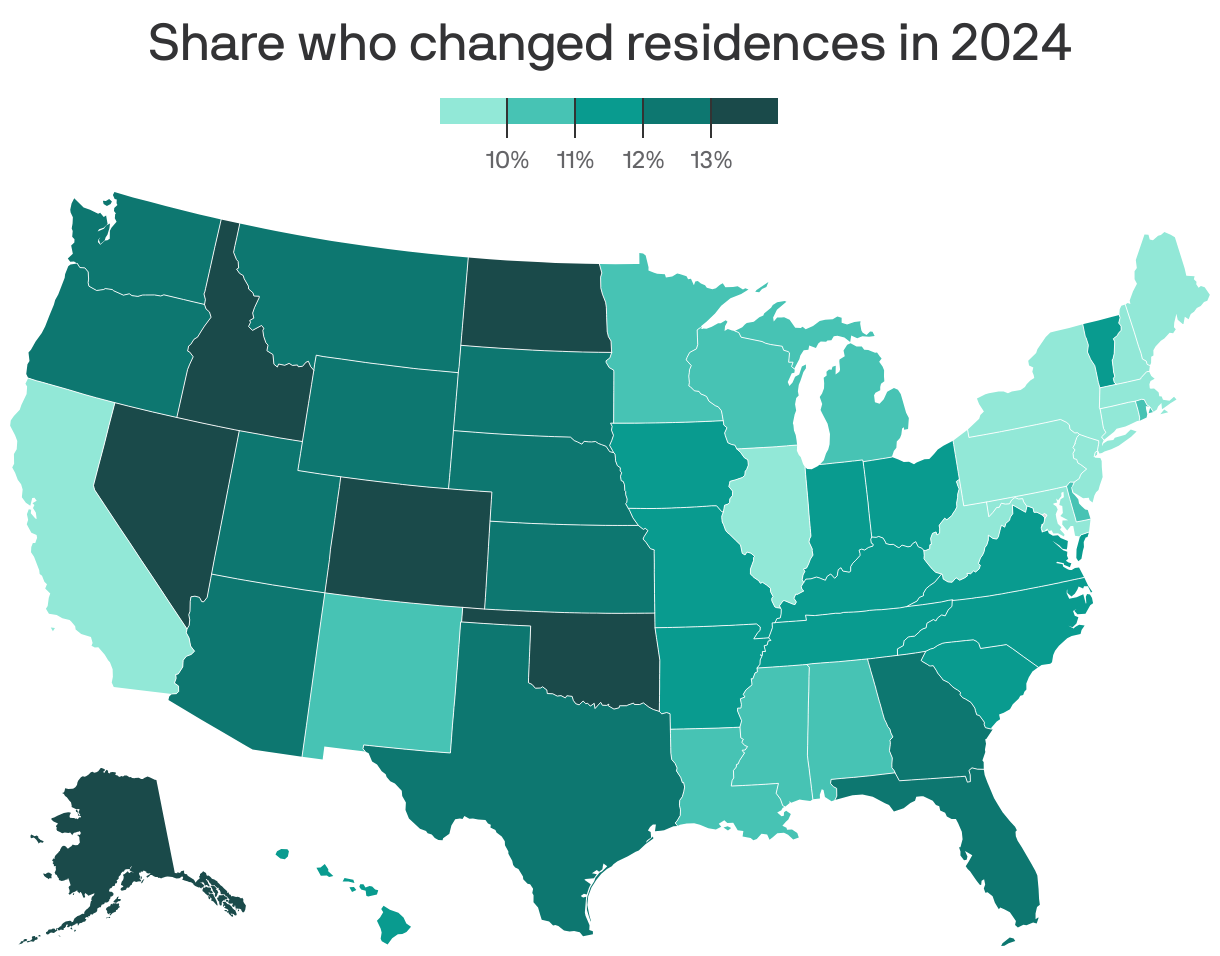
Indiana is drawing fewer out-of-state movers than most other states as nationwide mobility declines, a new analysis finds.
Why it matters: The trend could put a damper on civic leaders' push to grow downtown Indy's population by 20,000 people over the next decade.
Driving the news: Of those who moved to Indiana in 2024, 17.4% — nearly 134,000 — were from another state, according to an analysis of census data by rental listing site Point2Homes.
- That's the ninth lowest rate in the U.S.
- About 15% of those who moved to Indianapolis were from out of state, per the report.
- That ranks Indy at No. 26 of 37 large cities that Point2Homes reviewed.
Zoom in: Hoosiers are moving — mostly within Indiana.
- 11.2% of Hoosiers in 2024 changed addresses during the previous year, per the report.
- That's the nation's 27th-highest share of movers, and close to the 11% who moved nationally.
The big picture: Over time, Americans have become far less likely to move.
- Fewer people than ever moved in 2024, Point2Homes found. A decade ago, 14% of Americans moved; in the 1960s, that figure was 20%.
Threat level: A sharp nationwide "decline in geographic mobility is the single most important social change of the past half century," The Atlantic's Yoni Appelbaum wrote earlier this year.
- In any decade, "the people who have moved have done better economically than the people who stayed behind," Appelbaum said on a podcast in August, discussing his book, "Stuck."
- "The last 50 years, as we've stopped moving, have also seen [a] sudden atrophy and decay of our social and civic life."
Context: Appelbaum cites "discriminatory zoning laws" and "community gatekeeping" as major reasons mobility has stalled.
- Many who do move are going further afield, usually for housing affordability, climate resilience, or job opportunities.
What they're saying: "Falling mobility also affects economic resilience by limiting labor market flexibility, slowing wage growth and potentially reducing innovation as workers are less likely to move for better opportunities," the report says.