Energy-related CO2 emissions are falling in Indiana


Add Axios as your preferred source to
see more of our stories on Google.


Indiana cut its energy-related CO₂ emissions per capita more than most states over 18 years, but it's still far from transitioning to clean energy.
Why it matters: The numbers indicate some success in reducing emissions to curb climate change, but the Trump administration's pro-coal, anti-wind-and-solar attitude could jeopardize that progress as it gets harder to start new clean energy projects.
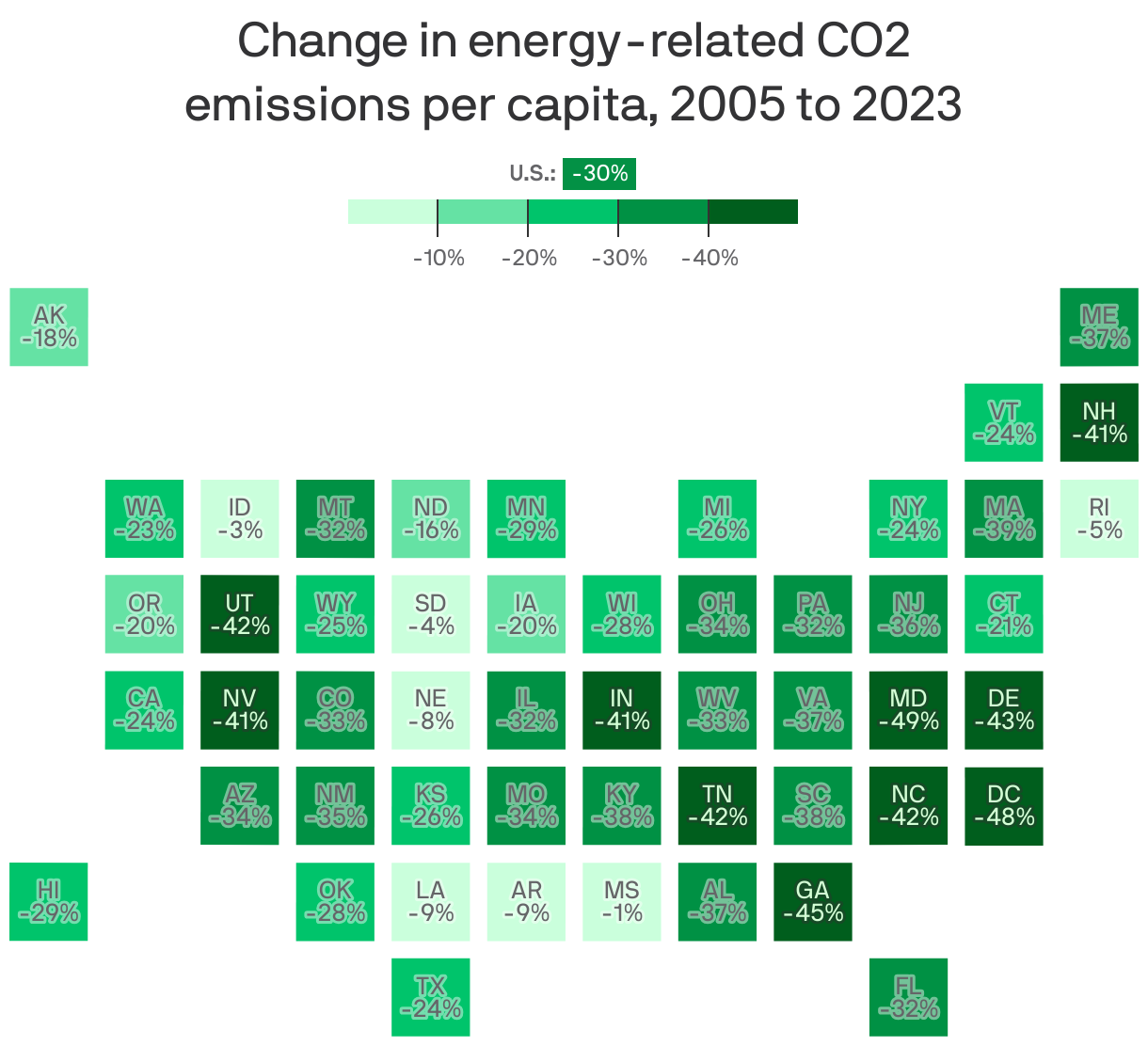
Driving the news: Indiana's rate fell 41%, placing it among the top 10 states with the most amount of change since 2005.
- That puts Indiana at No. 8 for the biggest drop in CO2 emissions in the U.S., and No. 1 in the Midwest.
The big picture: Energy-related emissions per capita fell 30% nationwide in the time frame, according to U.S. Energy Information Administration (EIA) figures.
- Raw emissions fell 20%, while the population grew by 14%.
Zoom out: Maryland (-49%); Washington, D.C. (-48%) and Georgia (-45%) saw the biggest decreases in energy-related emissions per capita.
How it works: The agency's state-by-state data reflects where power plants are located (even if their energy is sent to other states) and where transportation fuels are sold (even if vehicles burn those fuels to cross state lines).
Between the lines: The nationwide emissions decline was primarily a result of less coal being burned to generate electricity.
- An uptick in natural gas use, plus clean wind and solar energy, "offset the decrease in coal generation," per the EIA.
Yes, but: Indiana was the nation's second-largest coal consumer after Texas in 2023.
- According to the EIA, coal fueled 45% of Indiana's electricity net generation that year, the seventh-highest share of any state.
- Meanwhile, wind power provided 10% of Indiana's total electricity net generation. Solar, biomass, and hydropower combined accounted for about 3%.
Zoom in: The electric power sector was Indiana's leading source of CO2 emissions in 2023, per the EIA.
- Our industrial sector is the state's largest energy consumer, accounting for 45% of Indiana's energy consumption in 2022.
- Indiana leads the nation in the energy-intensive steelmaking industry. In 2023, it manufactured about 84% of the recreational vehicles sold in the nation.
The latest: A report released this week by environmental advocacy group the Sierra Club says Indiana electric utilities are failing to deliver on plans to transition to clean energy.
- The report identifies Duke Energy as the "dirtiest" company and gave it an "F" grade for delaying the company-wide exit from coal by three years and significantly scaling back proposed clean energy investments.
What they're saying: Megan Anderson, a senior Beyond Coal campaign organizer in Indiana, said Hoosier ratepayers are being stuck with expensive coal and gas costs to feed "power-hungry data centers."
- "(Gov. Mike) Braun's executive orders and new laws aimed at bailing out uneconomic coal plants are forcing Hoosiers to subsidize electric infrastructure for data centers, hurting our economy and our health," Anderson said in a statement. "I hope Gov. Braun is serious about decreasing rates, but it feels disingenuous based on his actions."
What's next: EIA is predicting a 1% uptick in overall CO2 emissions this year, in part due to a surge in demand for power from data centers and heavy industry.
Go deeper: Data centers and climate change could stress Indiana's water supply