Lilly investing $250 million in research at Purdue

Add Axios as your preferred source to
see more of our stories on Google.
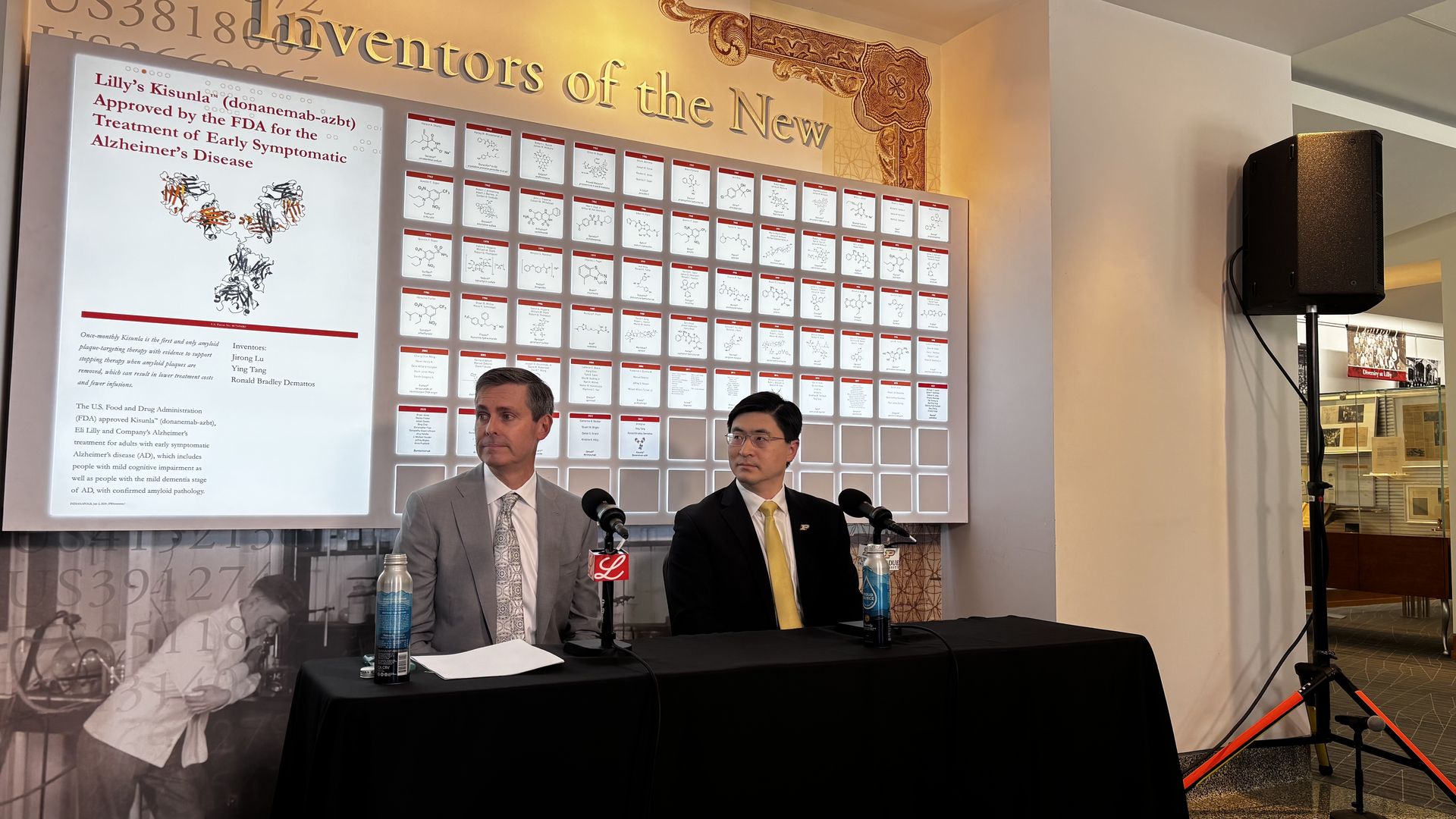
Eli Lilly CEO David Ricks (left) with Purdue University president Mung Chiang (right). Photo: Arika Herron/Axios
Pharmaceutical giant Eli Lilly will invest $250 million in an eight-year research partnership with Purdue University.
Why it matters: There's a lot of uncertainty around federal research funding at the moment, so landing what could be the largest-ever agreement of its kind between private industry and a university is a big deal.
The big picture: The initiative will bring Lilly researchers to Purdue's West Lafayette campus and Purdue researchers to Lilly facilities and will focus on accelerating drug discovery, development, and manufacturing using AI and other technology-driven approaches.
What they're saying: "This may not be the only part of the future of research, but it certainly is an increasingly important part," said Purdue president Mung Chiang during the Friday announcement.
Context: The Trump administration has instituted spending cuts and freezes to federal grants that have roiled major academic research programs.
- "In the face of uncertainty about exactly what funding will be available, institutions are grappling with, 'What choices do we have?'" Elena Fuentes-Afflick, chief scientific officer at the Association of American Medical Colleges, told Axios' Erica Pandey.
- "For decades, American prominence on the world stage in scientific research has been possible because of NIH funding," she said. "The disruption interrupts the ability to make discoveries, to make impactful findings."
- Plus, the disruption has implications for companies, which rely on the pipeline of scientists and technologists coming out of universities.
State of play: The collaboration between Lilly and Purdue will allow the pharmaceutical company to strengthen its own talent pipeline by training its next generation of workers.
- "The alliance between Purdue and Lilly can make sure Lilly gets the very best Purdue students to stay in the state and work here at the state's largest company," said Lilly CEO David Ricks.
Kurt Ristroph, an assistant professor of agricultural and biological engineering at Purdue, has already worked with the existing Lilly and Purdue Research Alliance Center.
- There's always been a benefit to working on research with companies, Ristroph said, in that you get to help them solve real-world problems. Now, he said, there's the added benefit of having this investment as a buffer to the uncertainty at the federal level.
- "It's good to know that this is here," he said. "But more than that, it's good to know that we'll be able to work on problems that matter."