Lawmakers give Braun total control over IU Board of Trustees

Add Axios as your preferred source to
see more of our stories on Google.
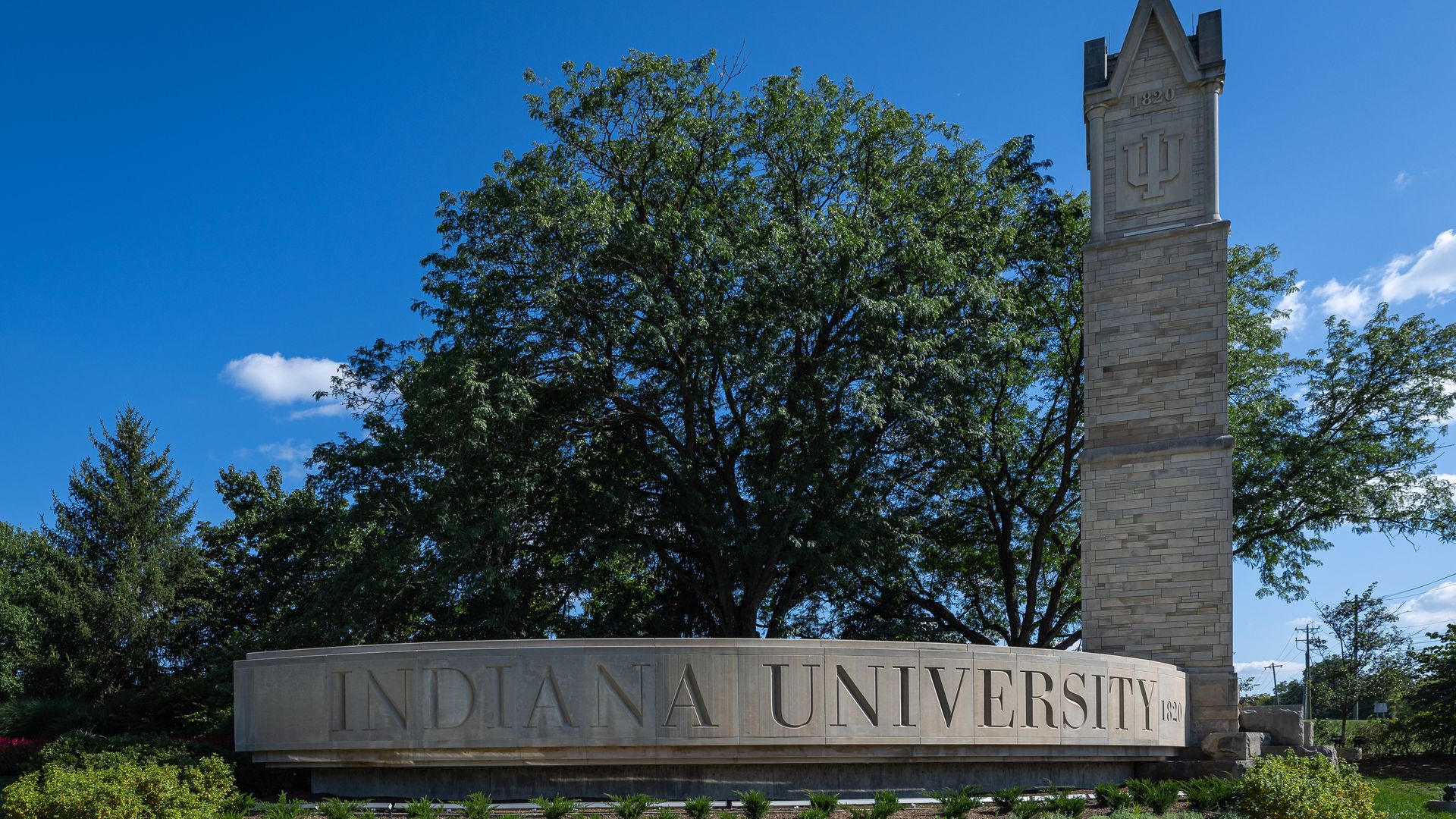
Photo: Michael Hickey/Getty Images
Language slipped into the last-minute budget deal gives Gov. Mike Braun total control over the Indiana University Board of Trustees.
Why it matters: The nine-member board is the IU system's governing body, overseeing its financial and legal affairs, administration and nearly 90,000 students.
Driving the news: Republican lawmakers dropped a 215-page two-year spending plan Wednesday evening that the General Assembly is expected to vote on Thursday.
- On pages 181 and 182, there is seemingly non-budget language that remakes IU's governing body, which Braun told Axios Thursday is because he wants a board "that's going to produce better results."
- Braun was critical of IU for its "curriculum to cost to the whole way one of our flagship universities has been operating."
How it works: Right now, Indiana's governor appoints five members of the nine-person board and selects one student representative, with the help of a student-led committee.
- The three other members are IU alumni, elected by IU alumni.
- All serve three-year terms, except the student member who serves two years.
The latest: The language in the budget bill eliminates the elected members, instead allowing the governor to appoint all nine members.
- It also gives Braun the power to "remove and replace" any of the elected members at any time, meaning he could remake the board as soon as the legislation takes effect.
- It shortens student terms from two years to one and puts a three-term limit on board members.
- Five of the board members are required to be IU alumni and five must be Indiana residents under the new language.
The big picture: Board makeup at Indiana's other public higher education institutions varies, but most have some kind of alumni input.
- The Ball State University alumni council nominates two people to its nine-member board.
- The alumni council of Indiana State University gets two nominees to its nine-person board.
- Three of Purdue University's 10 trustees are selected by the alumni association.
- Ivy Tech Community College's board is made up entirely of gubernatorial appointees, with no alumni input.
What they're saying: "I think alumni and IU stakeholders need to have a say in who is running the institution," said John McGlothlin, an alum currently running for a seat on the board. "It's that simple."
- McGlothlin unsuccessfully ran last year. He said he was motivated to run after seeing how the university handled pro-Palestinian protests and what he called other free speech issues and finding the response "unacceptable."
McGlothlin said he's been inspired by Vivian Winston, the board member he is now running to replace after she announced she won't seek a second term.
- She was one of the few people "raising complaints, raising concerns and asking questions about what IU administrators were doing," he said. "I wanted more voices on the board like hers."
Threat level: Higher education institutions have been the target of conservatives at the federal and state level for years, but it's been total warfare on all aspects of higher education since President Trump took office for his second term.
The other side: "A very small fraction of the IU alumni have been participating in the election for the alumni seats on the IU Board of Trustees," said Senate President Pro Tempore Rodric Bray, R-Martinsville. "It is not a fair representation and therefore not what the drafters intended. Many trustees across our public universities are selected by our governor, so this is a logical change."
- A spokesperson for IU said the university "is currently reviewing the potential impacts of the proposed state budget."
- The IU Board of Trustees and IU Alumni Association did not immediately respond to requests for comment.
- Winston declined to comment for this story.
Reality check: It's not unheard of for non-budget policy language to get passed through the budget bill.
What's next: The budget is expected to pass in its current form, given the Republican supermajorities in both chambers.