Indiana to restrict food stamps, put work requirements on Medicaid

Add Axios as your preferred source to
see more of our stories on Google.
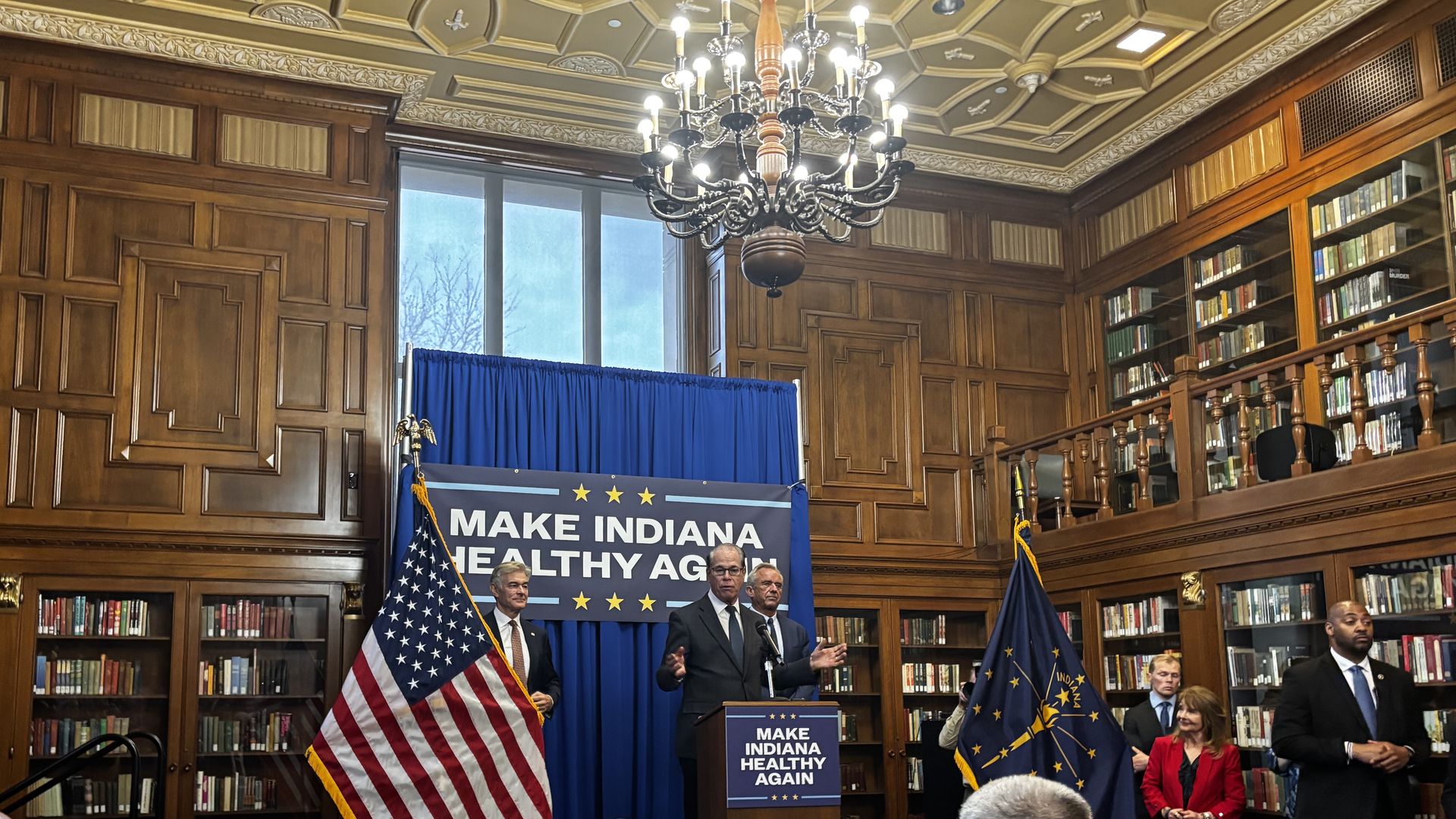
Photo: Arika Herron/Axios
Gov. Mike Braun announced Tuesday a new public health initiative that includes restrictions on welfare programs for low-income Hoosiers.
The big picture: Braun signed nine executive orders putting Indiana in line with Trump administration health policies. The governor said the orders, which will likely make it harder for poor people to gain access to health coverage and food assistance, are aimed at making the state healthier.
- Braun was joined by two top Trump health officials — Secretary of Health and Human Services Robert F. Kennedy Jr. and Centers for Medicare and Medicaid Administrator Mehmet Oz — lawmakers and a crowd of supporters in "Make Indiana Healthy Again" hats for the announcement.
State of play: The orders support new work requirements for Medicaid and SNAP recipients, reinstate income and asset verification for SNAP eligibility and remove candy and soft drinks from SNAP benefits.
- Nearly 2 million low-income Hoosiers receive health care coverage through Medicaid and approximately 600,000 receive SNAP benefits.
The intrigue: Kennedy said Tuesday that Indiana is the first state to submit a USDA waiver for candy and pop — something he has encouraged states to do.
- The SNAP restrictions won't take effect until after the waiver is granted.
Zoom in: Braun also signed orders asking various state agencies to study the health impacts of artificial food dyes and additives, obesity and diet-related chronic disease in Indiana, and access to local foods from Hoosier farmers.
- He also established a new fitness program and test for schools.
What he's saying: "We're taking on big issues like preventative measures for diet-related chronic illnesses, addressing harmful additives in our food, encouraging fitness and health in schools through two new initiatives, and making big changes to food stamps to put the focus back on nutrition — not candy and soft drinks," Braun said.
- Braun — who has championed parents' rights on school choice, education and other aspects of child-rearing — was critical of the food choices SNAP recipients are making for their families, but he didn't have answers to how to make healthier food more affordable and accessible.
- "The whole idea of affordability and accessibility, that is something you can't sidestep," he said. "If it is going to be more costly to actually eat better, we've got to find out entrepreneurial ways of addressing it through the folks that produce it."
The other side: Democrats were quick to criticize Braun's announcement, noting that his budget proposal called for cutting public health spending from $150 million to $100 million annually.
- Lawmakers expanded the state's public health investment in 2023 through the Health First Indiana program, which gave more state dollars to local health departments that provide core services, such as programming to address chronic diseases, including obesity and diabetes — health issues targeted by Braun's orders.
- "It's not leadership to bring your D.C. friends in for a flashy announcement but then fail to put your money where your mouth is when it comes to actually funding local public health programs," said Rep. Maureen Bauer, D-South Bend.
Between the lines: Braun and Republican lawmakers have also been looking for ways to curb Medicaid spending, the fastest-growing portion of the state budget, and have proposed work requirements for participants in the state's Medicaid expansion program in legislation that Braun has said he would sign.
Friction point: Research from KFF says Medicaid work requirements do little to move more people into the workforce since most adults on Medicaid are already working or face barriers to work. Instead, it results in eligible people losing coverage because of issues with documentation.
- When Arkansas instituted a work requirement in 2018, approximately 25% of people lost their coverage. Researchers found an increase in the percentage of uninsured adults but no significant change in employment.
Threat level: Paired with Braun's orders for more stringent enrollment eligibility verification, review and redetermination, the work requirement changes will likely lead to fewer people receiving the benefits.
- Fewer families on food stamps could have trickle-down effects on schools, which receive additional state dollars to support students in low-income households.