Indiana residents lost millions more to fraud last year


Add Axios as your preferred source to
see more of our stories on Google.
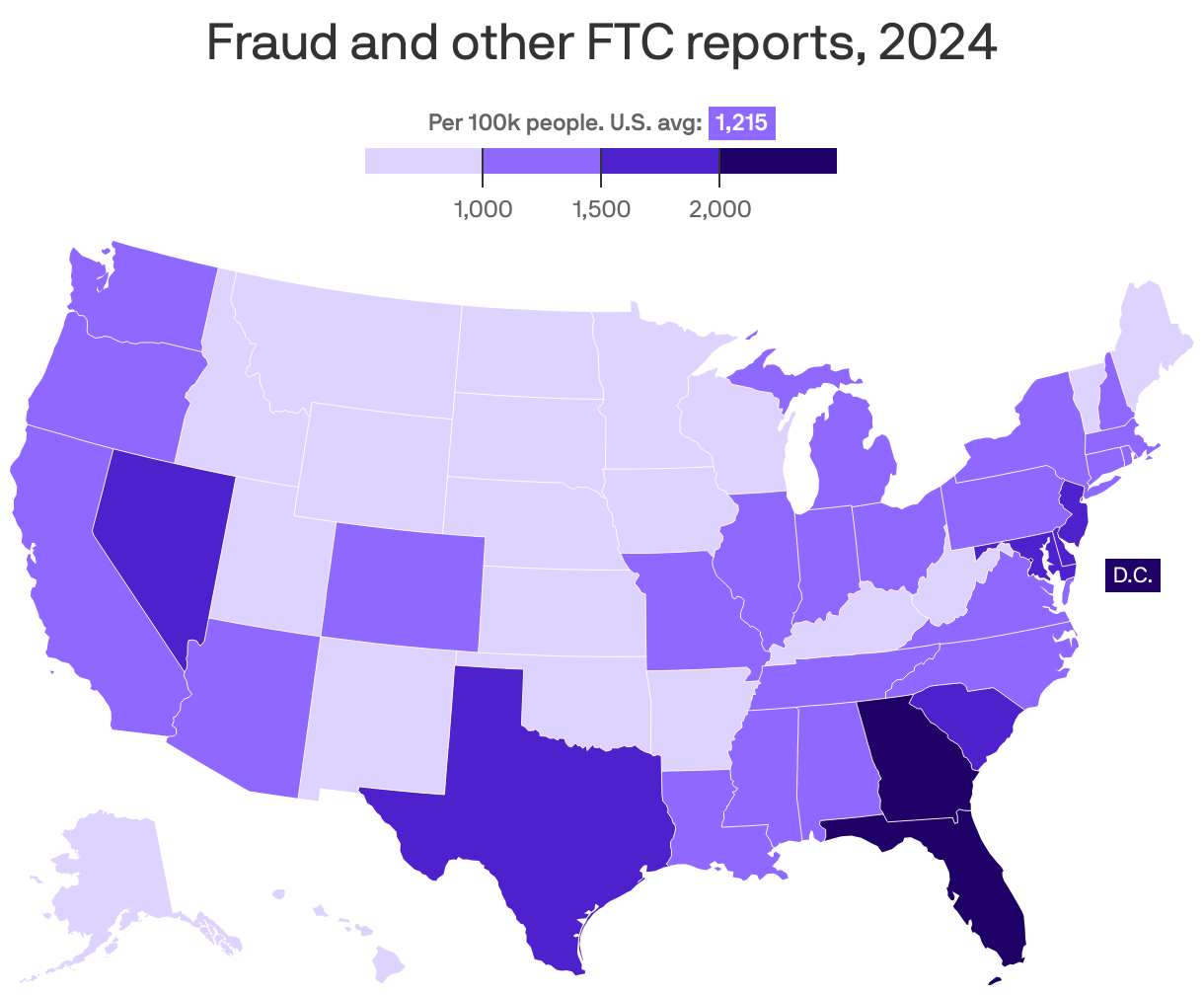
Hoosiers lost more than $112.3 million to various forms of fraud last year, per new FTC data — up 15% from 2023.
The big picture: Indiana's fraud spike, which mirrors a national trend, suggests fraudsters are outpacing law enforcement and efforts to educate consumers on how to protect themselves.
By the numbers: Indiana residents filed 72,938 reports with the FTC last year.
- 31,318 of those reports were from the Indianapolis-Carmel-Greenwood metro.
- Impostor scams were the most common deception in the state, followed by online shopping scams and health care scams.
- The Indy metro had the same top two, but fraudulent business or job opportunities were No. 3.
Stunning stat: Many fraudsters prey on older, less digitally savvy people — but of those 20-29 years old who reported fraud in the state in 2024, 38% said they lost money, compared to just 24% of those 70-79 years old.
Yes, but: The Hoosiers hit the hardest were 60-69 years old. They reported losses of more than $12.2 million.
- The median amount lost by Hoosiers was $375.
Zoom out: Residents of Washington, D.C. (2,509); Florida (2,163) and Georgia (2,108) filed the most FTC reports per 100,000 residents last year for fraud and other topics.
State of play: Nationwide, the raw number of FTC fraud reports remained relatively steady year-over-year.
- But there was a spike in the share of victims reporting that they lost money as a result of fraud: 38% in 2024, up from 27% in 2023.
By the numbers: Americans reported losing over $12.5 billion to fraud last year — up 25% from 2023.
- Investment and impostor scams took the biggest financial tolls last year, the FTC says, with consumers losing $5.7 billion and nearly $3 billion to each, respectively.
- Scams where perpetrators pretend to be government representatives are particularly hot now, with reported losses increasing from $171 million in 2023 to $789 million in 2024.
Caveat: FTC fraud reports are voluntary, and many instances of fraud and other scams go unreported — meaning all these numbers are probably undercounts.
What's next: Companies like Visa are stepping up efforts to detect and fight fraud and scams, Axios' Sam Sabin reports.