Indy is growing — thanks to immigration


Add Axios as your preferred source to
see more of our stories on Google.

Immigrants are driving growth in Indianapolis (and Indiana), according to new U.S. Census Bureau data.
Why it matters: An exodus of city dwellers rocked many U.S. metros during the COVID-19 pandemic, but most are clawing back residents (and their productivity, creativity and tax dollars), driven largely by foreign immigration.
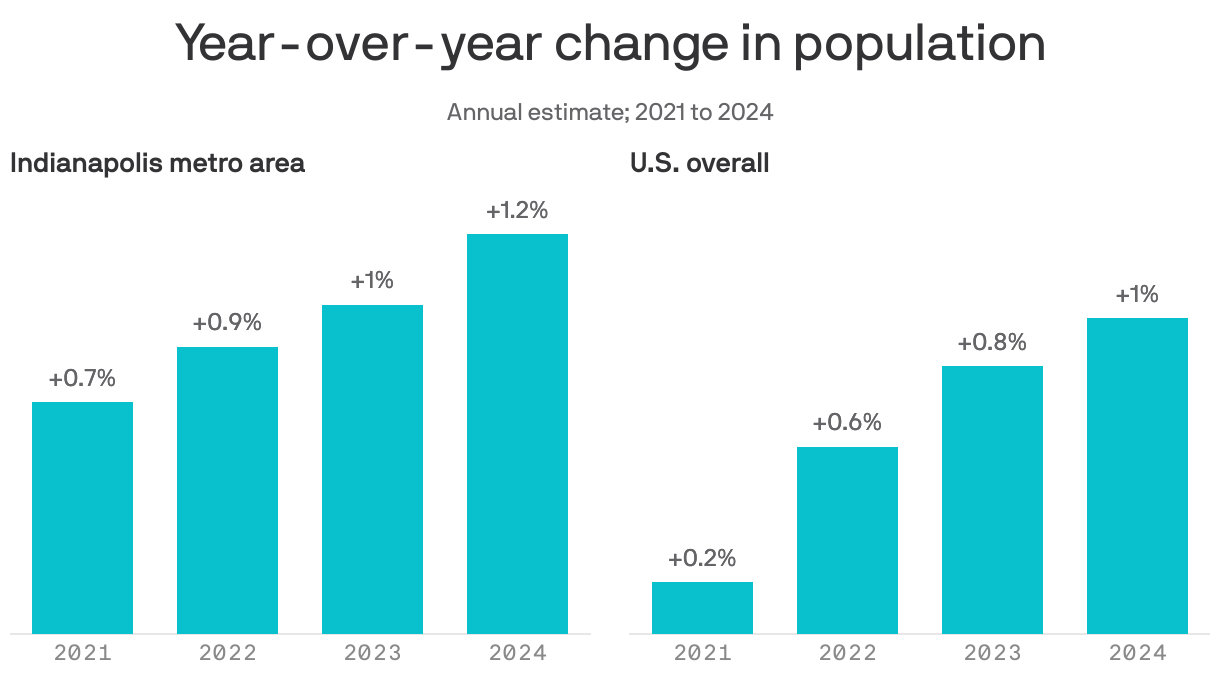
The big picture: The number of people living in U.S. metro areas increased by almost 3.2 million from 2023 to 2024 — a gain of about 1.1% — the Census Bureau said last week.
- By comparison, the total U.S. population rose 1% during that time.
Zoom in: Half of the Indianapolis metro area's growth since the pandemic has come from international migration.
- The number of foreign immigrants moving to our region is far outpacing natural gains from births (minus deaths) and domestic in-migration.
Zoom out: Indy isn't the only part of the state benefiting from international migration.
- Last year, Indiana added 44,144 residents — its largest population increase since 2008.
- Natural population increases driven by birth rates are rebounding, yet they're still well below the pre-pandemic norm.
- Growth was seen in rural, mid-size and metropolitan communities.
What they're saying: "While the size of Indiana's growth in 2024 was similar to 2008, the drivers of change in these years were drastically different," said Matt Kinghorn, senior demographer at the Indiana Business Research Center.
- "Back in 2008, natural increase — or the difference between births and deaths — accounted for 77% of Indiana's growth. In 2024, by contrast, a net international migration of 30,852 residents accounted for 70% of the state's growth."
By the numbers: The metro area gained over 85,000 people from April 1, 2020, to July 1, 2024.
- Of those, nearly 43,000 came from international migration.
- The natural change, births minus deaths during that time, was under 27,000, and domestic migration was almost 16,000.
The bottom line: The bureau bases these estimates on current data for births, deaths and migration, all of which affect the overall population.
- Demographers and other researchers will closely monitor how Trump administration policies might affect immigration levels.