Fall allergies are hanging on in Indy


Add Axios as your preferred source to
see more of our stories on Google.
If you're feeling run down lately, a plant — not an illness — may be to blame.
Why it matters: Climate change is making Indianapolis' allergy seasons longer and more intense. This fall is a prime example.
Driving the news: It's not unusual for weed pollen to spike this time of year, causing fatigue, itchy eyes, sneezing and scratchy throats.
What they're saying: "Climate change and in particular global warming is doing two major things to plants," said Jennifer Lau, a professor of biology at IU. "It's changing when they flower ... It's also changing the abundance of particular plant species."
- Lau said this is causing the allergy season to start earlier in the spring, last later in the fall and increase the abundance of allergens like ragweed, which she said is a "particularly nasty allergen."
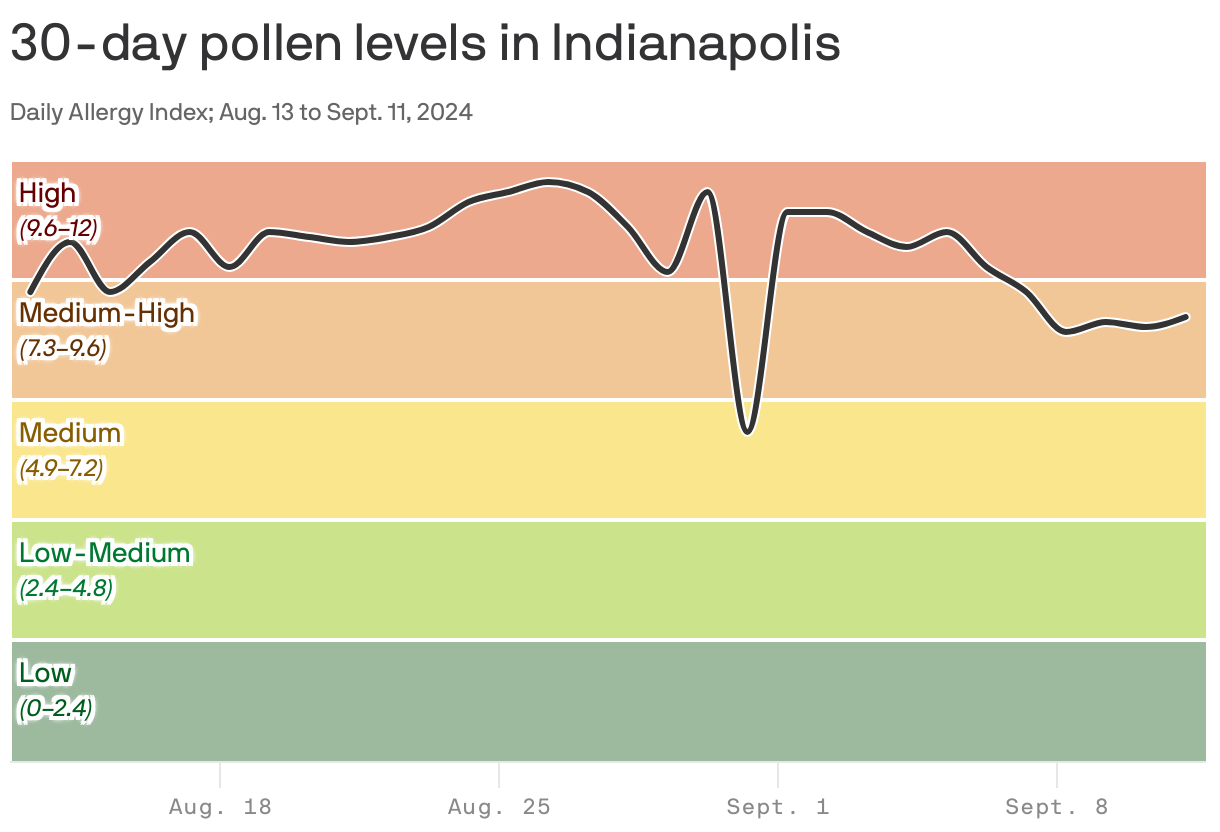
By the numbers: The amount of pollen in local air has been high for 17 of the last 30 days, according to Pollen.com. Ragweed is the top allergen.
- Counts have trended slightly downward over the past week, but as of yesterday, they were still predicted to be medium-high or medium through Sunday.
The good news: Relief is coming. Fall allergy season typically tapers when frost arrives in late October or early November.
Pro tips: Newer antihistamines like Claritin, Allegra and Zyrtec offer relief without the drowsiness associated with older antihistamines like Benadryl.
- Several days of continuous therapy may be necessary to curb symptoms.
- Closing windows in the morning and showering before bed can reduce exposure.
Go deeper: Sign up for local pollen alerts.