Indianapolis' decades-old stormwater system challenged by changing climate

Add Axios as your preferred source to
see more of our stories on Google.
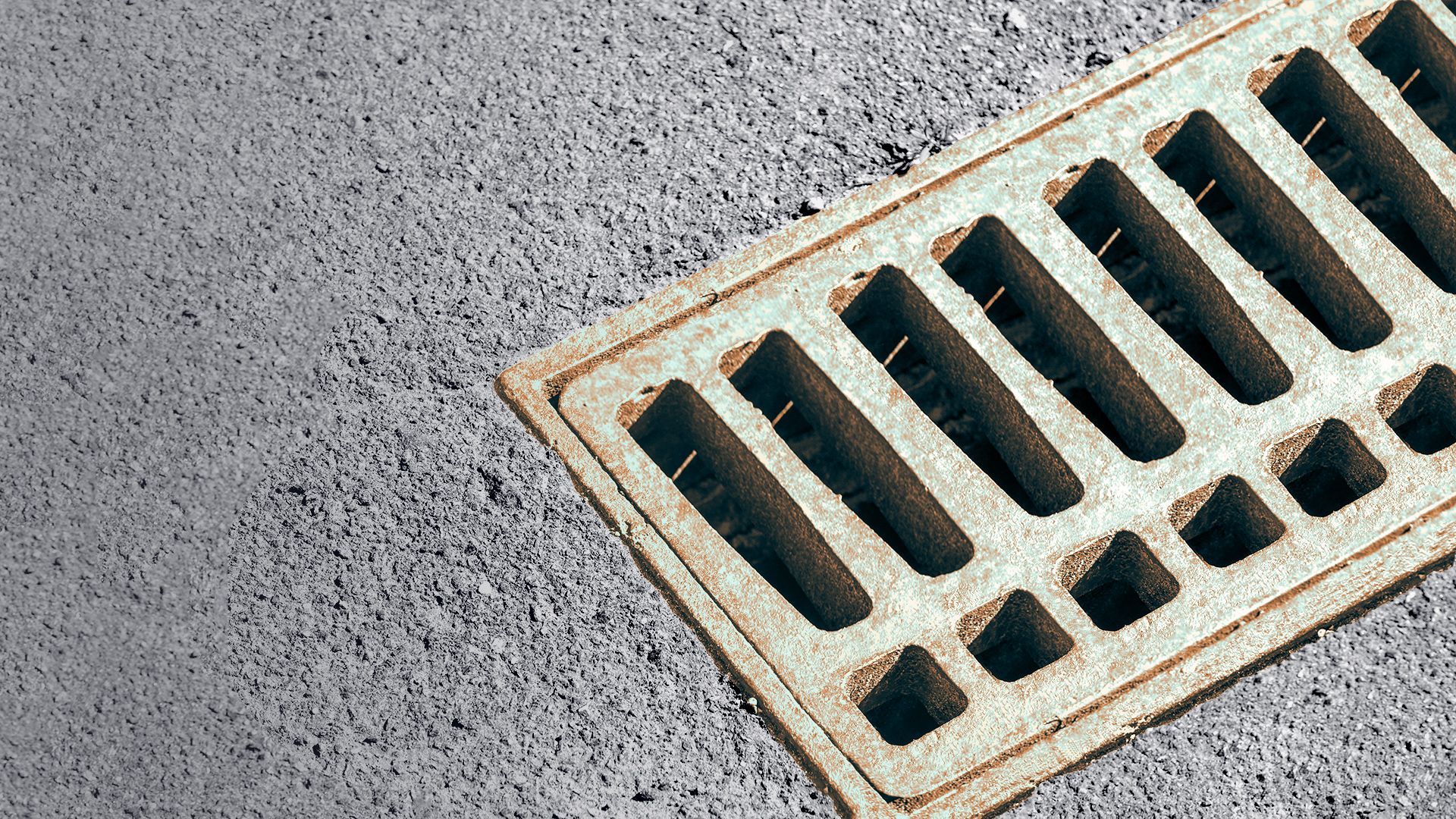
Illustration: Brendan Lynch/Axios
Indianapolis is employing a new strategy to manage stormwater, as the city continues to deal with a changing climate and infrastructure built decades ago.
Why it matters: Experts expect more intense and more frequent rainstorms going forward, meaning more localized standing water and flooded roads.
Driving the news: The Department of Public Works recently requested to use a portion of its stormwater management budget to purchase a tract of land in the Far East Side for preservation of the floodplain, a first for the city.
- The land is undeveloped and marshy, creating a natural sponge to absorb excess water in a way that impervious surfaces like paved roads and parking lots can't.
- The request was approved by the City-County Council's public works committee earlier this month.
What they're saying: "Grassy Creek Trail is planned to go through this parcel but if we were acquiring land just for that (project), it would have been much smaller," said Shannon Killion, DPW's stormwater administrator.
- "The seller had more land. We saw it as an opportunity … to protect the floodplain."
State of play: Making the city more resilient to a changing climate is an ongoing effort.
- Last year, DPW added several new employees to help address drainage, flooding and downed trees and trained others to work on both solid waste and stormwater issues as needed.
What they're finding: Sometimes field investigators find an issue is as simple as clearing out a blocked storm drain, Killion said.
- Other times, it's infrastructure that was built for weather patterns of the past and solving that kind of problem takes a major capital investment.
Between the lines: DigIndy, the $2 billion, years-long project to improve the city's sewer system and prevent sewage overflow into the White River, is also facing a challenge from more intense storms.
- The project isn't finished, but it's already outdated.
Reality check: It's unlikely that this year's DPW budget request will be as heavily focused on climate resiliency as last year.
- Director Brandon Herget said the department is also balancing needs related to pedestrian safety.
Zoom out: Cities around the country are similarly dealing with the effects of a changing climate creating more intense storms and rain events.
- The most recent national climate assessment found the largest increase in the number of extreme precipitation days has occurred over the Northeast and Midwest.
Yes, but: It could be worse. An agriculture-heavy region in Iowa recently had "poop soup" in its floodwaters.
The bottom line: "An intense storm is always hard to design for," Killion said. "When you start looking at designing infrastructure to handle those events, the cost associated is huge."
- "We're looking at what can we do … to meet those needs and provide drainage but knowing we're not going to make water instantly disappear off of roads."